_画板-1.png)
Many importers ask me if hybrid grass makes sense for garden applications, often confusing it with standard residential artificial turf. When high-end landscape contractors struggle with heavy foot traffic tearing up natural lawns1 in luxury estates, wholesale distributors need a reliable, premium solution. Fortunately, woven hybrid turf bridges this exact gap between durability and natural aesthetics.
Yes, hybrid grass can be used in a garden, provided the "garden" refers to large-scale commercial landscapes, private luxury estates, or hotel resort courtyards. In these high-traffic, high-budget environments, an open woven hybrid grass system protects natural grass roots, combining the durability of synthetic fibers with the aesthetic appeal of real grass2.
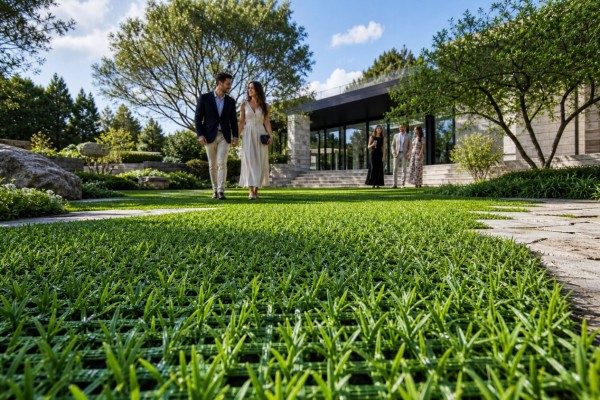
Moving past small residential backyards, regional importers must understand where this specific product truly shines. To secure large wholesale orders and satisfy demanding commercial clients, let’s explore how distributors can successfully position woven hybrid turf for large-scale landscaping projects.
What types of garden projects actually use hybrid grass?
Pitching high-end turf to the wrong buyer wastes valuable time and burns B2B relationships. If your clients try to install hybrid systems in small residential backyards, the costs and maintenance requirements will quickly cause downstream complaints. You must target the right large-scale applications.
Hybrid grass is designed for heavy-duty, high-budget commercial garden projects. The ideal applications include luxury private estates, hotel and resort courtyards, municipal parks, and corporate campus green spaces. These venues require the 100% natural look of real grass but demand structural reinforcement to withstand constant foot traffic.
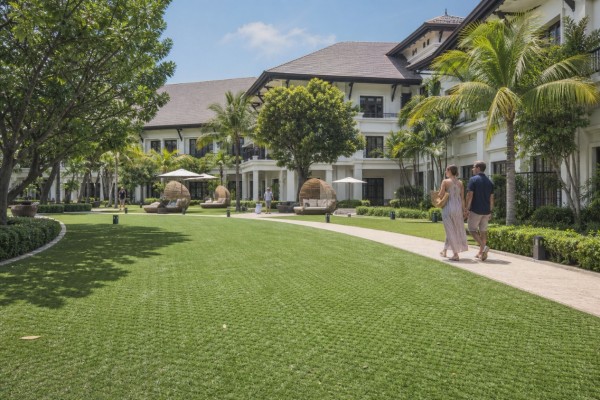
I often see distributors mistakenly market this as a direct replacement for standard landscape artificial grass. It is not. As a B2B factory supplier, I always advise my wholesale partners to pivot their definition of a "garden" toward a commercial scale. At QH, our minimum order quantity for custom specifications is 3,000 square meters. That massive scale inherently rules out DIY home projects and single-family backyard installations.
Instead, importers should focus their sales and marketing efforts on contractors handling substantial, high-value projects:
- Private Estates and Manors: Wealthy homeowners who frequently host large outdoor events, weddings, or parties need sprawling lawns that do not turn into mud pits after heavy use.
- Hotel Resorts and Wedding Venues: These commercial gardens experience intense weekend traffic. Property managers demand that the grounds look perfectly natural in guest photographs, making purely synthetic grass undesirable.
- Corporate Campuses: Large tech or finance headquarters often require expansive green spaces that align with corporate eco-friendly compliance standards while remaining functional for employee recreation.
- Municipal Roadside Green Belts: City governments frequently upgrade public gardens and roadside spaces where heavy pedestrian traffic destroys natural grass, yet city ordinances mandate living greenery.
By redefining the target market, wholesale importers can position hybrid artificial grass as a high-margin, premium architectural solution. It allows landscape contractors to offer a robust product that ordinary residential installers simply cannot access or afford, elevating their bid proposals for lucrative commercial contracts.
How does the open woven grid structure protect natural grass roots?
Contractors often worry that synthetic materials will choke and kill natural grass over time. If a turf system blocks water drainage or air circulation, the real grass dies, leaving an ugly, sparse landscape. A scientifically designed woven backing solves this complex biological challenge.
An open woven grid structure allows natural grass roots to grow directly through the synthetic backing. This porous design ensures maximum water drainage and oxygen flow into the soil. As the real grass grows, the synthetic fibers act as a protective shield, preventing foot traffic from crushing the vulnerable root crowns.
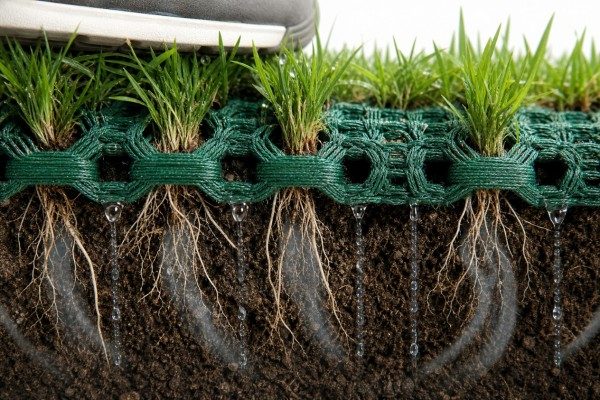
Understanding the physics behind this product is crucial for B2B sales. Standard artificial grass uses a solid polyurethane or latex backing with small, mechanically punched drainage holes. If a contractor tries to grow real grass through standard turf, the roots suffocate, and water pools on the surface.
Woven hybrid turf—often referred to in the industry as grow-through turf—is fundamentally different. During my factory tours at QH, I always show major buyers the backing of our hybrid products. It looks like a strong, open net made from environmentally friendly, recyclable materials.
Here is how the hybrid grass system physically interacts with the commercial landscape:
- Soil Integration: The open woven mesh is laid directly over a professionally prepared topsoil bed.
- Seed Germination: Natural grass seeds are sown into the soil, easily passing through the large open gaps in the mesh.
- Root Protection: As the natural grass grows, its roots anchor firmly beneath the mesh. When crowds walk across the lawn, their heavy footsteps hit the strong synthetic fibers rather than compressing the soil directly around the delicate natural root crowns.
Comparing Backing Technologies
| Feature | Standard Landscape Turf | Woven Hybrid Grass |
|---|---|---|
| Backing Type | Solid Latex/PU with punched holes | Open woven mesh net |
| Air Permeability | Low (relies entirely on small holes) | Extremely High (open grid design) |
| Root Protection | N/A (No real grass involved) | Excellent (physically shields root crown) |
| Eco-Compliance | Seals soil, limits biodiversity | Coexists with nature, promotes soil health |
For importers, explaining this structural difference is the key to justifying the premium price tag. When landscape engineers and architects understand that the open woven structure actively supports plant life rather than suffocating it, they are much more likely to specify hybrid synthetic turf in their commercial garden blueprints.
Will hybrid grass reduce landscape maintenance for contractors?
Expectation management is the biggest commercial risk in turf distribution. If you sell this product promising a "maintenance-free" lawn, your contractors will face furious property managers when the grass overgrows or dries out. You must communicate the maintenance reality clearly from day one.
No, hybrid grass does not eliminate landscape maintenance. Because it integrates with living, natural grass, it still requires regular topsoil management, seeding, watering, fertilizing, and mowing3. However, it drastically reduces the costly need for total lawn replacements caused by heavy traffic and severe wear-and-tear.
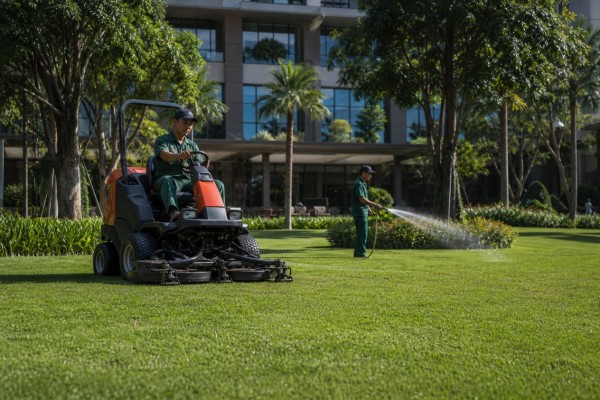
One of the most common friction points I encounter between factories, importers, and end-users is the dangerous misconception about maintenance. Because the word "artificial" is involved, buyers often assume it is a lay-and-play solution.
As a wholesale distributor, your sales team must actively manage downstream expectations. Woven hybrid grass is a reinforcement tool, not a synthetic replacement. The natural grass component is alive. If the landscape contractor stops watering the luxury estate lawn, the natural grass will die, leaving only the synthetic fibers visible.
Mandatory Maintenance Requirements
Contractors bidding on hybrid synthetic turf projects must budget for ongoing horticultural care:
- Irrigation: The real grass needs consistent watering to thrive, just like a standard natural lawn.
- Mowing: The natural blades will eventually grow taller than the synthetic fibers and must be trimmed regularly to maintain a pristine, manicured garden appearance.
- Aeration and Fertilization: The soil beneath the woven grid still requires vital nutrients and seasonal agricultural care.
You might wonder: Why would high-end estates or municipalities pay a premium for a product that still requires mowing and watering? The answer lies in long-term Return on Investment (ROI).
In a high-traffic hotel courtyard or a heavily used municipal park, pure natural grass gets destroyed in just one season. The soil compacts, the roots die, and the property manager is forced to pay for a complete, highly expensive sod replacement4 every single year. Hybrid grass systems prevent this catastrophic failure. The synthetic fibers absorb the physical trauma of the foot traffic, keeping the garden green, intact, and structurally sound year-round, which saves massive amounts of money in replacement costs over a ten-year span.
How can wholesale importers pitch hybrid grass to landscape contractors?
Transitioning commercial contractors from standard synthetic turf to premium hybrid systems is challenging. If they only look at the initial upfront material cost, they will stick to cheaper, traditional alternatives. Distributors need a compelling sales enablement strategy to help their clients win lucrative bids.
Wholesale importers should pitch hybrid grass as a high-ROI, eco-friendly solution for heavy-traffic areas. By emphasizing the 100% natural visual feel, long-term durability, and compliance with municipal greening requirements, distributors can help contractors win high-budget bids for commercial estates and public gardens.
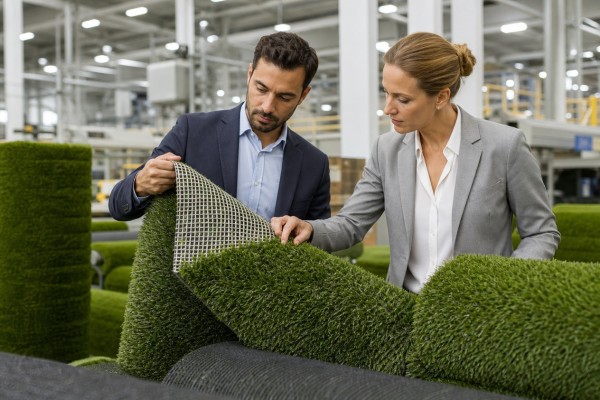
To successfully move 40HQ containers of hybrid grass, importers must equip their contractor clients with the right commercial arguments. Selling this specialized product requires shifting the conversation away from a simple "price per square meter" comparison and focusing entirely on "total project value" and long-term sustainability.
Here is the exact sales enablement toolkit I recommend for our regional distributors to use in the field:
Core Premium Selling Points
- 100% Natural Aesthetics and Tactile Feel: High-end clients at luxury private estates often despise the shiny, "plastic" look of standard synthetic turf. Because the real grass grows through the open grid and visually overtakes the synthetic fibers, the final result looks, feels, and smells entirely natural.
- Eco-Friendly Municipal Compliance: Many municipal parks and commercial real estate developments face strict government greening quotas. Standard artificial turf often does not count toward these quotas because it completely covers and seals the living soil.5 Open woven hybrid turf allows natural plant growth, supports soil microbiology, and uses recyclable materials, frequently qualifying the project for environmental landscaping points.
- Immediate Landscape Greening: Upon installation, the green synthetic fibers provide immediate, vibrant color to the landscape. This covers the ugly bare soil instantly while the client waits for the natural grass seeds to germinate and grow, which is a massive selling point for impatient commercial property developers.
By sourcing directly from an experienced B2B manufacturer like QH, wholesale buyers can secure reliable, large-volume supply at factory-direct pricing. With 10 production lines and a monthly capacity exceeding 1.5 million square meters, we ensure our distributor partners never miss a major commercial project deadline. Furthermore, we provide the technical specifications required to prove the durability of our woven hybrid grass to strict municipal engineers.
Frequently Asked Questions
Can hybrid grass be installed over existing concrete?
No. Because woven hybrid turf is designed to integrate with living natural grass, it requires a proper soil base. Installing it over concrete defeats its purpose, as natural grass seeds cannot germinate or grow roots without soil and proper water drainage.
What is the minimum order quantity for wholesale hybrid turf?
At QH, we specialize in B2B factory-direct exports. Our minimum order quantity (MOQ) for customized hybrid grass specifications is 3,000 square meters. We strictly service wholesale buyers and full-container orders for large-scale commercial projects.
How long does a standard container of hybrid grass take to produce?
For a standard 1×40HQ container of our open woven hybrid turf, production takes approximately 15–20 days. Customized specifications require 25–30 days. Each additional container adds about 10 extra days to the production timeline.
Does hybrid grass look fake in a high-end garden?
No. Once the natural grass seeds germinate and grow through the open woven grid, the natural blades blend entirely with the synthetic fibers. The final garden landscape provides a 100% natural visual and tactile experience, making it perfect for luxury estates.
Conclusion
Successfully utilizing hybrid grass in a garden requires understanding the true scale and demands of the project. For wholesale importers, the key to high margins lies in targeting large commercial landscapes, luxury private estates, and municipal green spaces. By educating contractors on how the open woven grid structure protects natural roots and emphasizing the reality of ongoing landscape maintenance, you can prevent downstream complaints and build long-term trust.
If your distribution business is ready to expand into the premium commercial landscaping market, reliable factory supply is critical. Contact me at [email protected] or via WhatsApp at +86 185 7566 0746 to discuss securing your next full-container order of high-performance woven hybrid grass.
-
"Foot traffic on turf primarily shaped the endophytic bacteriome …", https://pmc.ncbi.nlm.nih.gov/articles/PMC12014648/. See university extension literature on turfgrass management, which details how concentrated foot traffic leads to soil compaction, reduced macroporosity, and mechanical tearing of grass blades. Evidence role: mechanism; source type: education. Supports: The mechanism by which foot traffic causes soil compaction and mechanical damage to turfgrass.. Scope note: Focuses on general turfgrass wear rather than specific luxury estate contexts. ↩
-
"Hybrid grass", https://en.wikipedia.org/wiki/Hybrid_grass. Studies on hybrid turf systems indicate they successfully merge the high wear tolerance of synthetic fibers with the regenerative properties and visual characteristics of natural grass. Evidence role: general_support; source type: paper. Supports: The dual benefits of hybrid turf systems in providing both structural durability and natural aesthetics.. ↩
-
"Lawn Maintenance – Wisconsin Horticulture", https://hort.extension.wisc.edu/articles/lawn-maintenance/. Sports turf management guidelines emphasize that reinforced natural turf systems require the same agronomic inputs—including irrigation, mowing, and fertilization—as conventional natural grass. Evidence role: expert_consensus; source type: institution. Supports: The consensus that hybrid turf systems require standard natural grass maintenance practices.. Scope note: Guidelines are typically published for sports field managers rather than commercial landscapers. ↩
-
"Compaction and Cultivation : Turf", https://www.umass.edu/agriculture-food-environment/turf/fact-sheets/compaction-cultivation. Severe soil compaction reduces pore space, leading to root hypoxia and turf death, which in high-traffic commercial settings often necessitates costly full-scale sod replacement. Evidence role: mechanism; source type: education. Supports: The progression from soil compaction to turf death and the necessity of sod replacement.. ↩
-
"3.5 Integrated Stormwater Management Examples", https://water.phila.gov/development/stormwater-plan-review/manual/chapter-3/3-5-integrated-stormwater-management-examples/. Many municipal environmental planning departments classify standard artificial turf as an impermeable surface, explicitly excluding it from calculations intended to meet living green space or stormwater management quotas. Evidence role: general_support; source type: government. Supports: The classification of standard artificial turf as an impermeable surface that does not satisfy green space requirements.. Scope note: Regulatory definitions of permeable surfaces vary by local jurisdiction. ↩