_画板-1.png)
Your beautiful landscape project looks ruined because of uneven lumps. Moles are a nightmare for property owners. Let’s see if artificial grass truly stops these underground pests.
Yes, moles can technically burrow under artificial grass, but it is very difficult for them. The compacted sub-base and weed barrier create a tough environment. However, without a steel mesh deterrent installed underneath, determined moles can still cause uneven surfaces if food sources exist below.
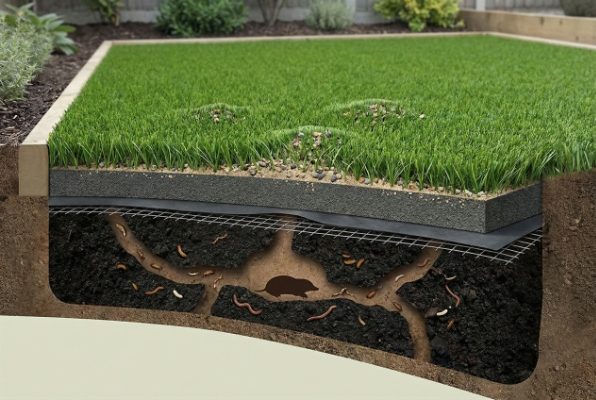
I have seen many projects suffer from poor ground preparation. You do not want to lose money fixing damaged turf later. Read on to understand the risks and how to prevent them permanently.
What causes moles to suddenly appear in your yard?
You see mounds of dirt appear overnight. It is frustrating. Why are they invading your specific project site now?
Moles appear because they are hunting for food. They love rich soil full of earthworms, grubs, and soil insects. If the ground is moist and fertile, moles will dig tunnels to find their next meal, creating visible damage above ground.
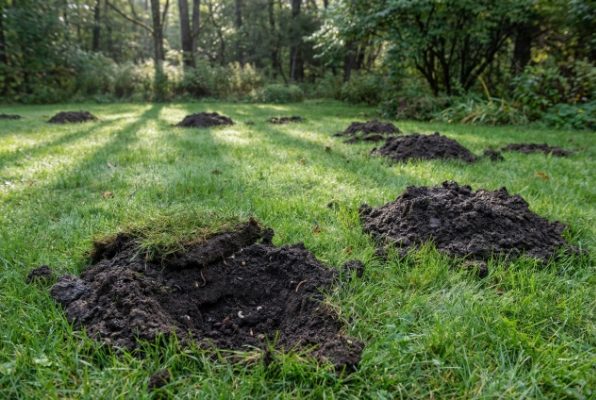
From my experience in the industry, I know that animals only go where they can survive. Moles are simple creatures. They do not eat grass or roots. They are carnivores. The sudden appearance of molehills usually means the deep soil is healthy and full of bugs. In natural lawns, this is common. Before we install artificial turf, the ground condition changes. But if the deep soil is still rich, moles might try to enter.
I always tell my customers to look at the environment before installation. If the project is near a forest or a damp field, the risk is higher. Moles need to eat almost their body weight in food every day. They follow the worms. If your client has a garden with wet soil next to the turf area, moles may wander over.
Here is a simple breakdown of what attracts them:
| Attractor | Why Moles Like It | Stickiness to Area |
|---|---|---|
| Moist Soil | Easy to dig through and holds tunnels well. | High |
| Insect Larvae | High-protein food source for energy. | High |
| Earthworms | Their main food source. | Very High |
| Quiet Areas | Low vibration means safety for them. | Medium |
If you ignore these signs before laying the turf, you act blindly. Dealing with the food source is just as important as the installation itself.
Does Artificial Grass Prevent Moles?
Clients ask if buying turf guarantees no pests. You want to say yes. But is it actually 100% effective?
Artificial grass itself does not kill moles, but it makes their life very hard. The aggregate sub-base is compacted rock, which is difficult to dig through. Also, the lack of natural soil near the surface reduces the food supply, forcing moles to move elsewhere.
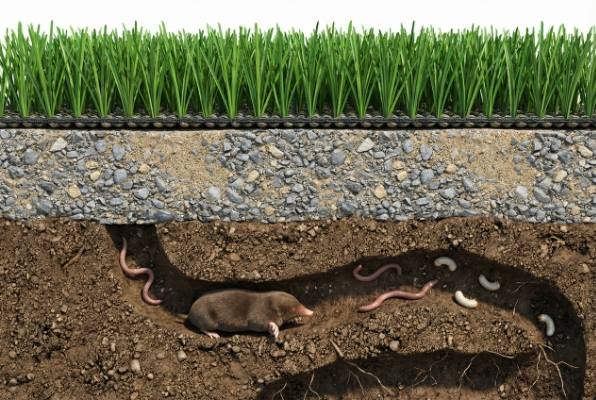
In my years as a sales executive at QH Grass, I have explained the "turf system" hundreds of times. The turf is not just the green plastic on top. It includes the base layers. This is your main defense. When we construct a proper base, we remove the topsoil. We take away the earthworms and bugs. Then, we put down crushed stone and sand. We use a heavy vibratory plate compactor to make it rock hard.
Moles are like swimmers in the dirt. They need loose soil to push aside. They cannot swim through compacted rock. It hurts their claws. Also, the plastic backing of high-quality turf is thick. It blocks the air. The environment under the turf becomes dry and lifeless. Worms leave this area. Without food, the moles usually leave too.
However, prevention is not guaranteed if the installation is lazy. If the base layer is too thin or not compacted well, moles can push up. They create tunnels right under the backing. This leaves "humps" on the surface. Walking on the turf feels uneven. It looks bad. To truly prevent them, you need to rely on the solidity of your sub-base construction1.
Key Factors in Prevention
- Compaction Rate: The stone base must be tight.
- Depth: A deep layer of aggregate pushes the soil zone down.
- Removal: Taking away organic topsoil removes the food scent.
What do moles hate the most?
You want a natural way to keep them out. Chemicals are dangerous. What actually stops them from digging?
Moles hate physical barriers that they cannot claw through. The most effective enemy of a mole is a galvanized steel mesh2 installed below the turf base. They also dislike loud vibrations and strong smells like castor oil, though barriers work best.
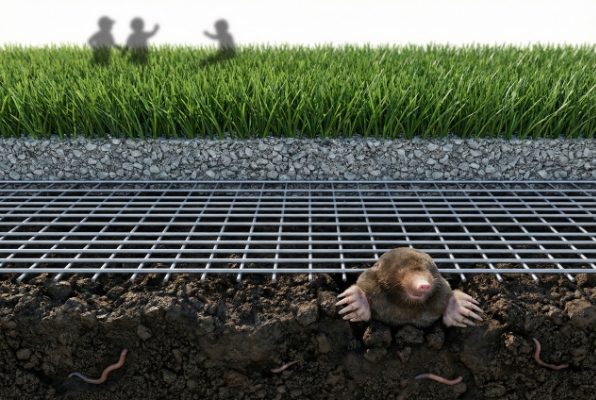
I always recommend physical barriers over chemical ones. Chemicals wash away with rain. A physical barrier lasts for years. When I help customers with large bidding projects, I suggest including "gopher wire3" or galvanized hardware cloth. This is a metal mesh. It goes under the sub-base, or sometimes right under the turf.
Moles have sensitive noses and paws. They hate the feel of metal. They cannot claw through steel. If you use plastic netting, they might chew it. Steel is superior. Another thing they hate is vibration. Since artificial turf is used for sports or playgrounds, the constant running matches disturbs them. They prefer quiet places.
Think of the installation cost versus the repair cost. Adding a wire mesh is cheap during the build. Fixing a sunken fake lawn is expensive. I have seen contractors skip this step to save money. Six months later, the customer complains about bumps. The contractor loses trust.
Here is a comparison of deterrents I have evaluated:
| Deterrent Type | Effectiveness | Longevity | Cost |
|---|---|---|---|
| Galvanized Steel Mesh | 99% Effective | 10+ Years | Low |
| Plastic Netting | 50% Effective | 5-10 Years | Very Low |
| Ultrasonic Spikes | 30% Effective | Varies | Medium |
| Castor Oil Repellent | 20% Effective | Weeks | Low |
Use the steel mesh. It is the only thing that physically stops them every time.
Will gophers eat through artificial grass?
Gophers have stronger teeth than moles. This causes worry. Can they chew right through your expensive plastic product?
Gophers can chew through artificial grass backing if they are trapped or desperate, unlike moles. While moles dig, gophers chew roots and obstacles. However, the plastic blades offer no nutritional value. They only chew through to get to the surface or bypass an obstruction.
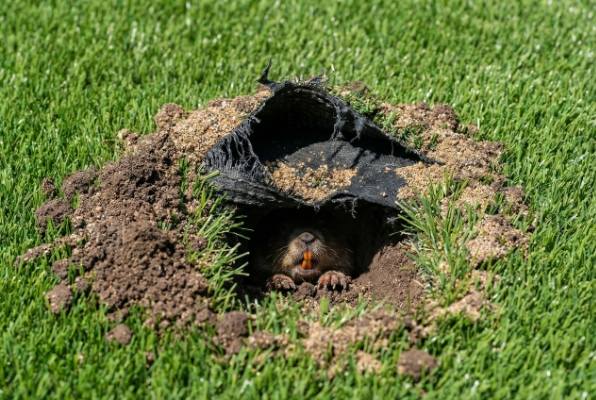
We need to be clear about the difference. Gophers are rodents. Moles are insectivores. Gophers have big, orange teeth meant for chewing tough roots. Artificial grass is tough, but a gopher can chew through it if it wants to exit the tunnel. I have dealt with cases in the US and Mexico where this happened.
Usually, the gopher hits the compacted base and stops. But if they are already living in the ground before you install, they try to escape. They dig up. They hit the backing. They chew a hole. You end up with a pile of dirt on your pristine green grass. This ruins the SBR latex or PU backing.
To stop this, the metal mesh I mentioned earlier is mandatory in gopher-prone areas. The mesh holes must be small (under 3/4 inch). Gophers cannot chew steel. Without the mesh, you risk damage. Moles just make humps; gophers make holes.
Damage Comparison
-
Mole Damage:
- Creates raised ridges or humps.
- Does not typically break the turf backing.
- Makes the ground soft and uneven.
-
Gopher Damage:
- Chews actual holes in the manufacturing cloth.
- Pushes dirt out onto the grass fibers.
- Destroys the integrity of the installation.
Conclusion
Moles can reach artificial turf but rarely thrive there. Use a compacted base and steel mesh for protection. This ensures your project remains flat and profitable for years.
_画板-1.png)