_画板-1.png)
Maintaining real grass on a steep hill is often a nightmare for you. The mower slides, the water runs off before the roots drink it, and the mud makes a mess. Artificial turf is the safe, permanent solution needed here.
Yes, you can install artificial grass on a slope. It prevents soil erosion and eliminates dangerous mowing work. However, you must secure the sub-base with timber frames and use granite dust instead of sand to stop the turf from sliding down the hill over time.
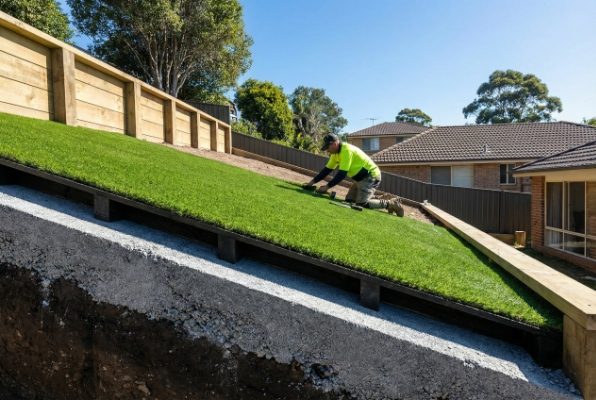
I have seen many customers ask if they can turn a muddy bank into a green paradise. The answer is yes, but the method is different from flat ground. If you do not change your installation method, you will face complaints about sliding grass later. Let me explain exactly how we do this correctly so you avoid costly mistakes.
How Do You Properly Lay Artificial Turf on a Slope Step by Step?
You cannot just roll grass out on a hill like a carpet. If you skip the foundation work, the whole system will slide down in the first heavy rain.
To lay turf on a slope, excavate the area and install treated timber borders1. Fix timber stakes into the ground to create a grid. Fill this with crushed granite, compact it, and nail the turf securely to the timber frame. Never use sharp sand as a top layer here.
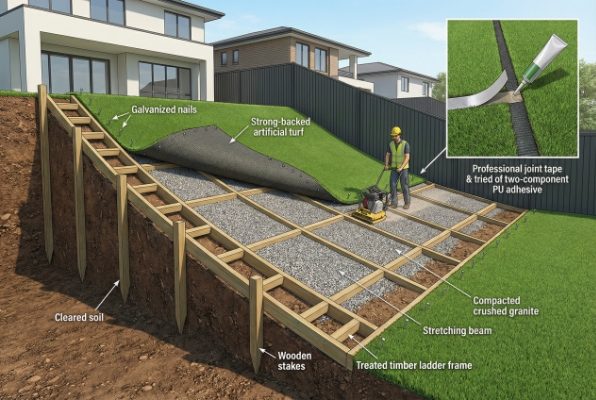
We need to follow a strict process to fight gravity. Based on my experience in the technical department, standard installation fails here. You must build a skeleton for the slope. First, clear all vegetation. We must remove all debris and loose soil. If the slope is very steep, I suggest you consider building a small retaining wall at the bottom first.
Next, you must install the timber framework. This is the most critical step. Secure treated timber edging along the perimeter. Also, place timbers across the slope. Fix these with galvanized nails or deep stakes. This acts like a ladder to hold the base material.
For the base, do not use sharp sand. Rain washes sand away easily, and the surface will become uneven. You must use granite dust or limestone dust2. This material compacts very hard and is permeable. Use a vibrating plate compactor3 to make the base layer stable. When you lay the grass, use artificial turf with a strong backing, like latex or polyurethane. Secure the grass to your timber frame using galvanized nails. For the joints, use professional joint tape and high-quality two-component polyurethane adhesive.
| Step | Material Needed | Function |
|---|---|---|
| 1. Preparation | Shovels, Excavator | Removes unstable topsoil. |
| 2. Framework | Treated Timber, Stakes | Prevents the base from sliding. |
| 3. Base Layer | Granite/Limestone Dust | Creates a stable, solid surface that drains well. |
| 4. Fixing | Galvanized Nails, PU Glue | Anchors the turf permanently to the frame. |
What Are the Pros and Cons of Installing Artificial Grass on Slopes and Uneven Surfaces?
Every landscape project has good points and bad points. You need to know the risks before you promise a perfect result to your customers.
The main pros are stopping soil erosion4, perfect drainage, and safety from not mowing on angles. The cons include higher installation costs due to extra labor and materials. Also, if not fixed with deep stakes, the turf might ripple or move over years.
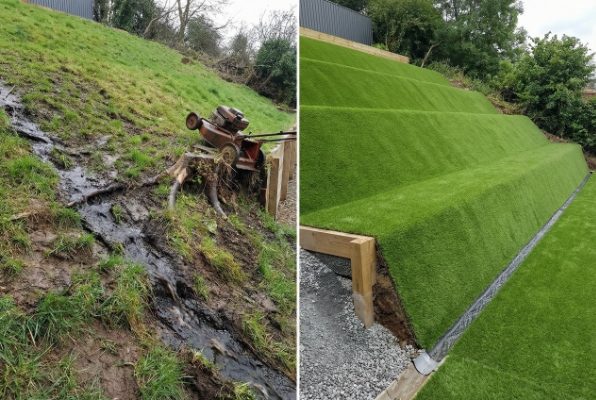
Let’s look at this with critical thinking. The biggest advantage is stability. Artificial turf provides a stable surface that prevents soil erosion. This is crucial for properties on hillsides or near water. I have seen heavy rain wash away natural gardens, but synthetic turf protects the land. Proper installation helps prevent rainwater runoff, which reduces puddles at the bottom of the hill.
However, there are challenges. Uneven ground requires meticulous ground preparation. You cannot just smooth it over. You need to create a stable base and use the correct fastening methods to ensure the turf does not shift. This often requires specialized tools and professional expertise.
This means the cost is higher. You need to budget for the timber, the extra stakes, and the longer labor time. If you or your installation team cuts corners to save money, the grass will slide. It requires regular inspection to ensure the nails are holding fast.
Comparison of Features on Slopes
- Erosion Control: Artificial turf is superior to natural grass because the backing holds the soil.
- Maintenance: It creates zero maintenance on dangerous angles. No mowing is required.
- Cost: It is more expensive than flat installation because of the timber framework requirement.
- Drainage: If you use the right granite base, water flows through naturally. If you use sand, it fails.
Why Should You Consider Artificial Grass for Sloped or Uneven Areas?
You might wonder if the extra effort and budget is worth it. When you look at the long-term value and safety, the answer becomes very clear.
You should consider it because it solves the "unusable land" problem. It turns a dangerous, ugly dirt patch into a usable, green asset. It also protects the property foundation from water damage by managing runoff better than patchy natural grass.
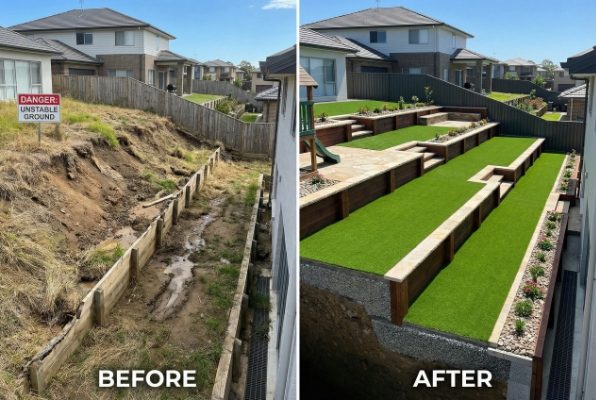
From my time as a sales executive, I know that customers want usable space. Artificial turf can be cut and shaped to perfectly fit even the most irregular areas. This allows for creative landscape design. You can combine it with retaining walls, flowerbeds, and decorative stones. It creates a professional-grade landscape out of a "dead" area.
Also, consider the durability. Not all artificial turf is suitable here. You must choose high-quality products. I always recommend turf with high pile density and pile height. This hides the uneven nature of the ground better. You need UV-resistant materials because slopes often get direct sun all day.
If the area has heavy rainfall, the turf acts as a shield. We can install advanced drainage channels under the turf if the slope is severe. This stops the water from damaging the house foundation at the bottom of the slope. It is an investment in protecting the property, not just a decoration.
Recommended Specs for Slope Turf
- Backing: Strong Latex or Polyurethane (must hold nail stress).
- Density: High density (prevents gaps showing when bent over a curve).
- Resistance: High abrasion resistance (the fibers lie differently on a slope).
- Accessories: Treated timber edging is mandatory, not optional.
Conclusion
Installing artificial grass on slopes prevents erosion and adds beauty, but it requires a timber framework and granite base. You must avoid sand and use strong fixing nails. At QH Grass, we supply the high-quality turf and knowledge you need to do this job correctly.
-
Explore this link to understand the importance of treated timber borders in creating a stable foundation for artificial turf. ↩
-
Learn why granite or limestone dust is essential for a stable and well-draining base when laying artificial turf. ↩
-
Discover how a vibrating plate compactor ensures a solid base for your artificial turf installation. ↩
-
Explore how artificial grass can effectively prevent soil erosion, especially in hilly areas, ensuring landscape stability. ↩
_画板-1.png)