_画板-1.png)
You want a perfect lawn, but clearing old grass seems like hard work. Is it really necessary to dig it all up before laying your new turf?
Theoretically, you can lay it on top, but I strongly discourage it. The natural grass underneath will die and rot, leading to an uneven surface, poor drainage, and serious weed issues. For a long-lasting result, you must remove the existing grass and prepare a proper base.
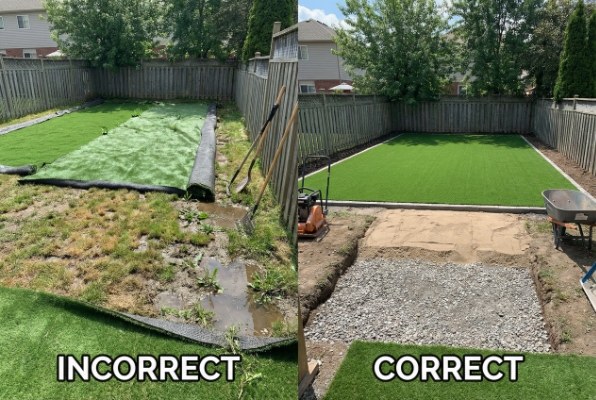
Many clients ask me if they can skip the excavation step to save money or time. It sounds like a smart shortcut, but in my experience, this usually leads to regret. Let’s look at the specific problems that happen when you cover natural grass.
Will Installing Fake Grass Over Natural Grass Create an Uneven Surface?
A smooth, professional look is the main goal for any field project. But if you layer turf over living grass, that smoothness is guaranteed to fail.
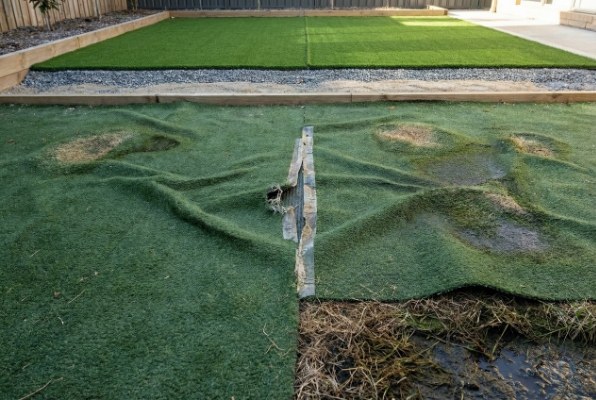
Yes, it will. Living grass provides a cushion that disappears as it dies and decomposes. This shrinking causes the ground to settle unpredictably, creating dips, holes, and a bumpy surface that looks unprofessional and can even cause tripping hazards.
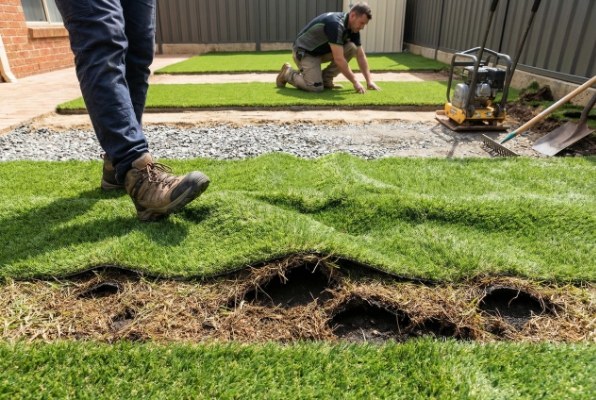
In my early days as an engineer, I saw a project where a customer tried to save money by rolling turf directly over his backyard lawn. At first, it looked fine. But within three months, the field looked like the surface of the moon.
Here is why this happens. Natural grass is organic matter. When you cover it with artificial turf, you cut off the sunlight. The grass dies. As it decomposes, it loses volume. This process does not happen evenly across the whole area. Some spots sink deeper than others.
Standard construction guidelines specifically state that we must clean and dispose of weeds to ensure a level surface1 for laying the site. You cannot achieve a level surface if the foundation is rotting organic material. Furthermore, to get a firm field, we need to compact the sub-base. If there is soft grass underneath, you cannot compact the joints to ensure they are flat and firm.
Comparison of Surface Stability
| Base Type | Immediate Result | Result After 6 Months | Risk Level |
|---|---|---|---|
| Over Natural Grass | Looks soft and full | Bumps, wrinkles, and dips | High (Tripping) |
| Proper Stone/Sand Base | Flat and Hard | Remains Flat and Hard | Low (Safe) |
If you skip the removal step, you are building your house on sand. Actually, it is worse than sand; you are building on compost.
Does Putting Fake Grass on Top of Natural Grass Cause Drainage Problems?
Water needs somewhere to go when it rains. Blocking the soil with a layer of rotting grass is a recipe for a muddy disaster.
Yes, significant drainage problems will occur. A layer of dead, matted grass acts like a sponge, holding water between the turf and the soil. This prevents rainwater from draining away efficiently, creating a boggy, smelly mess every time it rains.
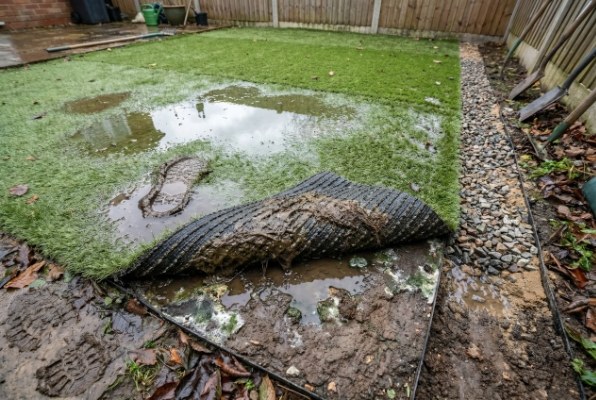
Drainage is one of the most critical parts of our work. When we supply turf to varying climates, from the rainy UK to humid Southeast Asia, we always ensure the products have drainage holes. But those holes are useless if the water has nowhere to go.
When natural grass dies under the plastic backing, it turns into a slimy sludge. This layer blocks the natural pores of the soil. Instead of water flowing through the turf and into the ground, it sits in this sludge layer.
The result is "squishy" grass. When you walk on it, dirty water might squirt up through the drainage holes. It creates a perfect environment for mold and bacteria to grow. In our installation guides, we emphasize spreading quartz sand evenly. This sand helps verify the flatness and aids drainage. If you pour sand over a soft, rotting grass base, the sand just mixes with the mud.
The Consequences of Poor Drainage
- Bad Odors: Decaying grass releases unpleasant gases.
- Mold Growth: Constant moisture damages the turf fibers.
- Unusable Areas: The field takes days to dry after rain.
- Mosquito Breeding: Standing water attracts insects.
If you want a clean, dry area for sports or landscaping, you must remove the organic barrier.
Can Weeds, Pests, or Moles Grow and Thrive Under Fake Grass Laid Over Natural Grass?
You buy artificial grass to stop weeding and pest maintenance. But laying it over live grass might actually create a comfortable home for them.
Yes, they can. Strong weeds can push through the drainage holes of the turf. Furthermore, the rotting organic matter attracts worms and bugs, which in turn attracts moles that will tunnel underneath, destroying the level of your lawn.
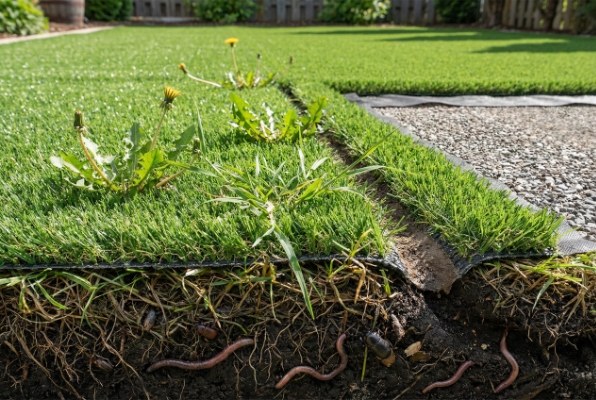
I often tell my customers: "Nature finds a way." Just because you cover the grass doesn’t mean the roots are dead immediately. Many tough weeds possess strong root systems. If you do not dig them out, they will try to grow toward the light. The only light comes from the drainage holes in the backing.
I have seen bamboo and heavy weeds pierce right through the backing of cheap installations. This damages the integrity of the turf loop structure. This is why our construction preparation demands that we clean and dispose of weeds completely.
Also, think about the food chain.
- Dead grass = Food for worms and beetles.
- Worms and beetles = Food for moles and rats.
If you leave the grass, you are setting a buffet table under your expensive carpet. Moles will tunnel through the soft, wet soil to eat the worms. Their tunnels create ridges and collapse the ground. A proper installation involves removing the soil and replacing it with crushed stone or limestone dust, which contains no food for bugs and is too hard for moles to dig through easily.
Weed and Pest Risks
- Weed Penetration: Damages the latex or PU backing.
- Visual Impact: Green weeds poking through fake grass look terrible.
- Structural Damage: Animal tunnels cause sinking.
- Hygiene: Increased insect activity on the play surface.
Does Installing Fake Grass Over Natural Grass Shorten Its Lifespan?
You want your investment to last 10 to 15 years. Cutting corners on installation steps can effectively cut that lifespan in half or more.
Absolutely. An unstable base puts uneven stress on the backing and seams of the turf. The excessive moisture can degrade the glues and materials faster, leading to wrinkles, tears, and a need for replacement much sooner than expected.
Artificial turf is tough, but it requires a stable foundation. When we splice the turf, we require the gap between joints to be less than 2mm, and we use adhesive tape to bond them firmly. This bonding relies on the turf laying flat.
If the ground underneath is shifting because the grass is rotting, the seams will pull apart. The glue we use is strong, but constant movement and excessive moisture from below will eventually weaken the bond. Once a seam opens, the entire system can fail.
Also, consider the wear patterns. If the ground is bumpy, the high spots take all the friction from feet (or sports equipment). The fibers on these high spots will wear out much faster than the rest. We forbid heavy objects from crushing the lawn for a long time, but an uneven rock or clump of soil underneath acts just like a heavy object pushing from the bottom.
Lifespan Factors Checklist
| Factor | Correct Installation | Over Natural Grass |
|---|---|---|
| Seam Strength | High (Supported) | Low (Constant movement) |
| Backing Integrity | Dry and Stable | Wet and Stressed |
| Fiber Wear | Even | Uneven (High spots bald first) |
| Estimated Life | 10-15 Years | 3-5 Years |
Do not waste your budget on quality turf only to ruin it with a bad foundation.
Conclusion
Installing fake grass directly over natural grass is a mistake. It causes uneven surfaces, drainage failure, and damage. Always remove the old grass to ensure your project succeeds.
-
Learn the best practices for ensuring a level surface to avoid future issues with your turf. ↩
_画板-1.png)