_画板-1.png)
Walking on scorching surfaces ruins summer fun. Are you worried your artificial lawn will burn your family’s feet? Let me explain exactly how hot it gets and how to fix it.
Yes, artificial grass gets hot in direct sunlight. It can reach temperatures between 120°F and 180°F, which is significantly hotter than natural grass. However, you can manage this heat by choosing the right infill, rinsing the turf with water, or providing shade.
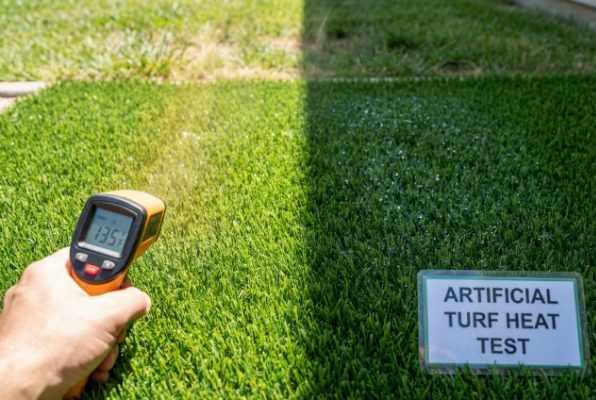
Many clients ask me about safety during the summer months. You might think synthetic turf is too hot to handle. But with the right knowledge, you can enjoy a cool lawn all year round. Let’s look at why this happens and what we can do.
What Factors Make Artificial Grass Hotter Than Natural Grass?
Natural grass stays cool, but synthetic turf can feel like a frying pan. Why does this material hold so much heat compared to the real thing?
Artificial grass consists of polyethylene or polypropylene fibers. These plastics absorb solar radiation rather than reflecting it. Unlike natural grass, synthetic turf does not undergo transpiration1, a natural process where plants release water to cool the surrounding air.
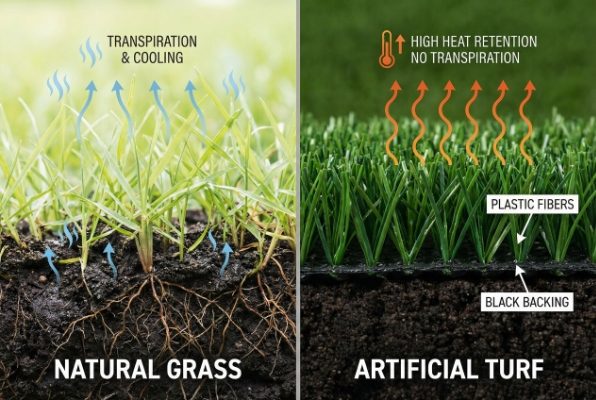
I have spent years in factories studying these materials. The primary reason for the heat is the material itself. Plastic derivatives like polyethylene (PE) and polypropylene (PP) are excellent at holding heat. When the sun hits them, they soak up that energy. They do not release it quickly.
Another factor is the color. Most people want a lush, dark green lawn. Dark colors absorb more light energy than light colors. We also use a black backing and coating to hold the turf together. This black layer sits at the bottom and acts like a heat sink. It traps thermal energy.
The biggest difference is biological. Natural grass is a living plant. It pulls water from the soil and releases mist through its leaves. This is called transpiration. It acts like an air conditioner for the ground. Artificial grass is dry. It cannot cool itself down naturally.
Here is a breakdown of the differences I see in the lab:
| Feature | Natural Grass | Artificial Grass |
|---|---|---|
| Material | Living plant matter (Cellulose) | Synthetic Plastic (PE, PP, PA) |
| Cooling Mechanism | Transpiration (Evaporation) | None (Passive heat absorption) |
| Color Base | Green (variable light reflection) | Green fibers with Black backing |
| Heat Retention | Low (dissipates quickly) | High (holds heat for hours) |
Density also plays a role. I often tell customers that a very dense turf looks great, but it traps more heat. Not enough air can circulate between the fibers to cool them down.
How Can You Keep Artificial Grass Cool in Hot Weather?
You have installed the turf, but now it is noon and too hot to walk on. Do not let the heat make your investment useless during the day.
The most effective method is rinsing the turf with water for a few minutes; this lowers the temperature immediately. You can also install shade sails, plant trees, or use specialized cooling infills2 like hydro-chill sand3 that mimics natural evaporation.
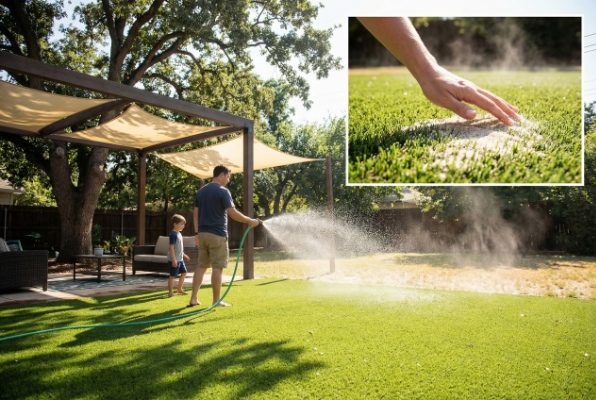
I have helped many clients in hot regions like the Middle East. They face extreme heat. The simplest solution is always water. You do not need to water it like real grass to keep it alive. You just need to hose it down for two minutes before you use it. The water evaporates. This mimics the transpiration of real grass. It can drop the surface temperature by 30 degrees or more instantly.
Another great method is creating shade. Direct UV radiation is the enemy here. If you block the sun, the plastic stays cool. You can plant tall trees around the perimeter. You can also use retractable awnings or shade sails. This protects the grass and your skin.
We also look at the "infill" material. This is the sand or rubber we brush between the blades. Old rubber infill (black crumb rubber4) gets very hot. I recommend using silica sand or special cooling infills. These are designed to hold moisture. When they get wet, they release cool air slowly over time, just like soil.
Here is a checklist for keeping your lawn cool:
- Hydration: Spray the lawn with a garden hose before your kids go out to play.
- Shade: Install a pergola or umbrella over the main seating area.
- Infill Choice: Avoid black rubber; ask your supplier for light-colored silica sand or TPE.
- Airflow: Do not block the wind. A breeze helps carry the heat away from the plastic surface.
What Is the Best Type of Artificial Grass for Heat Resistance?
Choosing the wrong product can lead to a lawn that is unusable in summer. You need to know which specific features reduce heat absorption before you buy.
Look for artificial grass labeled with "CoolPlus" or similar heat-reflective technology. Lighter colors absorb less heat than dark green. Also, W-shaped or S-shaped fibers dissipate heat better than flat fibers because they have less surface area exposed to direct sunlight.
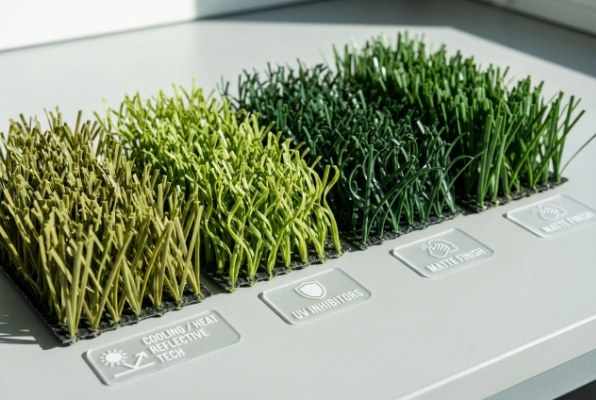
Technology in our industry has changed a lot. We now have fibers specifically engineered to reflect infrared light. When you shop, ask the supplier if the yarn has UV inhibitors or heat-reflective pigments. These additives stop the fiber from absorbing the full energy of the sun.
The shape of the blade is very important. I always check the cross-section of the yarn. Flat fibers look nice, but they act like solar panels. They have a wide surface area that faces the sun directly. This makes them get hot fast. Structured fibers are better. Shapes like "W", "S", or "C" are superior. These shapes have curves and angles. They deflect the light in different directions. They also allow more air to pass through the pile.
Color creates a big difference too. A deep forest green is beautiful. But a lighter "lime" or "olive" blend will stay cooler. It reflects more sunlight. I also recommend a "matte" finish. Shiny grass looks fake. It also tends to heat up faster. A matte finish looks more natural and handles light better.
Below shows how fiber shape affects heat:
| Fiber Shape | Surface Area to Sun | Heat Retention | Durability |
|---|---|---|---|
| Flat | High (Direct exposure) | High | Low |
| C-Shape | Medium | Medium | High |
| S-Shape | Low (Deflects light) | Low | High |
| W-Shape | Low (Best airflow) | Lowest | Very High |
When you request samples, put them in the sun. Wait for 20 minutes. Touch them. You will feel the difference yourself.
Is Artificial Grass Safe for Kids and Pets in High Temperatures?
Parents worry about burns on their children’s feet or dog’s paws. Safety is the top priority when installing a play area in a sunny backyard.
Yes, it is safe if you manage the temperature. High-quality turf is non-toxic and lead-free. However, surface temperatures can burn skin. Always test the grass with your hand before letting kids or pets play. Use water or shoes for protection.
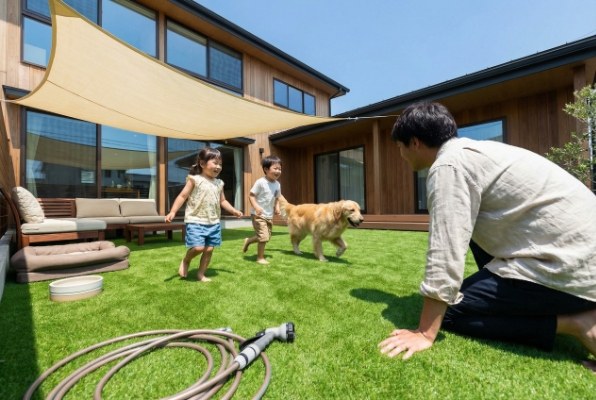
Safety is about more than just chemicals. At QH Grass, we ensure all materials are non-toxic. Cheap artificial grass can release smells when it gets hot. This is due to bad glue or low-quality plastic. High-quality turf will not release toxic fumes, even when it is 150°F.
But the heat itself is a physical danger. I have a simple rule. It is the "7-Second Rule." Place the back of your hand on the turf. If you cannot keep it there for 7 seconds, it is too hot for a dog’s paws or a child’s bare feet.
Dogs regulate heat through their paws and panting. If the ground is hot, they can overheat quickly. You must be careful. If the test fails, you must cool the grass down. Spray it with water. Or, make the kids wear sandals.
Here are the safety steps I follow:
- Quality First: Only buy turf with SGS or similar safety certifications. This ensures no lead or heavy metals will leach out when hot.
- The Touch Test: Always feel the grass before use during peak sun hours (11 AM to 3 PM).
- Create Zones: Keep a shaded area available at all times. Pets will naturally go there if the main lawn is too hot.
Do not worry about the grass melting. High-quality PE melts at around 260°F. The sun will not melt your grass. But reflected light from energy-efficient windows can. That is a different issue, but for general safety, heat burns to the skin are your main concern.
Conclusion
Artificial grass gets hot, but smart choices make it cool. Select the right fiber, use water for cooling, and ensure safety. You can enjoy a perfect, green lawn safely.
-
Learn about the cooling process of transpiration in plants and its significance in maintaining a cooler environment. ↩
-
Explore this link to understand how cooling infills can enhance your artificial grass experience and keep it comfortable. ↩
-
Learn about hydro-chill sand and its innovative cooling properties for artificial grass, making your lawn more enjoyable. ↩
-
Find out why black crumb rubber can be detrimental to your artificial grass and what alternatives are better. ↩
_画板-1.png)