_画板-1.png)
You buy artificial turf to save time and make your project look perfect. But seeing green weeds poke through the plastic grass is a nightmare for your clients and your reputation. I will explain why this happens and how to stop it so your business stays successful.
Yes, natural grass and weeds can grow through artificial turf if the installation is poor. This usually happens when installers skip the weed barrier fabric or fail to remove the original roots completely. Proper ground preparation and a geotextile membrane are essential to prevent this unsightly growth.
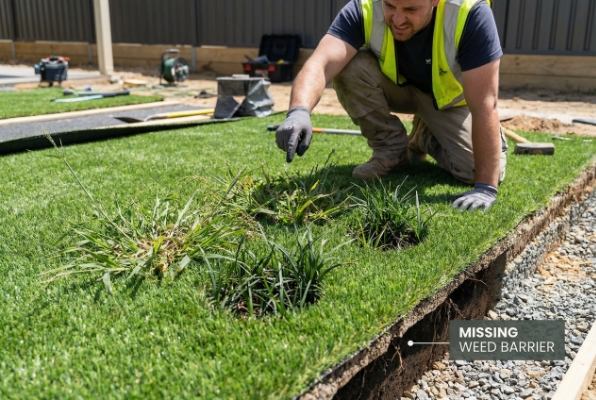
Many of my customers ask me if they can just lay the turf on top of the soil to save money. I always tell them no because the result will be a mess within a few months. You need to read the following details to understand the risks and avoid complaints from your buyers later.
What Causes Grass or Weeds to Appear on Synthetic Turf—Edge Gaps, Seams, or Drainage Issues?
Weeds are very strong and they will find any weakness in your installation. If you see them appearing on a finished project, it means the system failed somewhere. You must find the source immediately to protect the investment.
The main cause is usually organic matter left under the turf or seeds landing on top. Weeds grow through weak points like poorly glued seams, outer edges that are not secured, or drainage holes. Without a solid base and a strong barrier, nature tries to take the land back.
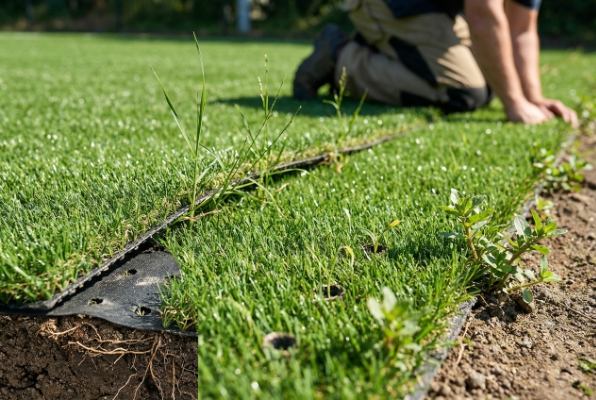
In my experience as an engineer at QH Grass, I have inspected many "failed" turf projects. The customer often blames the quality of the grass, but the grass is rarely the problem. The problem is almost always what lies underneath. To solve this, we need to think critically about where the weeds come from. They come from two directions: below the ground and above the air.
If the installer lays turf directly on soil, the old grass roots are still alive. They will seek light and grow through the drainage holes1 inherent in the turf backing. Also, some weeds are powerful enough to push through loose seams.
However, sometimes the installation is perfect, but weeds still appear. This happens because debris, dust, and bird droppings fall onto the turf. This creates a layer of "soil" in the infill. Seeds blow in the wind, land in this layer, and start to grow. This is why understanding the root cause is vital.
Here is a breakdown of the weak points in a standard installation:
| Weak Point | Description | Why Weeds Grow Here |
|---|---|---|
| Drainage Holes | Small holes in the backing to let water out. | Roots from below find these holes to reach sunlight. |
| The Seams | The line where two rolls of turf join together. | If the glue line is not continuous, weeds push through the gap. |
| Perimeter Edges | The outer border of the installation area. | Grass from the neighbor’s yard or outside the area creeps in. |
| Infill Layer | The sand or rubber granules on top. | trapped dust creating a "compost" for airborne seeds. |
You need to identify if the weed is rooted in the sub-base (deep root) or just sitting in the sand infill (shallow root). Deep roots mean the installation failed. Shallow roots just mean the turf needs cleaning.
Which Installation Practices and Maintenance Steps Keep Weeds from Penetrating Artificial Grass Long-Term?
Fixing a weed problem after installation consumes all your profit margin and hurts your brand. It is much better and cheaper to prevent them before you lay a single roll. Here is the correct process you must follow.
The best prevention is a multi-layer approach: excavate the topsoil, compact the base, and install a high-quality weed barrier fabric. For maintenance, apply a water-based weed killer annually and brush the turf regularly to remove airborne seeds and organic debris that could fuel surface growth.
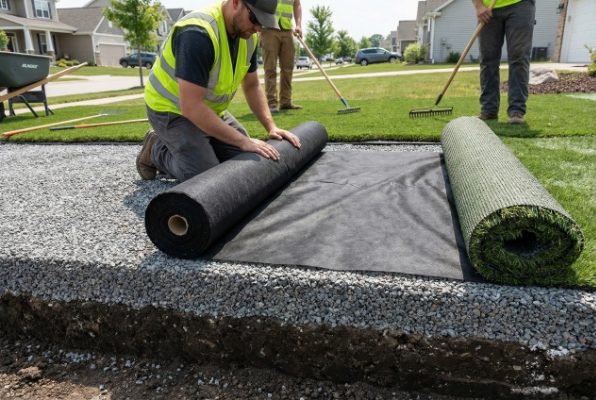
At QH Grass, our mission is to help you maintain stable quality. I have helped many distributors set up their installation standards. The most critical step is the Weed Barrier (Geotextile Membrane)2. This is a special fabric that lets water drain through but stops anything green from growing up. Never skip this layer.
I recently helped a customer in Brazil who had issues with tropical weeds lifting the turf. We adjusted his installation process to include a deeper aggregate base. Weeds cannot grow through 3 inches of compacted stone because there are no nutrients there. The combination of a hard base and a fabric barrier is the only way to guarantee a weed-free zone.
For maintenance, you must educate your end-users. Even with a barrier, surface weeds can happen. They are not a defect of the product; they are a result of the environment.
Here is the recommended workflow to ensure long-term success:
| Step | Action | Benefit |
|---|---|---|
| 1. Excavation | Remove 3-4 inches of natural grass and soil. | Removes the primary root system and organic food source. |
| 2. Base Work | Fill with crushed stone and compact it tightly. | Creates a surface too hard for roots to penetrate easily. |
| 3. Weed Barrier | Install a permeable geotextile fabric. | The final shield that physically blocks growth from below. |
| 4. Seaming | Use high-quality plenty of glue and strong tape. | Seals the gaps so nothing can squeeze between rolls. |
| 5. Leaf Blowing | Remove leaves and dirt regularly. | Prevents "soil" from forming on top of the turf fibers. |
By following these strict steps, you ensure the quality of the project matches the quality of the turf we supply. This leads to happy customers and fewer warranty claims.
Conclusion
Natural grass can grow through artificial turf if the base preparation is weak. You must remove old soil, install a strong weed barrier, and maintain the surface to help your customers achieve a clean, lasting result.
_画板-1.png)