_画板-1.png)
Winter brings heavy snow to your clients’ gardens. You worry about complaints regarding ruined artificial grass. Do cold temperatures and ice actually destroy the synthetic fibers?
Snow generally does not damage high-quality artificial turf. The materials are cold-resistant and withstand freezing temperatures. While heavy snow can flatten fibers, they bounce back after melting. You should avoid metal shovels and harsh chemicals to keep the backing and blades safe.
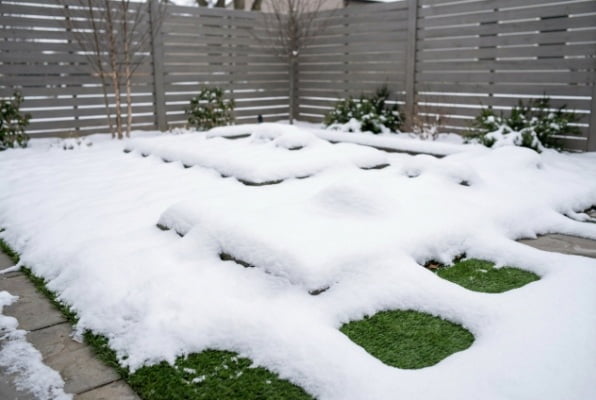
I see many customers panic when the first snow falls. They call me asking if their inventory or installed projects are safe. The truth is simple. Your grass is tougher than you think. Let us look at how to handle winter maintenance correctly.
How do you remove snow from artificial turf?
Your clients want a clear path on their lawn immediately. They might grab the wrong tools. You need to tell them the safest removal method to prevent damage.
The best method is patience. Let the snow melt and drain freely through the perforations. If you must remove it, use a plastic shovel or a stiff broom. Never use metal tools that can tear the backing or cut the turf fibers.
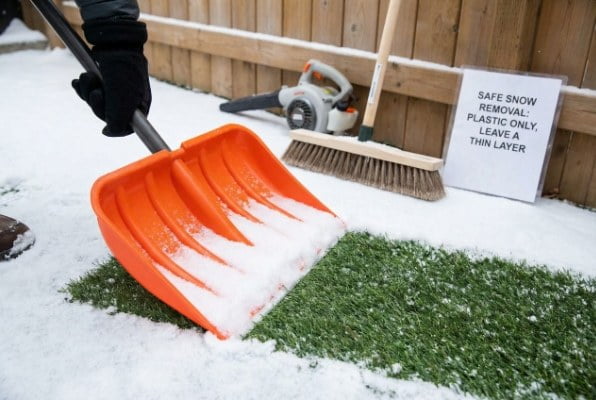
I have worked in this industry for a long time. I tell my customers that doing nothing is usually best. The drainage holes in QH Grass products handle melting snow easily. But sometimes, a client has a party or needs a path for a pet. They cannot wait for nature.
You can follow this specific process for safe removal:
- Use a Plastic Shovel: Metal is dangerous for the turf. Push the top layer of snow off gently.
- Leave a Thin Layer: Do not scrape the ground. Leave about one inch of snow near the fibers. This prevents the shovel blade from hitting the turf directly.
- Use a Broom: Sweep the remaining thin layer with a soft-bristled broom.
- Blowers for Light Snow: If the snow is dry and powdery, a leaf blower works well. It does not touch the fibers hard.
If you rush this process, you create problems. I once saw a landscaper use a snowblower with a low skid shoe on a project. The machine ripped the seams apart. You must recommend gentle methods to your end-users. This saves you from handling warranty claims later. Safe removal protects your profit and your reputation.
What destroys artificial grass?
You buy quality turf to avoid replacement costs. But winter mistakes can ruin that investment. You must know what substances actually cause permanent damage to the system.
Rock salt and metal tools are the biggest enemies. Salt chemicals degrade the latex backing and clog drainage. Metal edges cut fibers. Other threats include strong chemical de-icers which cause color fading and brittle fibers over time.
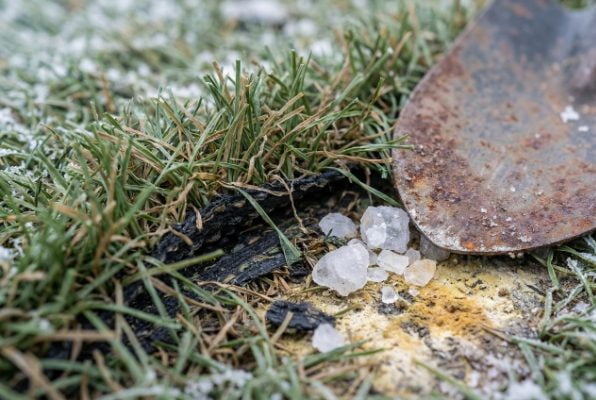
Snow itself is just frozen water. It is harmless. The damage comes from how we treat the snow. When I managed the technical department, we tested raw materials against cold. The PE (polyethylene) fibers are very strong. However, they change slightly in extreme cold.
Here is a breakdown of the risks:
| Hazard | Impact on Turf | Prevention |
|---|---|---|
| Rock Salt1 | The chemicals eat away at the latex backing. The salt crystals can also clog drainage holes. | Avoid salt. Use cat litter for traction if necessary. |
| Metal Shovels2 | Sharp edges cut the grass blades. They can also snag and tear the backing cloth. | Stick to plastic tools only. |
| Chemical De-icers | Harsh chemicals cause color fading. They can break down the UV protection in the yarn. | Allow natural melting. |
| Extreme Cold (-20°C) | Fibers become temporarily hard and brittle. Heavy foot traffic can snap the blades. | Avoid walking on the turf until it warms up slightly. |
I always warn my clients about these specific dangers. One wrong chemical application causes years of regret. The backing is the foundation. If salt eats the glue, the tufts fall out. The grass looks patchy. You must keep chemicals away from the lawn. Educate your purchasing team and your customers on these constraints.
How to protect turf from snow?
Prevention is always cheaper than repair. You want to offer your clients the best advice. Is covering the entire lawn actually worth the effort and money?
You can use a waterproof tarp to cover the area. This makes removing snow very easy. However, tarps are expensive and look unattractive during long winters. Regular brushing after the thaw is usually sufficient maintenance for most installations.
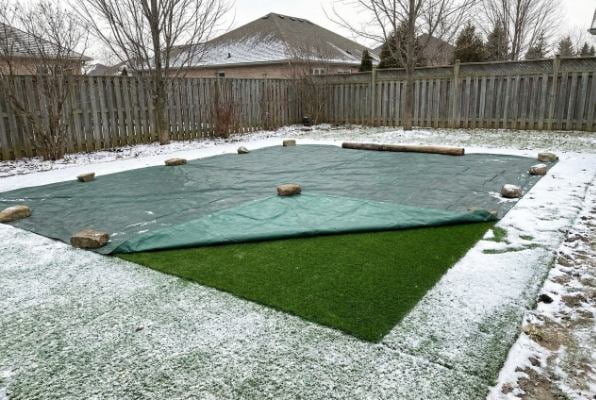
Many people ask me about tarps. Yes, a tarp works effectively. It acts as a shield. You pull the tarp off, and the snow goes with it. The grass underneath stays dry and clean. This is good for small areas or putting greens.
However, you must consider the trade-offs:
- Aesthetics: A blue or grey tarp looks ugly. It hides the green look that people buy artificial turf for. Your garden looks like a construction site.
- Cost: Light tarps blow away. You need heavy-duty weighted tarps. This adds significant cost to the project.
- Labor: Placing and removing a heavy tarp with snow on it is hard work.
My honest advice is simple maintenance. Accept the snow. When the snow melts, the fibers will look flat. This is normal. Heavy snow compresses the yarn. But our QH Grass yarn has memory.
Take a soft broom or a power brush in the spring. Brush the fibers against the grain. They stand up again. The sun warms the fibers, and they return to their original shape. The "protection" is built into the quality of the material itself. You do not need expensive covers. You just need a little patience and a broom.
Conclusion
Snow does not damage quality turf. Avoid metal tools and salt. Let snow melt naturally, then brush the fibers. This keeps the lawn green and durable for years.
_画板-1.png)