_画板-1.png)
Are you struggling to stand out in a crowded turf market? Selling generic grass kills your profit margins fast. Private labeling allows you to run your own game.
Private labeling (OEM) allows you to customize artificial grass specifications, packaging, and backing with your brand logo. This differentiates your business from competitors, controls pricing power, and builds customer loyalty by offering unique products tailored specifically to your local market needs, such as customized indoor or luxury turf.
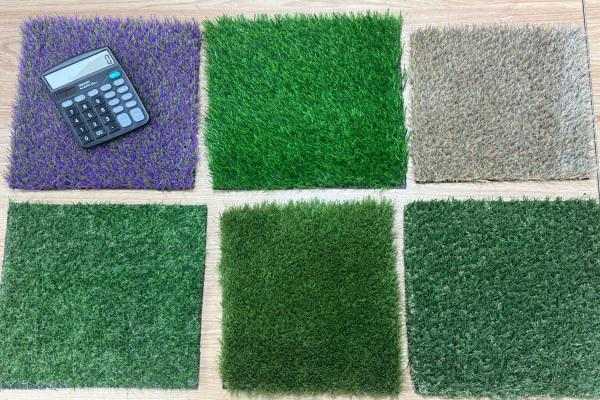
Most importers just buy what everyone else buys. That feels safe, but the profits are low. I have seen sales explode when my clients decide to make their own brand. This approach changes your business from a trader to a brand owner. Let us look at how you can do this effectively.
Why should you choose OEM for your artificial grass business?
Do you feel tired of fighting price wars with your local competitors? Selling the exact same products makes price the only factor for buyers. You need a change.
OEM means you create a unique product line. You control the pile height, density, and color. This exclusivity protects your margins because customers cannot compare your specific "brand" directly with others. It creates higher value and long-term brand equity.
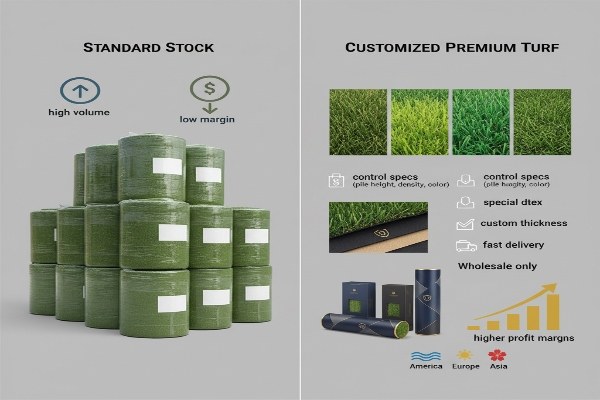
Based on my years of experience exporting artificial turf worldwide, I see a clear pattern in successful businesses. A smart importer or wholesaler typically orders stocks in a specific ratio. They keep 80% to 90% of their stock as standard best-selling models. These are for the general local market. They have lower profit margins, but they guarantee the bulk of your sales volume.
The magic happens with the other 10% to 20%. This portion is for OEM custom-made designs. These are your high-end, luxury, or specifically branded products. These models might have lower sales volumes, but they generate substantial profits per roll.
When you do OEM, you stop competing on the price of a standard 30mm grass. Instead, you sell a "Premium Landscape Solution" that no one else has. I have seen clients modify a standard grass by just adding 10% more density and giving it a fancy name. Their customers loved it. You can also go the other way. Some clients target budget markets. They order indoor artificial turf with low density and no UV protection. It is cheap, it fits a specific need, and it brings in significant profit because it solves a specific problem.
| Strategy type | Standard Stock | OEM Private Label |
|---|---|---|
| Volume | High (80-90%) | Low/Medium (10-20%) |
| Competition | Very High | Low (Unique Product) |
| Margin | Low | High |
| Control | None (Factory Standard) | Full (Your Spec) |
How can you find and evaluate the perfect OEM partner?
Are you afraid of choosing a factory that might steal your design? Trust issues can ruin an OEM project before it even starts. You need safety and reliability.
The perfect partner must have R&D capabilities, not just machines. Look for factories with transparent quality control systems1, NDA (Non-Disclosure Agreement2) willingness, and a history of exporting to your specific region. They must understand your technical specs, not just say "yes" to everything.
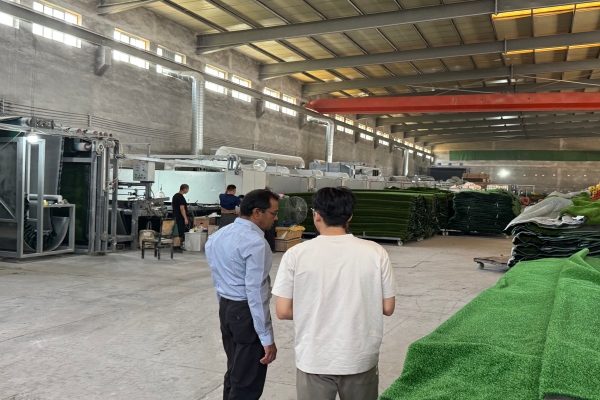
I used to work in the technical department of an artificial turf workshop. I know that not all factories are the same. When you look for an OEM partner, you must look beyond the price list. You need a partner who understands the engineering behind the grass.
First, test their communication. Do they understand what "Dtex" and "stitch rate" mean for your specific market? If you ask for a specific backing color to match your brand, do they say it is impossible? A good factory like QH Grass will try to find a solution.
Second, look at their quality control for OEM products. Standard products are easy. OEM products require strict monitoring. You do not want your branded grass to fail after one year. I always advise my clients to visit the factory or hire a third party for the first inspection.
Third, trust is key. Strict inspections are good, but a relationship is better. You need a supplier who will tell you if your custom specification will cause production problems. Sometimes, a client asks for a combination of yarn and density that the machine cannot handle well. A bad supplier says yes and delivers bad goods. A good supplier explains the risk and suggests a better alternative.
Checklist for Evaluating an OEM Partner:
- Experience: Have they done private labeling for your country?
- Confidentiality: Will they sign a contract to protect your design?
- Flexibility: Can they customized backing (Latex/PU) and wrap?
- Honesty: Do they point out potential technical risks?
How do you go about customizing your artificial grass product line?
Do you know exactly what your local customers really need right now? Guessing the specs results in dead stock sitting in your warehouse for months. Precision is key.
Customization involves selecting yarn shape (C-shape, W-shape), pile height (20mm to 60mm), and density. You must align these specs with your target application, whether it is high-traffic sports fields or decorative landscape. Even the backing material can be branded.
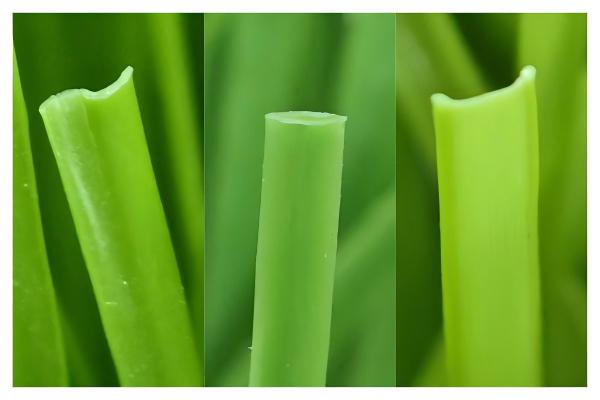
Customizing your product line is the most fun part of the business. But you must be strategic. You cannot just pick specs at random. You must analyze your local climate and user habits.
For example, if you are in a very hot area like Saudi Arabia or Arizona, you need a yarn shape that dissipates heat. A flat yarn will get too hot. You should choose a "C-shape" or "W-shape" yarn. You might also want a lighter color green, as dark green absorbs more heat.
If you target pet owners, you need a backing that drains water fast. You can ask your factory to punch more drainage holes or use a fully permeable backing. This becomes your "Pet Special3" product.
I mentioned earlier that some clients order indoor turf without UV protection. This is a perfect example of customization. They know the grass will never see the sun. So, they save money on UV stabilizers. They lower the density because nobody walks on it heavily; it is just for decoration. They get a product exactly for their need at the best price. As long as you identify the need, we can produce it.
Key Customization Parameters:
- Pile Height: 20mm-30mm for budget/traffic; 40mm-50mm for luxury.
- Yarn Shape: Flat (Look), C/S/W Shape (Resilience and Heat).
- Dtex: Thickness of the grass blade. Higher is more durable.
- Stitch Rate: Density. More stitches mean a softer, fuller feel.
- Backing: Black Latex (Standard), Green Latex (Branding), PU (High End).
How can you build your brand identity and go-to-market strategy?
Is your great product hiding behind a boring plain wrapper? Great grass without a brand story is just a commodity item. You must sell the dream.
Your strategy should focus on solving a specific local problem, like water conservation or pet durability. Use your OEM advantages in your marketing materials. Highlight the unique specs you created. Support your distributors with branded sample books and technical sheets.
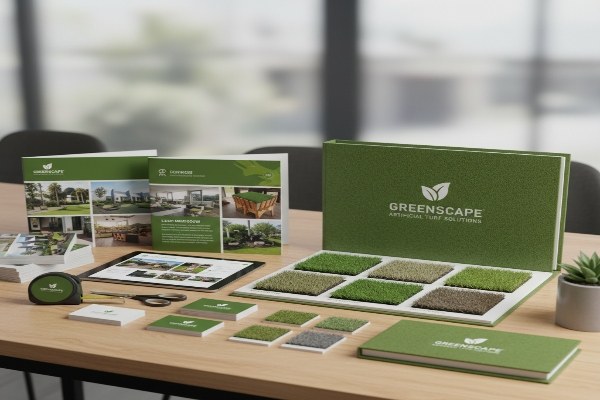
Building a brand is more than just putting a logo on the invoice. It is about the physical presentation of your product. When I helped customers grow their business, the ones who succeeded paid attention to details.
Start with the packaging. Standard rolls come in white or black bags. You can ask for yellow, blue, or printed bags with your logo. When the truck arrives at the job site, neighbors see your brand name on the packaging. That is free advertising.
Next, create your own sample book. Do not use the generic book from the factory. Create a book that explains why your grass is better. Use names that sound local and premium. Instead of "Model QJ40", call it "Royal Garden 40".
Your go-to-market strategy should focus on the 20% OEM products we discussed. Use them to open doors. When you bid for a project, show the standard grass as Option A and your Premium OEM grass as Option B. Explain that Option B is custom-made for this climate. Even if they buy Option A, your company looks more professional.
Go-to-Market Tools:
- Branded Cap/Plastic: Printed logo on the roll packaging.
- Backing Print: Your brand name printed every meter on the back of the turf.
- Warranty Card: A custom document promising quality from your brand.
- Sample Box: A high-quality box for architects and designers.
Conclusion
Private labeling is the best way to secure high profits and customer loyalty. Balance your inventory with 80% standard best-sellers and 20% unique OEM products to maximize your success.
-
Exploring quality control systems will provide insights into how to ensure product reliability and consistency in manufacturing. ↩
-
Learning about NDAs can help you understand how to protect your intellectual property when working with manufacturers. ↩
-
Discover essential features of pet-friendly artificial grass to ensure comfort and safety for your furry friends. ↩
_画板-1.png)