_画板-1.png)
Clients often complain that artificial grass looks fake and plastic, which drives down the perceived value of their property.
Realistic turf fibers answer this problem by using multi-color yarns and advanced shapes to mimic natural grass. By mixing field green, olive, and thatch colors with varied textures like monofilament and crimped yarns, they eliminate the "plastic look." This adds visual depth, ensures softness, and increases property appeal for commercial and residential sites.
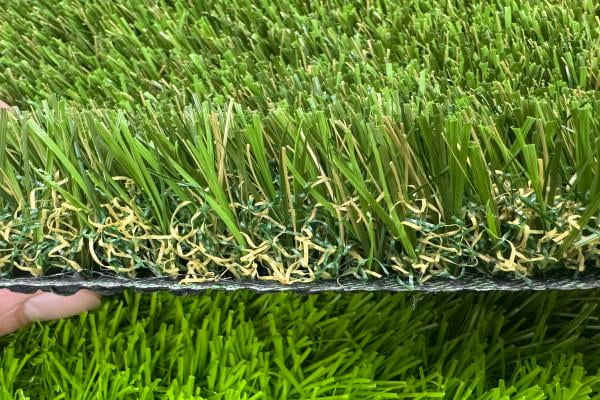
Many buyers ask me why some grass looks so real while others look like a flat green carpet. Let’s look closer at the technology behind this.
What Is the Science Behind Multi-Color Turf Yarn?
Do you struggle to explain to your customers why premium artificial turf costs a bit more than basic green plastic mats?
The science of multi-color yarn1 involves blending different threads into one single cluster. It mixes straight monofilaments with curly fibers in shades like field green, olive, and thatch. This combination prevents the "color block" effect and leads to a natural, 3D appearance that handles light reflection just like real grass.
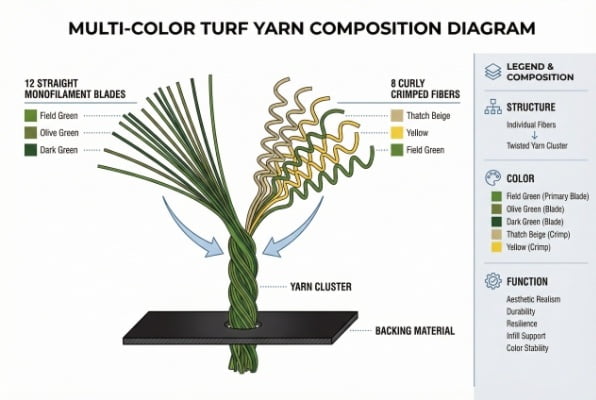
When I explain this to my clients, I like to use the analogy of a rope. Think of a single tuition of turf as a rope made of many smaller threads. In high-quality realistic turf, we don’t just use one green thread.
For example, a single cluster of mixed yarn might have 20 fibers in total. This could be 12 straight monofilaments and 8 curly, crimped fibers. Even inside those 12 straight fibers, we mix the colors. We might use 4 field green, 4 olive green, and 4 that look like dead grass or thatch. Then, the curly fibers might be a mix of dark green and yellow.
When these shades sit next to each other, they interact with the sun. This creates layers of color. It stops the grass from looking like a fake, solid block of green. It also softens the "shine" that you often see on cheap plastic grass.
From a factory view, this is not easy to do. We have to control the pigments very strictly. We also watch the extrusion temperature and how the yarn cools down. This ensures the colors stay true and do not fade under UV light. If you mix this with good UV stabilizers2, the grass keeps its real look for years.
| Component | Quantity Example | Color Example | Function |
|---|---|---|---|
| Monofilament | 12 strands | Field Green, Olive, Thatch | Provides structure and the main grass blade look. |
| Crimped Yarn | 8 strands | Dark Green, Yellow | Provides volume, support, and mimics the root zone. |
| Result | 1 cluster | Multi-tonal | Creates a 3D, natural visual effect. |
How Do These Turf Fiber Innovations Benefit Landscaping Projects?
Landscaping maintenance costs are rising every year, eating into your project’s profit margins every single month.
Innovative turf fibers offer a turnkey solution that rivals the look of high-quality natural grass. They provide a lush appearance year-round without seasonal browning. This visual authenticity boosts property interest for tenants, while UV resistance ensures the grass stays green, significantly lowering long-term replacement and maintenance expenses compared to real grass.
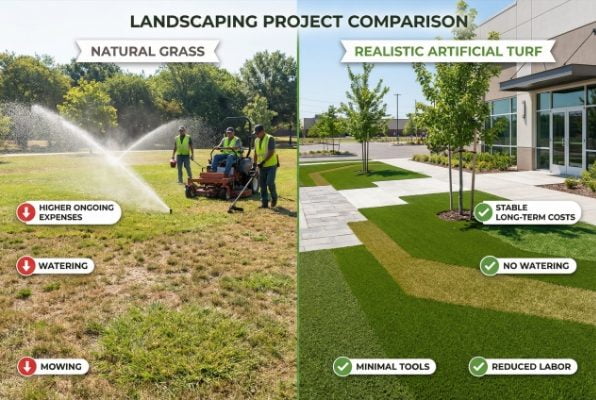
For landscape architects and property owners, the benefits of realistic fibers go beyond just looks. It is about money and time. When we look at the data, the practical advantages are huge.
Multi-colored artificial turf gives you a ground cover that looks perfect but needs very little work. You do not have the seasonal changes of natural grass. It does not turn brown in the winter or die in the summer heat. This makes a property look better to buyers or tenants. If a building looks well-kept, its value goes up.
I have seen many comparisons of costs. Yes, buying artificial turf costs more at the start. But, over a few years, you save a lot of money. You do not need mowers, water, fertilizer, or a crew of workers every week.
Data shows that for community venues, artificial turf systems cost between $23,250 and $127,000 to maintain over the medium term. Natural grass costs between $42,800 and $205,500 for the same period. That is a big difference.
Because these fibers are made to resist fading from the sun, you do not have to replace them often. This promotes better life-cycle costs3. More developers use this now because they can predict their costs better.
| Cost Factor | Natural Grass | Realistic Artificial Turf | Benefit |
|---|---|---|---|
| Watering | High | None | Saves utilities. |
| Equipment | Mowers, Aerators | Brushes only | Low capital output. |
| Labor | Weekly | Monthly/Quarterly | Reduces payroll/contract fees. |
| Aesthetics | Seasonal variation | Consistent | High asset value. |
Where Are Realistic Turf Fibers Most Effectively Applied?
Are you unsure where to recommend artificial turf installation to get the best return on investment for your client?
Realistic fibers work best in high-visibility areas like luxury residential lawns, hotel courtyards, and rooftop gardens. They are also perfect for urban parks and playgrounds where safety and looks matter. Event planners also use them for temporary, high-end branding displays that handle heavy foot traffic easily.
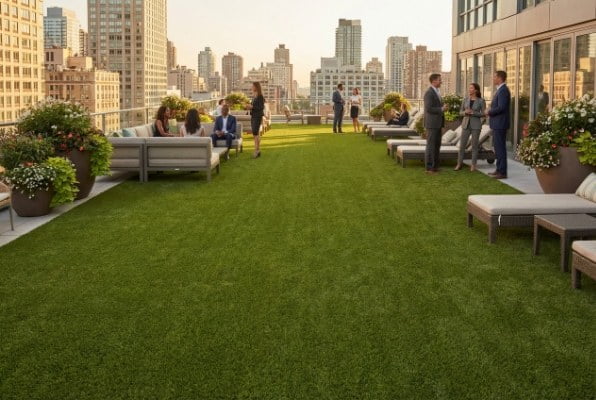
Based on my experience in sales, not every place needs the most expensive, realistic grass. But some places absolutely do.
Luxury residential projects are the top spot. Homeowners here want a perfect lawn that looks like a golf course but they do not want to work on it. The visual quality of the multi-coyor yarn fits perfectly here.
Commercial rooftops and mixed-use courtyards are also huge markets. Real grass is heavy when wet and hard to grow on a roof. Realistic artificial turf is light and looks great from the office windows above. Hotels and resorts use it near pools because it does not turn into mud.
I also see a lot of demand in event design. Planners need to make a space look high-end very quickly. They can install custom blends of this turf for a trade show or a wedding. It creates a strong brand image. Because the fibers are strong, thousands of people can walk on it, and it still looks good. Then, they can remove it easily.
For urban parks, it solves the problem of overuse. Natural grass dies if too many people walk on it. Realistic fibers stay green and offer a soft, safe place for kids to play.
| Application | Why Use Realistic Fibers? | Key Benefit |
|---|---|---|
| Luxury Homes | Owners demand perfection without work. | High visual appeal. |
| Rooftops | Natural grass is too heavy and messy. | Lightweight & Clean. |
| Hotels/Resorts | Needs to look good 24/7 for guests. | Low maintenance. |
| Events | Branding needs consistent colors. | Durable under traffic. |
Which Turf Fiber Features Should You Prioritize for Maximum Realism and Performance?
Choosing the wrong fiber shape can lead to angry customer calls about flatness or rough textures later on.
Prioritize a mix of monofilament and curled fibers for the best balance of looks and wear. Diamond and flat shapes offer softness for children’s areas. U, C, M, and W shapes provide resilience for general use. For high-traffic zones, choose wavy or S-shaped fibers that stay upright and resist matting.
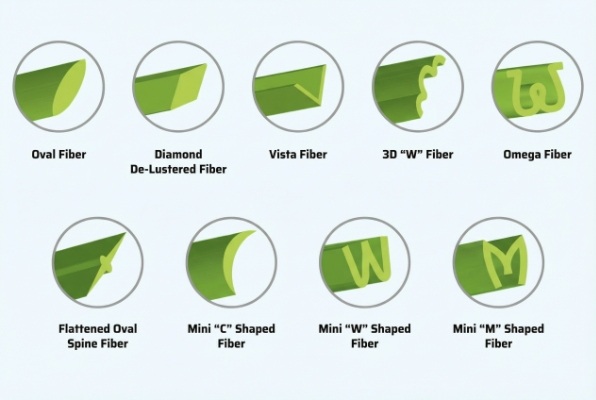
When you look at the specs, the shape of the fiber is just as important as the color. You need to pick the right shape for how the customer will use the grass.
If you want the best balance of looking real and lasting a long time, go for a mix of Monofilament and Curled fibers4. This is the "gold standard" for most landscaping.
However, if specific needs arise, you must look at the shape of the blade cross-section.
If the area is for a kindergarten or near a swimming pool, people will preserve bare feet. Here, you should choose Diamond-shaped or Flat monofilaments. They feel very soft. But, be careful, they might flatten faster if you drive a car on them.
For most business or landscape jobs, like a hotel lawn, I recommend U-shaped, C-shaped, M-shaped, or W-shaped fibers. These shapes act like a spring. When you step on them, they bounce back. They have a "medium" softness.
Finally, for very busy areas, like a public walkway or a pet area, use Wavy or S-shaped monofilaments. These are stiffer. They feel a bit rougher to the touch, but they stand up very well. They do not mat down easily.
| Fiber Shape | Feel | Durability | Best Application |
|---|---|---|---|
| Diamond / Flat | Very Soft | Low to Medium | Kids areas, Poolside (Bare feet). |
| U / C / M / W Shapes | Medium Soft | High | General Landscape, Commercial. |
| Wavy / S Shape | Firm / Rough | Very High | High traffic, Public paths. |
Conclusion
Realistic turf uses multi-color technology and specific fiber shapes to lower costs and boost appeal. It is a smart investment that helps your clients achieve better aesthetics and higher profits.
-
Explore this link to understand how multi-color yarn enhances the realism of artificial turf, making it a premium choice. ↩
-
Learn about UV stabilizers and their role in maintaining the color and longevity of artificial turf, ensuring it looks great for years. ↩
-
Understand the long-term savings and value of investing in artificial turf for your property. ↩
-
Explore the advantages of Monofilament and Curled fibers for achieving a realistic and durable lawn. ↩
_画板-1.png)