_画板-1.png)
Is there anything worse than walking out onto your beautiful green patio only to be hit by a nasty smell? It changes your relaxing oasis into a no-go zone instantly. You need a fast, safe way to fix this common issue without damaging your investment.
To make artificial grass smell good, use an enzyme-based cleaner or a mixture of equal parts white vinegar and water. These solutions break down the bacteria causing the odor rather than just masking it. Never use oil-based perfumes, as they damage the turf fibers. Regular rinsing prevents buildup.
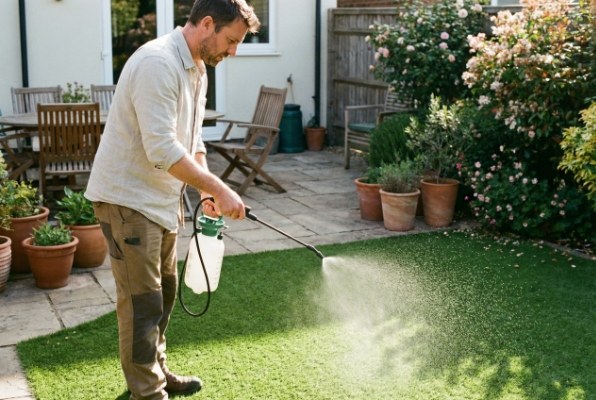
Let’s look at exactly what products are safe to use and what will accidentally ruin your investment if you are not careful.
What can you put on artificial grass to make it smell nice?
Choosing the wrong cleaning product can turn a smelly lawn into a permanently damaged one. Many owners make the mistake of grabbing the nearest air freshener, which leads to sticky residues and discoloration. Here is what you should actually use to solve the problem safely.
You should put eco-friendly enzyme cleaners1 or a homemade 50/50 vinegar-water solution2 on artificial grass. These are safe for the synthetic fibers and backing. Avoid bleach, harsh chemicals3, or oil-based perfumes, as they can degrade the material and harm pets.
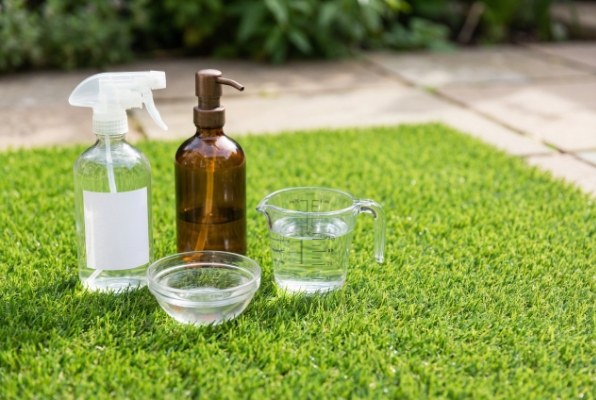
I have spent years in this industry, first in the technical workshop and now helping business owners like you sell more turf. One specific issue I see often is people trying to treat synthetic grass like a living room carpet. This is a huge mistake. Based on my experience engineering these fibers, I strongly advise against spraying perfume on artificial turf.
Perfumes and common household sprays usually contain oils, alcohol, and harsh chemicals. Synthetic fibers, like the ones we use at QH Grass, are durable, but they react poorly to these substances. The oils act like a magnet for dirt. They coat the grass blades, making them sticky. Over time, this traps more dust and bacteria, which actually makes the smell worse later on. Also, alcohol can dry out the polyethylene, causing the beautiful green color to fade or the fibers to become brittle and break.
Instead, you need to use science. Odors usually come from organic matter, like pet urine, breaking down. You need something that neutralizes the ammonia4, not something that covers it with a flower scent.
Here is a simple breakdown of what to use versus what to avoid:
| Product Type | Status | Why? |
|---|---|---|
| Enzyme Cleaners | Highly Recommended | They contain bacteria that "eat" the waste causing the smell. Safe for pets and backing. |
| White Vinegar & Water | Recommended | Natural disinfectant. It neutralizes ammonia smells chemically without residue. |
| Essential Oils | Avoid | Oils trap dirt and can discolor the grass blades. |
| Bleach | Avoid | Harmful to the environment, dangerous for pets, and will strip the color from your turf. |
| Floral Air Fresheners | Avoid | Masks odor temporarily but leaves chemical buildup5 that damages drainage. |
At QH Grass, our products are designed to be environmentally friendly and free from heavy metals. Using natural cleaners keeps them that way. If you are supplying turf to families with pets, educating them on this table will build their trust in your expertise. It shows you care about the product long after the sale is made.
How do you deodorize fake grass?
Pet waste and trapped moisture can create stubborn smells that a simple rain shower won’t wash away. If you ignore this, the smell gets burned into the backing, making it nearly impossible to remove later. You need a routine that attacks the source of the odor.
To deodorize fake grass effectively, first remove any solid waste immediately. Thoroughly rinse the area with water, then apply your vinegar solution6 or enzyme cleaner7. Allow it to sit for ten minutes before rinsing again to ensure deep penetration into the turf backing.
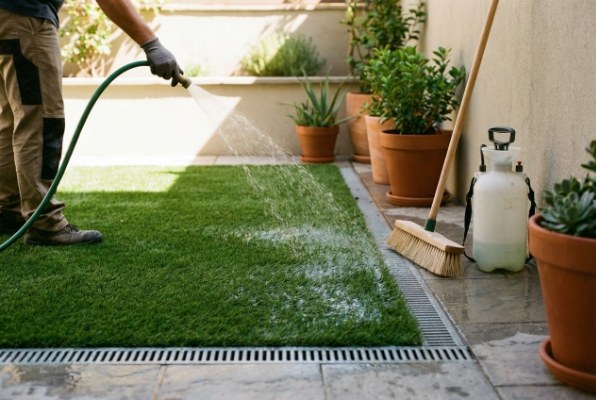
Deodorizing is not just about spraying a liquid; it is about the process. I often tell my clients that the longevity of the turf depends 30% on the product quality and 70% on how it is treated. Even though our turf has excellent drainage systems8, you must help the system work.
Here is the step-by-step method I recommend for deep deodorizing:
- Clear the Surface: Before you wet anything, remove solid waste, leaves, and debris. Our maintenance guide strictly forbids leaving sticky items on the site, and the same logic applies here. If you wet organic waste, it breaks down faster and smells worse.
- The Initial Rinse: Hose down the area. You want to push any loose urine or small particles through the drainage holes in the backing.
- Apply the Solution: Use a pump sprayer to apply your vinegar mixture (equal parts water and vinegar) or the enzyme cleaner. Do not just mist the top. You need to soak it enough so it reaches the base where the smell lives.
- Wait: This is the step most people skip. Let the solution sit for 10 to 15 minutes. The biological agents need time to break down the uric acid crystals.
- Scrub Gently: If the smell is bad, use a soft-bristled broom to work the solution into the fibers. Do not use metal rakes or stiff brushes that could pull out the yarn.
- Final Flush: Rinse everything away with plenty of water.
The goal is to prevent odor buildup. Most of the time, the smell comes from pet waste that has dried into the infill or backing. Regular cleaning is the most effective way to stop this. If your customers are in hot climates, like my friends in the UAE or Mexico, the heat will bake these smells into the plastic if they are not rinsed weekly.
Also, remember that quality matters. A cheap turf with a bad backing will trap odors more than a high-quality one. At QH Grass, we offer custom backing materials and drainage systems that allow liquids to flow through quickly, which is the first line of defense against bad smells. When you buy from us, you get a product that stays fresher longer because it drains better. Using the right cleaning method on a high-quality product is the secret to a lawn that smells as good as it looks.
Conclusion
Making your artificial grass smell fresh is simple if you avoid harsh chemicals. Use a vinegar mix or enzyme cleaner to neutralize odors safely, and rinse the turf regularly to prevent buildup.
-
Explore how eco-friendly enzyme cleaners can effectively eliminate odors without harming your artificial grass. ↩
-
Learn the simple steps to create a safe and effective cleaning solution for your synthetic lawn. ↩
-
Understand why avoiding harsh chemicals is crucial for maintaining the integrity of your artificial turf. ↩
-
Discover the science behind odor neutralization and how it can keep your lawn smelling fresh. ↩
-
Learn about the potential dangers of chemical buildup and how to prevent it for a healthier lawn. ↩
-
Learn about effective vinegar solutions that can help eliminate odors and maintain your turf. ↩
-
Discover the benefits of enzyme cleaners for breaking down pet waste and odors in your turf. ↩
-
Find out how proper drainage systems can prevent odor buildup and enhance the longevity of your turf. ↩
_画板-1.png)