_画板-1.png)
Have you ever wondered about the sheer volume of those tiny black pellets on an artificial turf field? It’s a detail many overlook, but getting it wrong can compromise a multi-million dollar project.
A standard 109 x 72-meter football field uses about 31 tons of rubber pellets, also known as rubber granules. This infill, combined with silica sand, is essential for player safety, field performance, and protecting the turf fibers from damage, ensuring the field lasts for years.
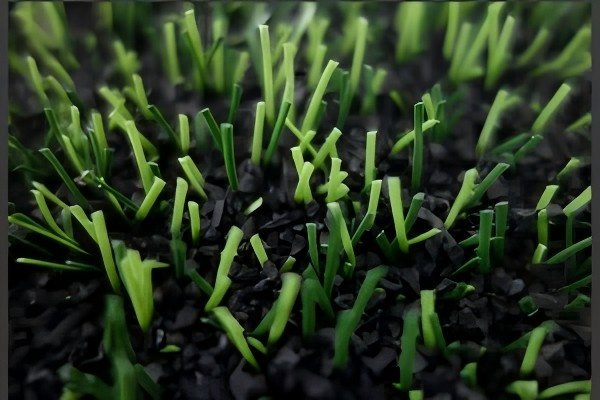
When I first started in this industry, I thought of infill as just filler. A simple "topping" for the turf. But I quickly learned that the science behind the infill is just as important as the turf itself. Understanding the quantity, type, and purpose of these pellets is the key to delivering a project that performs well and stands the test of time. It’s the difference between a satisfied client and a costly callback. So, let’s dig a little deeper into what makes these small pellets such a big deal.
What Is the Purpose of the Turf Pellets on a Football Field?
Thinking of turf pellets as just "filler" is a common mistake. This mindset leads to cutting corners and jeopardizing the entire field’s quality and safety. Let’s clarify their vital role.
The primary purpose of turf pellets is to provide shock absorption for player safety, support the artificial grass fibers to keep them upright, and create a surface that mimics the playability of natural grass.
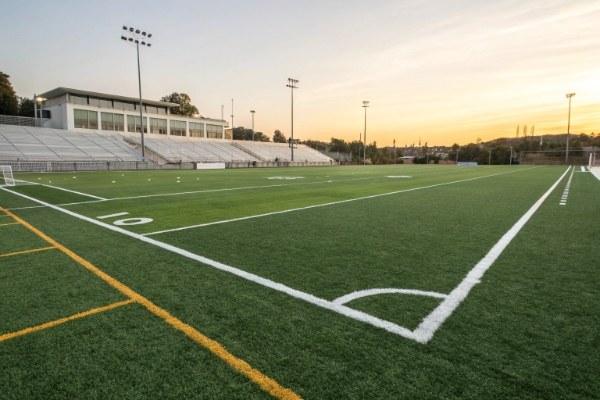
When you get a quote for a turf field, the infill can seem like a place to save money. But from my experience, this is the last place you want to cut costs. The pellets, or rubber granules, do three critical jobs that determine the success of your installation.
1. Shock Absorption and Player Safety1
This is the most important job. When a player falls, runs, or jumps, the rubber infill compresses and absorbs the impact. This reduces the risk of injuries, from minor joint stress to serious concussions. We measure this with a "G-max" test. A field with too little infill will be hard and dangerous, while a field with the right amount provides a safe, cushioned surface.
2. Supporting the Turf Fibers2
Without infill, the turf fibers would get flattened by foot traffic very quickly. They would mat down, and the field would look worn out in months. The granules and sand get in between the fibers, holding them upright. This not only keeps the field looking great but also significantly extends its lifespan by reducing wear and tear on the individual blades.
3. Creating Natural Playability3
Players want an artificial field to feel and play like a perfect natural grass pitch. The infill is what makes this possible. It controls:
- Ball Bounce: The right depth ensures the soccer ball bounces at a predictable, natural height.
- Ball Roll: It provides the right amount of resistance so the ball rolls smoothly and at a realistic speed.
Getting these elements right is crucial for a high-quality field.
How Do the Turf Pellets Affect the Playing Surface of the Football Field?
You know infill is important, but how does the exact amount change the game? Choosing the wrong quantity can create a field that’s too hard, too soft, or dangerously unpredictable. Let’s learn how to get it right.
The amount of turf pellets directly impacts the field’s firmness, ball behavior, and overall player experience. Too little infill makes the surface hard and fast, while too much makes it soft and slow.
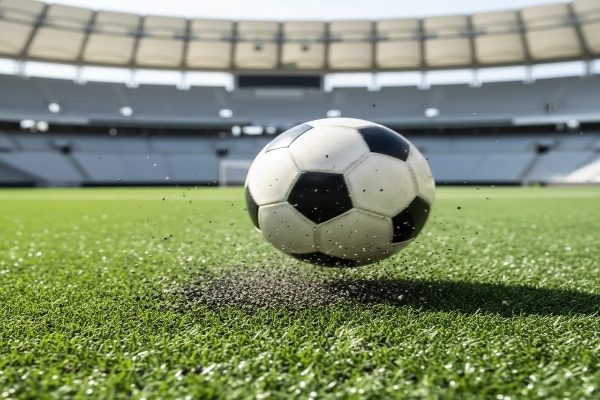
The effect of infill is all about balance. I remember a project where a client insisted on using less rubber to lower the initial cost. Within a year, they were calling me about player complaints—the field was too hard, and the ball was bouncing uncontrollably. We had to add more infill, which cost them more in the long run. Let’s break down the exact quantity so you don’t make the same mistake.
Calculating the Right Amount
For a typical football field, the amount of infill depends on the pile height (the length of the grass blades).
| Turf Pile Height | Recommended Rubber Granules | Recommended Silica Sand |
|---|---|---|
| 40mm | 3-5 kg/m² | 20-25 kg/m² |
| 50mm | 5-7 kg/m² | 25-30 kg/m² |
| 60mm | 7-8 kg/m² | 30 kg/m² |
Let’s do the math for a standard field with buffer zones, measuring 109 meters by 72 meters.
- Total Area: 109m x 72m = 7,848 m²
- Turf System: 50mm pile height
- Rubber Needed: 7,848 m² x 6 kg/m² (a good average) = 47,088 kg, or about 47 tons.
- Sand Needed: 7,848 m² x 28 kg/m² = 219,744 kg, or about 220 tons.
As you can see, we are talking about massive quantities. The 31 tons mentioned earlier is on the lower end, suitable for a 50mm turf system but maybe closer to 4kg/m², which highlights how the specification can vary. Always confirm the pile height before calculating your infill needs.
Are All Turf Pellets the Same?
You see "rubber infill" on a spec sheet and assume it’s a standard product. But choosing the wrong type can lead to an overheated field or unhappy clients asking about that "rubber smell."
No, turf pellets are not all the same. The most common is SBR rubber from recycled tires, which is cost-effective. However, premium options like EPDM and TPE offer different colors, lower heat absorption, and less odor, but at a significantly higher cost.
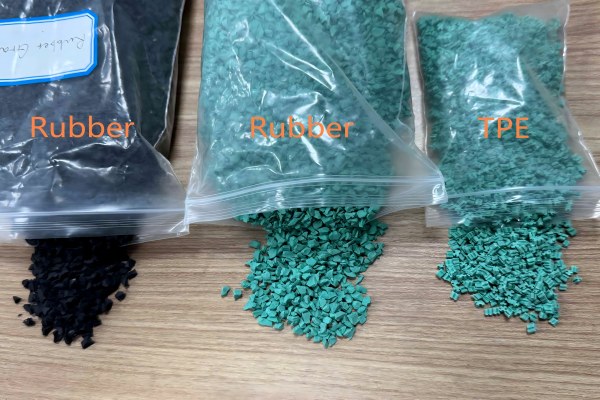
As a buyer, understanding the different types of infill helps you match the product to your client’s budget and expectations. SBR is the workhorse of the industry, but it’s not always the best fit. I’ve worked with schools in hot climates like the UAE and Australia who specifically request "cool infill" because black SBR can get very hot in the sun. Knowing the options makes you a better solutions provider for your customers.
Here’s a simple breakdown of the most common types:
| Infill Type | Pros | Cons | Best For |
|---|---|---|---|
| SBR (Styrene-Butadiene Rubber) | Low cost, excellent durability, proven performance | Black color absorbs heat, distinct rubber smell | General use, budget-conscious projects |
| EPDM (Ethylene Propylene Diene Monomer) | Comes in colors (green, tan), cooler than SBR, no odor | Two to three times the cost of SBR | High-end fields, hot climates, playgrounds |
| TPE (Thermoplastic Elastomer) | Good performance, 100% recyclable, can be cooler than SBR | More expensive than SBR, newer technology | Environmentally conscious projects, premium sports |
| Organic Infill (e.g., Cork, Coconut) | Natural material, very low heat absorption | Can absorb moisture, requires more maintenance, expensive | Niche projects with a focus on natural materials |
For most commercial and distribution partners I work with, SBR remains the top choice due to its unbeatable balance of price and performance. However, being able to offer EPDM or TPE as an upgrade can set you apart from competitors and meet the needs of more demanding clients.
Conclusion
A football field requires tons of infill, a critical component for safety and performance. Understanding the right quantity and type is key to a successful, long-lasting installation that keeps players safe.
-
Understanding shock absorption can help ensure player safety and reduce injury risks on artificial fields. ↩
-
Learn how proper support for turf fibers can enhance the longevity and appearance of artificial fields. ↩
-
Discover how to achieve a natural feel on artificial fields, crucial for player satisfaction and performance. ↩
_画板-1.png)