_画板-1.png)
Are you looking for a fun new addition to your backyard? You might feel overwhelmed by the thought of a big construction project. I’m here to show you that building a bocce court is easier than you think.
Building a bocce court involves a few key steps. First, you measure and mark the area. Then, you dig out the space and build a wooden frame. After that, you add and compact layers of gravel and sand for the base. Finally, you add your chosen playing surface, and you’re ready to play.
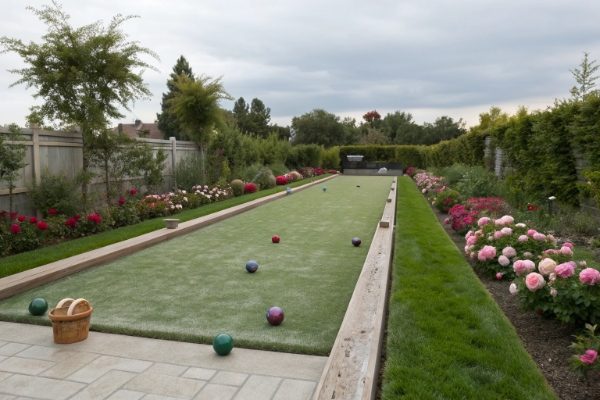
I’ve helped many clients design and build their own courts. They always tell me it brings their family and friends together. It’s more than just a game; it’s a place to make memories. Let me walk you through the process, just like I’ve done for them. You’ll see how you can create a professional-quality court right in your own backyard.
What is a good size for a backyard bocce ball court?
Do you have a backyard but are not sure if you have enough space for a bocce court? You might worry that a smaller court won’t be fun to play on. I’ll explain the different size options so you can choose the perfect fit for your yard.
A regulation bocce court is 91 feet long by 13 feet wide. However, for a backyard, a smaller size like 60 feet by 10 feet works great. The most important thing is to keep the length-to-width ratio similar. This ensures the game still feels right and is enjoyable for everyone.

The size of your court can change depending on your space and how seriously you take the game. I remember a client, James, who had a smaller yard in a suburban area. He was convinced he didn’t have room. I showed him how we could build a fun 40×8 foot court. He was thrilled. It became the centerpiece of his backyard parties. You don’t need a huge space to have a great time. Let’s look at some common sizes.
Court Size Options
| Court Type | Dimensions (Length x Width) | Best For |
|---|---|---|
| Regulation | 91 ft x 13 ft | Tournaments, serious players |
| Backyard Pro | 60 ft x 10 ft | Most backyards, great gameplay |
| Casual Fun | 40 ft x 8 ft | Smaller yards, family fun |
| Minimum | 20 ft x 5 ft | Very limited space, practice |
No matter the size you choose, the most important factor is a perfectly level playing area. Even a small slope can affect how the balls roll. So, take your time during the early stages to get the foundation right. The size can be flexible, but the levelness cannot.
Which Materials and Tools Do You Need for Construction?
Ready to build, but the list of potential supplies seems endless? If you buy the wrong things, your court might not last. I will give you a clear list of what you need to get the job done right.
For materials, you will need pressure-treated lumber1 for the frame, landscape fabric2 to block weeds, crushed gravel for drainage, and a top layer of sand or oyster shell. For tools, you will need a shovel, a level, a drill, a wheelbarrow, and a hand tamper or plate compactor3.

Putting together the right kit before you start is key. A few years ago, I was helping a friend build his court. He tried to save money by using regular pine for the frame instead of pressure-treated lumber. After two years, the wood was rotting, and the frame was falling apart. We had to replace it all. Learning from that, I always tell my customers: don’t cut corners on the materials for the frame. It’s the skeleton of your court. Using the right tools will also make the job much easier. Renting a power tamper, for instance, is much better than tamping the entire base by hand.
Essential Materials
| Material | Purpose |
|---|---|
| Pressure-Treated Lumber | Creates a durable, rot-resistant border for the court. |
| Landscape Fabric | Prevents weeds from growing through your court surface. |
| Crushed Gravel (e.g., #57 stone) | Forms the solid base layer and allows for water drainage. |
| Decomposed Granite or Sand | Creates a smoother layer on top of the gravel. |
| Playing Surface (Oyster Shell, Turf) | The final topping where the game is played. |
| Wood Screws/Lag Bolts | To fasten the frame together securely. |
Essential Tools
| Tool | Purpose |
|---|---|
| Shovel & Rake | For digging out the area and spreading materials. |
| Wheelbarrow | To move gravel, sand, and soil. |
| Tape Measure & String Line | For marking out accurate dimensions. |
| Level | To ensure the frame and surfaces are perfectly flat. |
| Drill | To assemble the wooden frame. |
| Hand Tamper or Plate Compactor | For compacting the base layers until they are firm. |
What is the best base for a bocce ball court?
You want your bocce balls to roll true, not bounce around on a lumpy surface. A poor base can lead to drainage problems and an uneven court. I will show you how to build a multi-layered base that will last for years.
The best base for a bocce court is a layered system. It starts with a 3-4 inch layer of compacted crushed gravel for drainage. This is followed by a 1-2 inch layer of compacted decomposed granite or coarse sand. The final playing surface can then be a thin layer of oyster shell blend or even high-quality artificial turf.

Creating the base is the most labor-intensive part of the project, but it’s also the most important for performance. I once got a call from a hotel manager. They had a beautiful new bocce court, but it was a swamp after every rain. The contractor who built it had just put sand over dirt. We had to dig it all up and install a proper gravel drainage layer. A solid foundation is everything. Don’t skip the layers.
The Foundation: Crushed Gravel
The first layer you put down after digging out the area is crushed gravel. This is your drainage field. Use a stone like #57, which is about the size of a nickel. Spread a layer about 4 inches deep across the entire court. Then, you need to compact it. You can use a hand tamper, but I really recommend renting a gas-powered plate compactor4 for a few hours. You want this base to be rock solid. Water it lightly as you compact to help the stone settle and lock together.
The Leveling Layer and Playing Surface
After the gravel base is firm, you add a finer material on top. Most people use decomposed granite5 or coarse sand. This layer is about 1-2 inches deep. Its job is to fill in the gaps in the gravel and create a smoother, level surface. Rake it out evenly and compact it just like you did with the gravel. Your final playing surface goes on top of this. Traditional courts use a blend of crushed oyster shells. This gives a great roll, but a more modern, lower-maintenance option is artificial turf. A short-pile turf designed for putting greens works wonderfully and looks great year-round.
How Do You Maintain Your Bocce Court for Long-Term Performance?
You finished your court, and it looks amazing. But how do you keep it that way? Without regular care, your court can become weedy, uneven, and unplayable. I will provide a simple maintenance plan to protect your investment.
Regular maintenance is simple but important. You should sweep the court6 to keep it clear of leaves and debris. Also, you need to periodically water and roll or tamp the surface to keep it firm. Finally, check the wooden frame for any damage and repair it as needed to ensure safety and longevity.

Good maintenance doesn’t have to take a lot of time. Think of it like mowing your lawn. A little bit of work on a regular basis prevents big problems later. I have a client, Mohammed, who chose an artificial turf surface for his court specifically because he travels a lot for work. He knew he couldn’t commit to the daily grooming that some natural surfaces require. His court looks perfect every time he comes home, with almost no effort. Choosing the right surface material during construction is the first step to easier maintenance.
Bocce Court Maintenance Schedule7
| Frequency | Task | Why It’s Important |
|---|---|---|
| After Each Game | Sweep/rake the surface. | Removes footprints and debris, keeps the surface smooth. |
| Weekly | Remove any leaves or weeds. | Prevents organic matter from breaking down and creating soft spots. |
| Monthly | Water and roll/tamp the surface. | Re-compacts the surface for a firm and fast roll. |
| Annually | Check and repair border boards. | Ensures the frame is solid and safe. |
| Annually | Add a thin new layer of top dressing. | Refreshes the playing surface (not needed for artificial turf). |
If you live in an area with freezing winters, it’s a good idea to cover your court with a tarp. This prevents the freeze-thaw cycle from making the surface uneven. Keeping up with these small tasks will ensure your bocce court remains a source of pride and fun for many years to come.
Conclusion
Building a backyard bocce court is a rewarding project that creates a wonderful space for fun with family and friends. With the right plan, materials, and a little work, you can build it.
-
Understanding pressure-treated lumber is crucial for building durable structures that resist rot and decay. ↩
-
Explore how landscape fabric effectively blocks weeds, ensuring a clean and maintained surface for your project. ↩
-
Discover the differences between these tools to choose the right one for compacting your base layers effectively. ↩
-
Discover how using a gas-powered plate compactor can ensure a solid foundation for your bocce ball court. ↩
-
Explore how decomposed granite can enhance the playing surface and longevity of your bocce ball court. ↩
-
Learn about the importance of regular sweeping to keep your bocce court in top condition. ↩
-
Explore this link to understand the best practices for maintaining your bocce court effectively. ↩
_画板-1.png)