_画板-1.png)
You want a pristine lawn for your customers, but you fear weeds ruining the final look. Choosing the wrong barrier causes endless headaches and refund requests. I will show you how to pick the right one.
To choose the best weed barrier, select a high-quality non-woven geotextile or heavy-duty PP woven fabric. Ensure it is permeable, durable, and made from virgin materials rather than toxic recycled mix. This effectively prevents weed growth while allowing proper drainage, protecting your artificial grass investment for years.
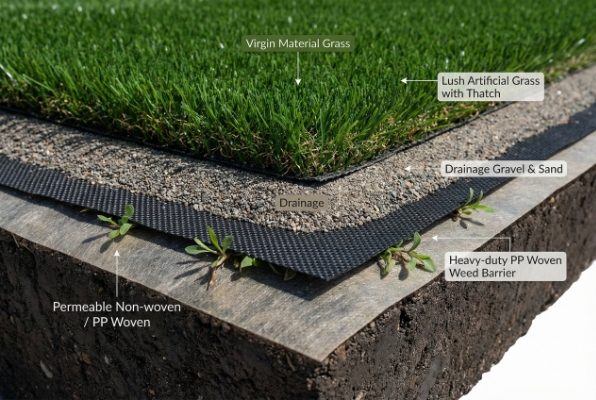
Many clients ask me if this step is truly necessary or just an extra cost. They want to save money on the installation materials. However, skipping this small step can lead to big failures. Let us look at why you need it and what happens if you ignore it.
Should I put a weed barrier under artificial grass?
Skipping this layer saves a little money now, but weeds will destroy your project later. Do not risk your business reputation on a cheap installation mistake.
Yes, you should always install a weed barrier. It effectively stops weed seeds from germinating through the soil and protects the turf backing from burrowing pests. It ensures the longevity and aesthetics of the artificial grass project and keeps your customers happy.
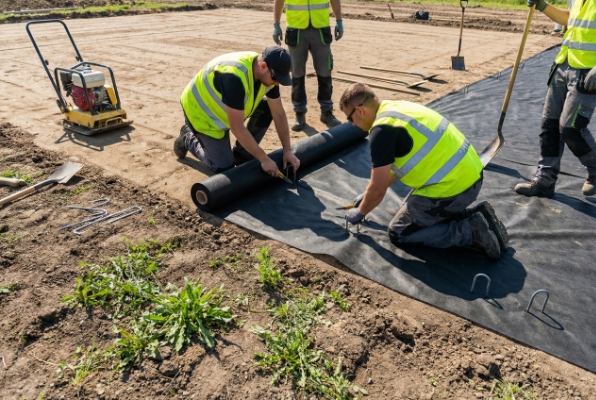
In my years as an engineer, I have seen many projects fail. Often, the installer was lazy. They skipped the membrane to save time. Six months later, grass grew through the drain holes. The customer demanded a refund. This destroys your profit.
Preventing Unwanted Growth
The main reason is simple. Weeds are strong. They can grow in very poor soil. Even if you compact the base well, seeds hide in the dirt. If you do not block the sunlight and the soil contact, seeds will sprout. They push up the artificial turf. This makes the surface uneven. It looks terrible. Weeds can even grow through the drainage holes of the turf. Pulling them out damages the backing.
Deterring Pests
It is not just about plants. It is about animals too. Earthworms and bugs live in the soil. They attract moles and other burrowing animals. Moles dig tunnels to find food. This makes the ground soft and unstable. A strong barrier stops them from reaching the back of the turf. It keeps the base stable and flat.
Cost vs. Reputation
I supply turf to many countries. The successful buyers always insist on full accessories. They know the value of "system selling1." You sell a solution, not just plastic grass.
| Feature | With Barrier | Without Barrier |
|---|---|---|
| Initial Cost | Slightly Higher | Lower |
| Maintenance | Low | High (Weeding required) |
| Longevity | 8-10 Years | Unpredictable |
| Customer Satisfaction | High | Low |
As a business owner, you want happy clients. A small cost now saves big repair bills later. Do not cut corners here. It is not worth the risk.
What weed membrane to use under artificial grass?
There are many fabrics on the market, but most are garbage. Choosing the wrong type leads to drainage issues and rotting turf.
The best options are Non-Woven Geotextile or Polypropylene (PP) Woven Fabric. Geotextiles offer superior drainage and separation. PP Woven fabrics are stronger against aggressive roots. Avoid thin, cheap plastic sheets that trap water and kill the soil ecosystem.
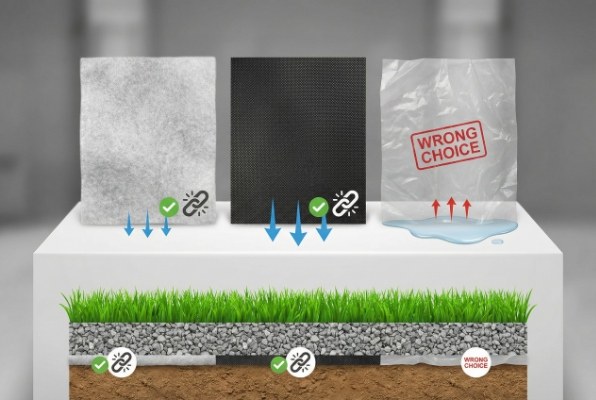
I get asked this at trade shows all the time. "Tom, which one is better?" It depends on your specific needs, but quality is key. We offer both at QH, but you must know the difference.
Non-Woven Geotextile2
This material feels like felt or fabric. It is soft. It is very good at letting water pass through. If your area rains a lot, like in parts of the UK or Southeast Asia, use this. It allows for rapid drainage. It also separates the soil from the stone base very well. It prevents the aggregate base from sinking into the mud over time. It creates a stable platform for the turf.
PP Woven Fabric3
This looks like the material used for rice bags. It is woven black plastic. It is very strong physically. It is tough to tear. If you have aggressive weeds like bamboo or heavy tree roots nearby, use this one. It stops punctures better than the soft felt. However, the drainage is slightly slower than geotextile.
The Material Matters: Virgin vs. Recycled
You must check the raw material facts. Look for "Virgin Material4". Do not buy "Recycled Material".
- Virgin PP: This is made from new plastic pellets. It is strong. It resists UV rays. It lasts a long time. It is safe for the environment.
- Recycled Mix: This is made from old trash. It is cheap. But it is brittle. It breaks easily. It often contains heavy metals. It has a short life.
I always tell my buyers: check the sample. If it smells bad or tears easily, do not buy it. It will degrade in two years. You need a lifespan that matches your turf warranty.
What are the cons of weed barrier fabric?
Every product has a downside. Ignoring the risks of poor quality barriers endangers health. You need to know the hidden dangers of bad fabrics.
The main disadvantage comes from choosing low-quality barriers5. Cheap fabrics made from recycled materials can contain heavy metals6. They degrade quickly into waste, posing a threat to human and animal health. They may also clog drainage if the design is poor.
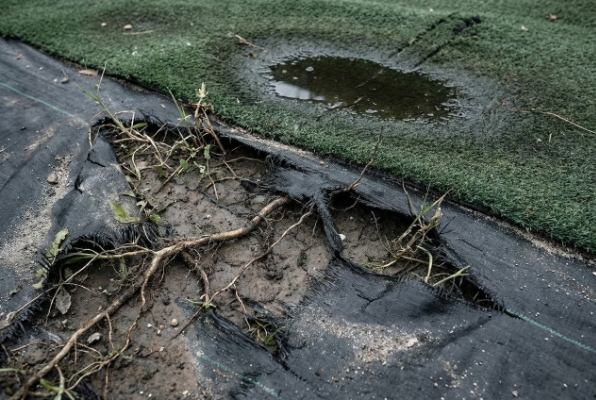
Honesty is my policy at QH Grass. Not all barriers are perfect. If you buy the wrong one, or install it incorrectly, it causes problems. You need to be smart about your supply chain.
Drainage Clogs
Some cheap fabrics are not designed well. The weave is too tight. They do not let water through fast enough. Heavy rain comes. The water sits on top of the grass. It creates a pool. This is bad for sports fields or playgrounds. It also helps moss grow. You must test the permeability before you order a container. Pour a cup of water on the sample. It should pass through immediately.
The Toxic Trap
This is serious. Many cheap factories in China use waste plastic to make black weed mats. They collect trash plastic. They melt it down. They add fillers to make it heavy. These fillers often have lead or other heavy metals.
When the fabric breaks down, it turns into dust. This dust enters the soil. It enters the groundwater. If children or pets play on the lawn, it is not safe. As a specialized buyer, you must avoid this liability.
Short Lifespan
A bad barrier lasts maybe 2 years. Your artificial grass lasts 8 to 10 years. What happens in year 3? The barrier rots under the grass. Weeds start to grow. Roots come up. You cannot fix this easily. You have to lift the whole lawn. This costs thousands of dollars.
How to spot bad quality:
- Price: If it is suspiciously cheap, be careful. Good materials cost money.
- Smell: Recycled plastic smells like burnt rubber or chemicals. Virgin material has no strong smell.
- Strength: Scratch the surface. If black flakes come off, it is bad quality.
Do not let a cheap accessory ruin your premium grass sales. Your brand depends on quality.
Conclusion
Always use a virgin material weed barrier, either Geotextile or PP Woven. It stops weeds, pests, and protects health. Do not sacrifice long-term quality for a cheaper price.
-
Discover how system selling can enhance your business strategy and improve customer satisfaction in turf installations. ↩
-
Explore the advantages of Non-Woven Geotextile for effective drainage and soil separation under artificial grass. ↩
-
Learn how PP Woven Fabric provides strength against aggressive roots, making it ideal for tough environments. ↩
-
Discover why Virgin Material is crucial for durability and environmental safety in artificial grass applications. ↩
-
Understanding the risks of low-quality barriers can help you make informed decisions for your landscaping projects. ↩
-
Explore the health risks associated with heavy metals in weed barrier fabrics to protect your family and pets. ↩
_画板-1.png)