_画板-1.png)
Uneven surfaces in playgrounds cause tripping hazards and ruin expensive turf. Poor installation wastes your money and damages your reputation. You need a solid foundation to ensure safety and longevity.
To lay a proper artificial turf foundation, excavate the area and remove debris. Install a 5-15 cm layer of crushed stone or decomposed granite. Ensure a 1-2% slope for drainage. Compact the base thoroughly using a vibratory plate compactor to create a stable, non-sinking surface.
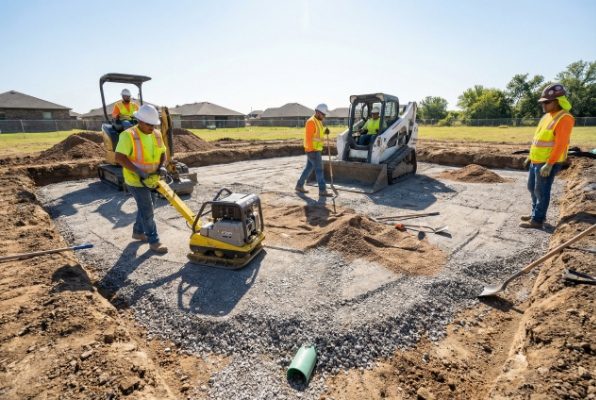
Many people think buying the best turf is enough. But the ground underneath matters more. I will explain exactly how to build a base that handles heavy use and rain without failing.
Why is the foundation so important for artificial turf in a playground?
Heavy foot traffic ruins weak grounds quickly. Your investment disappears if the earth moves. A solid base stops this damage immediately and keeps the playground safe.
The foundation is vital because playgrounds face high stress. A stable base prevents sinking, water accumulation, and surface wrinkling. It ensures the turf remains flat, safe for children, and durable over many years of heavy use.
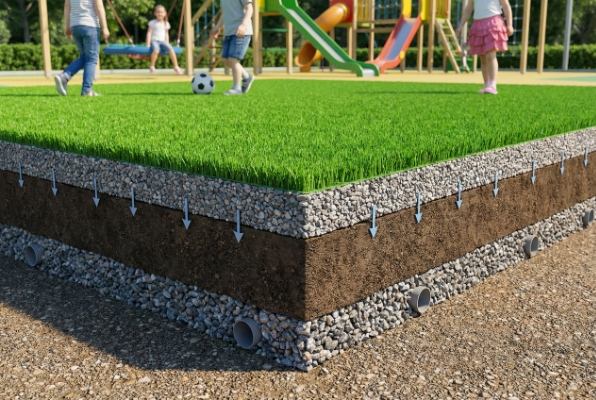
I have seen many projects fail because the builder ignored the sub-base. Playgrounds experience high traffic and frequent use every day. This creates significant stress on the turf. If the foundation is not stable, the turf faces serious problems. It can easily sink in specific spots. It can accumulate water and turn into a swamp. It can even wrinkle and cause children to trip. These issues affect both the aesthetics of your project and the lifespan of the product.
Therefore, constructing a proper foundation structure is crucial for ensuring the overall paving effect. At QH Grass, we believe stability leads to success. I always tell my clients that the invisible part of the project is the most important part. A good base acts like a shield. It absorbs the shock from running and jumping. This protects the backing of the artificial grass.
Here is a breakdown of why structure matters:
Key Functions of a Stable Foundation
| Problem | Cause | Solution Provided by Foundation |
|---|---|---|
| Sinking | Soft soil shifts under weight. | Compacted stone resists movement and holds heavy loads. |
| Wrinkling | The ground expands and contracts. | A stable layer minimizes ground movement affecting the turf. |
| Puddles | Water sits on the surface. | Proper aggregate choice allows water to drain away quickly. |
| Injury | Uneven spots create trip hazards. | A level base ensures a flat and safe playing surface. |
You must treat the foundation as the root of the system. Without strong roots, the grass will not last. This approach saves you maintenance costs in the future.
What are the common base materials?
Choosing the wrong stone causes drainage issues. Mud will ruin your project. You must select the right aggregates for stability and proper water flow.
Common base materials include crushed stone1, decomposed granite2, and washed concrete sand3. The best choice depends on local availability and drainage costs. These materials compact well to form a hard surface while still allowing water to pass through.
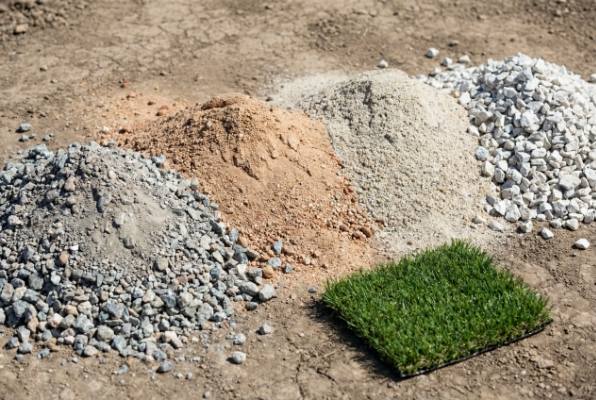
You need to source the right materials before you start digging. In my experience with foreign trade sales, I suggest using local materials to save on shipping. However, the type of material is non-negotiable. Common base materials include crushed stone, weathered granite (often called decomposed granite), and washed concrete sand. You cannot use regular dirt or topsoil. Those materials hold too much water and will shift.
We use specific materials for two reasons: stability and permeability. Crushed stone locks together when you hit it with a machine. This creates a hard floor. But it also has small gaps. These gaps let rain pass through.
I recommend looking for a mix often called "CMB" (Crushed Miscellaneous Base) or "Class 2 Road Base" depending on your region. You want a mix of larger rocks and smaller dust (fines). The dust acts like glue.
Material Selection Guide
| Material Type | Pros | Cons | Best Use |
|---|---|---|---|
| Crushed Stone (Road Base) | Extremely stable and strong. | rough surface if not topped with fines. | The main structural layer (bottom). |
| Decomposed Granite (DG) | Packs down very smooth and flat. | Can become muddy if it has too much clay. | The leveling layer (top). |
| Washed Concrete Sand | Drains water very fast. | Does not compact as hard as stone; can shift. | Low-traffic areas or under pads. |
| Limestone Chippings | Readily available and cheap. | Can become solid like concrete and stop drainage. | Dry areas with low rainfall. |
When you buy these materials, check the quality. Too much dust blocks water. Too much big rock makes it hard to smooth out. You want a balance. This balance helps customers achieve greater profits by avoiding rework.
How to lay and compact the base material?
Loose soil destroys the final look of your turf. Pockets of air lead to holes later. Proper compaction prevents these expensive repairs and ensures a professional finish.
Remove existing grass and level the ground. Spread your chosen aggregate material to a depth of 5-15 cm. Use a vibratory plate compactor4 to densify the stone. Ensure a 1-2% gradient slope to direct rainwater away from the center of the playground.
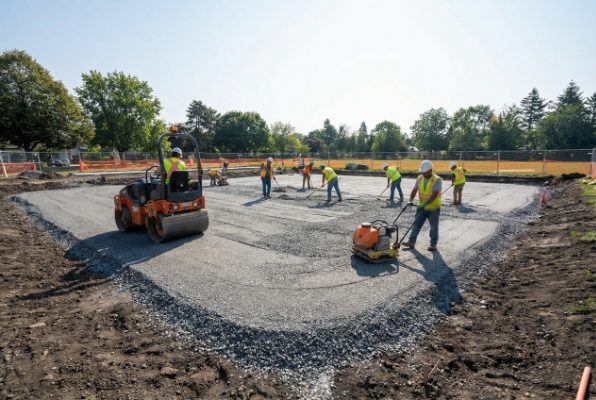
Now we reach the construction phase. This process requires strict quality control. When laying and compacting the base material, you must follow a clear order. First, remove existing turf and debris. You must clear roots and large rocks. These will rot or push up later. Ensure a level surface on the sub-soil before you add stone.
Next, according to project requirements, lay gravel, granite, or sand. Typically, you need a layer 5-15 cm thick. For a playground, I suggest closer to 10-15 cm because safety is priority. Do not dump it all at once. Spread it in layers.
You must compact it using a vibratory roller or plate compactor. This machine removes air pockets. It ensures density and stability. This step prevents future settlement. High-quality compaction significantly improves the turf’s impact resistance and stability. If you walk on it and leave a footprint, it is not ready. You must compact it again.
Drainage Strategy
Drainage is also crucial. A good drainage system prevents the turf from becoming waterlogged and deforming. You must manage the water flow.
To this end, ensure that:
- The base material has good permeability. The water must go down.
- The ground is slightly sloped. A 1-2% gradient is standard. This facilitates rainwater drainage to the edges.
- Install systems if necessary. If the local soil is clay, install a subsurface drainage or infiltration system. This improves drainage efficiency.
Step-by-Step Installation Process
| Step | Action | Why it is important |
|---|---|---|
| 1. Excavation | Dig down 10-15cm. | Removes organic matter that creates instability. |
| 2. Geotextile | Lay a weed barrier fabric. | Separates usage stone from mud below. |
| 3. Spreading | Spread base material evenly. | Ensures consistent height and drainage. |
| 4. Watering | Mist the stone with water. | Helps the dust bind the rocks together. |
| 5. Compaction | Run the vibratory roller 3-4 times. | Locks the stone into a solid mass. |
| 6. Leveling | Check for low spots and fill them. | Ensures the playground surface is perfectly flat. |
I have helped many customers grow their business by teaching this process. When your installation is perfect, your client trusts you. Trust leads to more orders.
Conclusion
A strong playground foundation requires removing debris, laying 5-15cm of crushed stone, and heavy compaction. Proper drainage and stability ensure safety, prevent sinking, and extend the artificial turf’s lifespan.
-
Explore the advantages of crushed stone for stability and drainage in your projects. ↩
-
Learn how decomposed granite can enhance your landscaping with its smooth finish and drainage properties. ↩
-
Discover the applications of washed concrete sand for effective drainage in low-traffic areas. ↩
-
Understanding how a vibratory plate compactor works can enhance your installation process and ensure a professional finish. ↩
_画板-1.png)