_画板-1.png)
You worry about high importing costs hurting your profit margins. If you pay too much, you lose local bids to competitors. I will teach you how to negotiate better deals.
To negotiate the best bulk prices, focus on ordering full containers and committing to consistent monthly volumes. Understanding raw material costs, specifically yarn waste in custom orders, allows you to bargain effectively. Always balance unit price with shipping terms and payment security.

Many importers think price is just about shouting numbers. This is wrong. It is a game of strategy and knowledge. Let us look at the details that actually change the final invoice.
What Drives Bulk Artificial Grass Pricing?
You feel the price is arbitrary. It is frustrating not knowing the breakdown. Here is the truth about costs.
Pricing depends on raw materials, labor, and machine time. However, waste is the biggest hidden factor. Custom orders create surplus yarn1 that factories must throw away, increasing your cost per square meter.
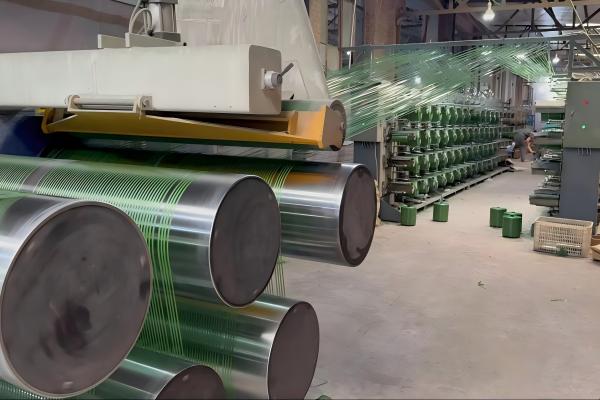
ordering a whole container of artificial turf from QH Grass entitles you to preferential wholesale prices. But you need to understand production to save money. When you ask for custom-made turf, like a specific yarn dtex or color, we have to make that specific yarn. Production inevitably creates surplus yarn, usually around 0.5 to 1 ton. This is waste. We cannot use it for other customers. So, we must charge you for this loss. This makes custom turf expensive.
There is a smart way to fix this. If you order at least one container of the same turf every month, we can save the surplus. We use it for your next order. Then, you get the same price as regular products. But be careful. Yarn has a shelf life. We can only store it for a maximum of 2 months. After that, the filaments deform. They will not be able to shorten to one-third of the total length properly during production.
Understanding this technical constraint helps you negotiate. Instead of fighting against the factory price, you align your order schedule with our production reality.
| Cost Factor | Impact on Price | Solution |
|---|---|---|
| Full Container | Lowers shipping and unit cost | Order 40HQ containers |
| Custom Yarn | Increases cost due to waste (0.5-1 ton) | Standardize specs or monthly orders |
| Yarn Storage | Increases risk if >2 months | Consistent ordering schedule |
| Labor | Fixed cost | Cannot negotiate much |
How to Evaluate Suppliers Before Price Negotiations?
You cannot negotiate if you do not trust the quality. A bad supplier will promise a low price and send trash.
Before discussing money, verify the factory’s capability. The most effective method is a physical factory audit2. This proves they actually own the machines and follow quality control3 protocols, rather than just being a middleman.
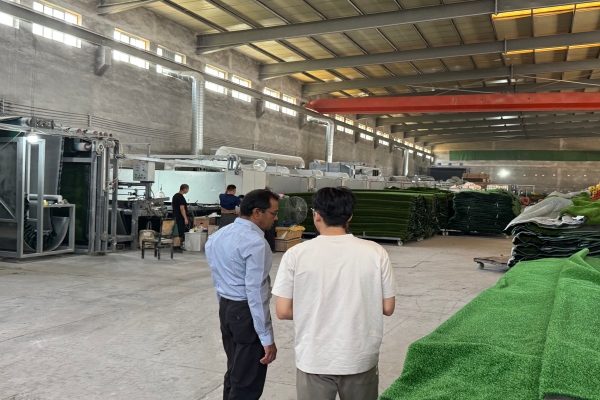
You see many suppliers on Alibaba or Google. They all look the same. How do you know who is real? A website is not enough. The best way to evaluate a factory is through a factory audit. You can choose a professional auditing agency to visit for you. They check licenses and machines. They ensure the factory exists.
However, I believe coming to China yourself is better. When you meet the owner and see the production line, you know the truth. You can check the yarn quality and backing strength instantly. You are not relying on photos. Photos can be fake. Samples can be "golden samples" that differ from the bulk order.
At QH Grass, we understand travel is expensive. That is why we provide free accommodation for all customers visiting our factory for negotiations. This is my way of showing sincerity. When we meet face-to-face, we build a relationship. I can show you our quality control steps. This trust is the foundation for a better price. When I see a customer invests time to visit, I know they are serious. I am more willing to give them a better deal.
Checklist for your visit:
- Warehousing: Do they have stock or is it empty?
- Machines: Are they running or covered in dust?
- Team: Do the sales staff speak with the engineers?
How to Proven Tactics to Secure Better Bulk Turf Pricing?
Do you feel you are leaving money on the table? Simply asking for a discount rarely works well. You need a strategy.
Successful negotiation involves leverage. Use the "anchoring" technique by starting with a lower target price, but remain realistic. Committing to long-term partnership and volume guarantees is more effective than aggressive one-time bargaining.

I have negotiated with buyers from all over the world. I must be honest. Although I sometimes dislike negotiating prices with Indian buyers, they are usually very good at bargaining. They often offer an unattainable price at the start. This is an anchoring strategy. They squeeze every potential supplier to the limit. While this is stressful for me, it is a valid tactic. You can try asking for a lower price to see my reaction.
However, do not just squeeze price. That can backfire. A better tactic is offering volume. If you promise to be a long-term partner, I will give you additional services and support. Long-term partners are valuable to us. We want you to grow.
So, combine these methods. Start with a tough price, but then offer a compromise based on volume. Say, "Tom, if I order 5 containers this year, can you match this price?" This works better.
Key Tactics Table:
| Strategy | How to use it | Why it works |
|---|---|---|
| Anchoring | Start with a very low target price | Lowers the supplier’s expectations |
| Volume Promise | Commit to monthly containers | Reduces factory waste and secures stability |
| Competitor Comparison | Show a cheaper quote from others | Forces supplier to explain their value or drop price |
| Loyalty | Emphasize long-term partnership | Suppliers invest in stable future income |
Beyond Price: What Other Terms Should You Negotiate?
A cheap price means nothing if the goods arrive late or you get scammed. You must look at the whole contract.
Negotiate shipping terms (Incoterms) and payment methods alongside the unit price. For new importers, CIF provides safety, while T/T payments balance risk. L/C is secure but adds banking fees.

International trade involves numerous risks. It is not just about the cost of the grass roll. You must negotiate the shipping terms. Factories typically prefer FOB (Free on Board). This means our responsibility ends when the container is on the ship. But for importers making their first or smaller purchases, CIF (Cost, Insurance, and Freight) is undoubtedly a better option. It puts the shipping responsibility on us until it reaches your port. It saves you the headache of finding a freight forwarder in China.
Payment terms are also negotiable and affect your cash flow.
T/T (Bank Transfer): This is standard. We usually ask for a deposit to buy materials and the final payment before shipping. This balances the risks between factories and importers. You put some money down, and I put my production time in.
L/C (Letter of Credit): This offers good protection for both parties. You do not pay until papers are correct; I know I will get paid. However, banks usually charge high fees for this. This increases your total costs.
Summary of Terms:
- FOB vs. CIF: Choose CIF if you are new. Choose FOB if you have a good logistics partner.
- T/T vs. L/C: Choose T/T for lower costs and speed. Choose L/C for very large, high-risk orders.
- Delivery Date: Always add a penalty clause for late shipment. This protects your project deadlines.
Conclusion
To get the best bulk price, visit the factory, commit to consistent monthly orders to reduce waste costs, and choose safe payment and shipping terms.
-
Exploring the impact of surplus yarn on pricing can reveal hidden costs and help you negotiate better deals. ↩
-
Understanding factory audits can help you ensure supplier reliability and quality, making your negotiations more effective. ↩
-
Exploring quality control practices can enhance your negotiation strategy and build trust with suppliers. ↩
_画板-1.png)