_画板-1.png)
Tired of that surprising zap every time you touch your artificial grass? It’s an annoying problem that can ruin a relaxing moment in your yard. The solution is simpler than you think.
The best way to remove static electricity from artificial grass is to increase the conductivity of the surface. You can do this by lightly spraying the turf with water, installing a silica sand infill, or using a commercial anti-static spray designed for synthetic materials.
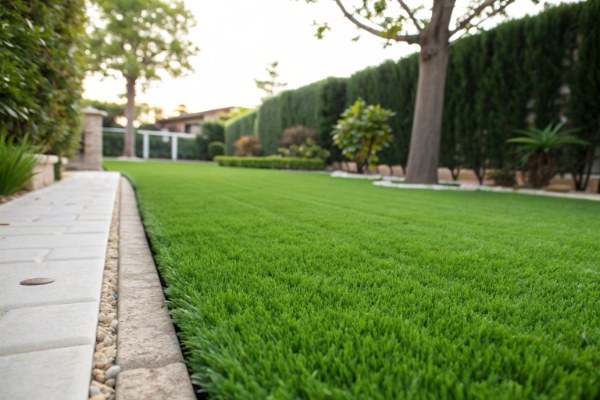
That little shock of static electricity can be a real nuisance, especially if you have kids or pets playing on the lawn. It happens when friction builds up an electrical charge on the grass blades, which then discharges when you touch it. Fortunately, there are several ways to tackle this issue, from quick fixes to permanent solutions. I’m here to walk you through the methods I’ve learned over many years in the artificial turf industry, so you can enjoy your lawn without any unpleasant surprises.
How can you stop getting static shocks from artificial grass?
Are you hesitant to walk on your beautiful lawn because of those pesky static shocks? It’s frustrating when your investment causes discomfort. Let’s stop the shocks for good.
You can stop static shocks by taking preventative measures before installation, like choosing grass with anti-static yarn and using a sand infill. For existing lawns, regularly rinsing the surface with water or applying a specialized anti-static product will immediately solve the problem.
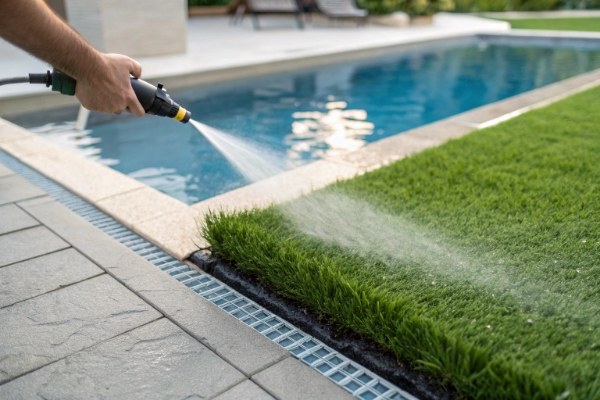
As an engineer, I always believe the best solution is prevention. If you’re planning to install a new lawn, you can stop static before it even starts. However, even if your turf is already down, don’t worry—there are still very effective ways to deal with it. I’ve helped countless customers troubleshoot this exact issue. The key is to understand what causes the static and then choose the right approach for your situation. It’s usually a combination of dry air and friction. By tackling these two factors, we can eliminate the shocks.
Before Installation: The Proactive Approach
The absolute best time to deal with static is before the turf is even laid down. When I talk to clients like Michael or Ahmed, who are meticulous about quality and long-term performance, I always emphasize this. Choosing the right materials from the beginning saves a lot of headaches later.
- Anti-Static Turf Technology1: Many modern artificial grass products, like some we offer at QH Grass, come with anti-static technology woven directly into the yarn. This is a game-changer. It works by including conductive fibers that prevent static charge from building up in the first place. It’s a built-in, permanent solution.
- Silica Sand Infill2: Using silica sand as an infill is another fantastic preventative measure. The sand provides weight, keeping the fibers upright, but it also helps dissipate static electricity. Its granular nature interferes with the friction between grass blades, which is the primary cause of static buildup.
After Installation: The Reactive Solutions
If your lawn is already installed and you’re experiencing static, there are simple and effective fixes.
| Method | Effectiveness | Duration | Notes |
|---|---|---|---|
| Rinsing with Water3 | High | Temporary (1-3 days) | The easiest and most natural solution. |
| Anti-Static Spray4 | High | Medium (Weeks) | Commercial products made for carpets or turf. |
| Diluted Fabric Softener | Medium | Medium (Weeks) | A DIY option, but test on a small area first. |
Are there natural ways to get rid of static on your turf?
Worried about spraying chemicals on your lawn where your children and pets play? Looking for a safe, natural way to fix the static issue? There are excellent eco-friendly options available.
Yes, the most effective natural anti-static method is water. Lightly spraying your artificial grass with a hose increases humidity at the surface, which dissipates static charge safely. Using a natural infill like silica sand also physically reduces static buildup without any chemicals.
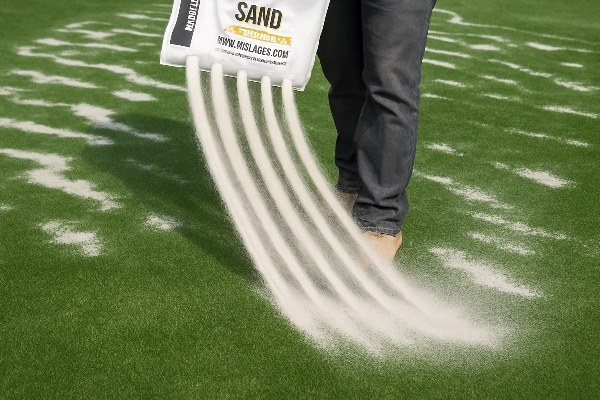
In my experience, especially when dealing with clients in dry climates like Saudi Arabia or Arizona, static electricity is a common complaint. The dry air makes the problem much worse. I always recommend starting with the most natural solution first: water. It’s cheap, safe, and surprisingly effective. One of my clients, Mohammed, was having a big issue with static on his new playground turf. I told him to just give the turf a quick rinse with a garden hose every couple of days. He called me back a week later, completely satisfied. The problem was gone.
Humidity is Your Best Friend
Static electricity thrives in dry conditions. When the air is humid, the water vapor in the air helps to conduct the electrical charge away from surfaces, preventing it from building up. So, the simplest way to fight static is to introduce a little moisture.
- Light Rinsing: You don’t need to soak your lawn. A light misting from a garden hose is enough to raise the humidity among the grass blades and get rid of the static. In very dry climates, you might need to do this every few days. In more temperate regions, it might only be necessary during dry spells.
- Consider Your Climate: If you live in a naturally humid area, you may never even experience static electricity on your turf. The environment takes care of it for you.
The Power of Sand Infill
I mentioned silica sand earlier as a preventative measure, but it’s also a powerful natural solution. It’s essentially just small, clean grains of sand. It works in two ways to combat static naturally:
- Reduces Friction: The sand settles at the base of the turf, which helps hold the blades in place and reduces how much they rub against each other when walked on. Less friction means less static buildup.
- Grounding Properties: The sand granules have their own properties that help dissipate electric charge into the sub-base below. It’s a passive, continuous way to keep static at bay.
Can you actually ground your fake grass to stop static?
Are you looking for a one-and-done, permanent fix for static electricity? A solution that you can set up once and never think about again? Grounding your turf might be the answer.
Yes, you can ground fake grass, and it is a highly effective, permanent solution. This involves connecting the turf’s backing mesh to the earth using grounding rods or metal fixtures, providing a path for any static charge to safely and immediately dissipate into the ground.
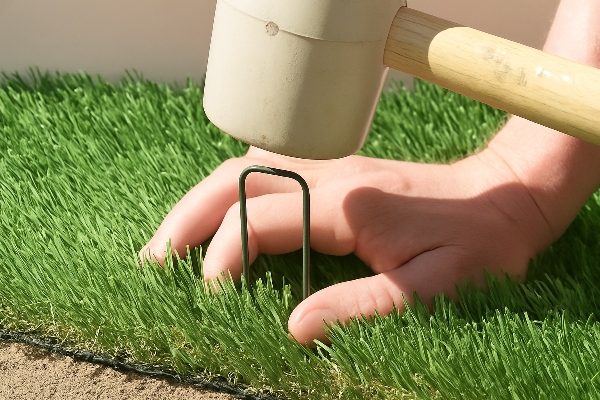
Grounding sounds complex, but the principle is very simple. It’s the same idea used to protect buildings from lightning. You are just creating a direct path for electricity to travel to the earth, where it can be neutralized. I once worked on a large sports field project where the client, James from Australia, was very concerned about player comfort and safety. We installed a grounding system using copper rods. It was some extra work during installation, but it provided total peace of mind and has worked perfectly for years.
How to Ground Artificial Turf
Grounding is best done during the installation process. It involves creating a physical connection between the artificial grass and the earth.
-
Method 1: Grounding Rods5
This is the most robust method, ideal for large areas or in places where static is a significant and persistent problem.- Install Rods: Drive several copper grounding rods into the ground around the perimeter of the turf area.
- Connect with Wire: Run a copper wire around the perimeter, connecting it to each of the grounding rods.
- Attach to Turf: Secure this copper wire to the mesh backing of the artificial grass. Any static charge that builds on the turf now has a direct highway to escape into the earth.
-
Method 2: Metal Fasteners6
A simpler, but still effective, method of grounding involves the fasteners you use to secure the turf.- Use Metal Nails: When you install the turf, use long, galvanized or copper nails or staples to fix the edges. Driving these metal fasteners through the turf backing and deep into the sub-base creates multiple small grounding points. For many residential installations, this is more than enough to prevent noticeable static buildup. I often recommend this simpler method to clients like Carlos in Mexico for their landscaping projects.
Conclusion
Preventing static on your turf is best done during installation with the right materials. If it’s already installed, a simple spray of water or grounding can solve the issue effectively.
-
Explore this link to understand how anti-static technology can enhance your artificial grass experience. ↩
-
Learn about the advantages of silica sand infill and how it can prevent static shocks effectively. ↩
-
Discover the simple yet effective method of rinsing to combat static shocks on your lawn. ↩
-
Find out which anti-static sprays are most effective for maintaining your artificial turf. ↩
-
Learn how grounding rods can provide a permanent solution to static electricity in your turf installation. ↩
-
Discover how metal fasteners can simplify the grounding process and enhance your turf’s performance. ↩
_画板-1.png)