_画板-1.png)
You worry about rain damaging your investment and ruining the look of your landscape. Waterlogging creates messes and destroys expensive sports fields. Is synthetic turf actually safe from water damage?
Yes, artificial grass is highly water-resistant. It is designed for outdoor use and withstands heavy rain and moisture without rotting. High-quality turf features drainage holes in the backing that allow water to pass through quickly, keeping the surface dry and usable shortly after a downpour.
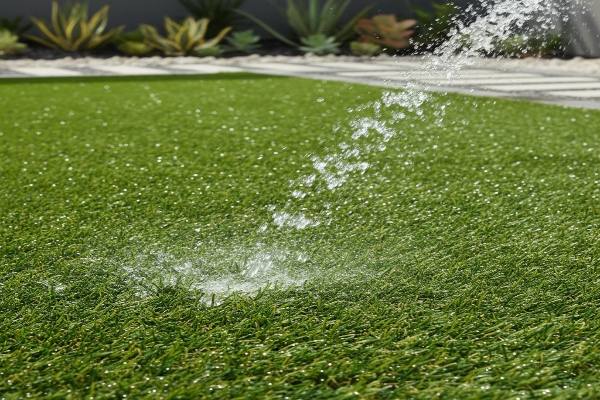
I have seen many customers ask this question before they place their production orders. They want to be sure that the product can handle their local weather. Let me explain the details to you so you understand exactly how it works.
Is it Okay for Artificial Grass to Get Wet?
You might fear that moisture will destroy the grass fibers over time. Rot and mold are common concerns for outdoor materials in humid areas. Is getting wet a problem here?
Getting wet is perfectly fine for artificial grass. The materials used, primarily polyethylene and polypropylene, are plastic-based and do not absorb water. They are built to face rain, snow, and humidity without losing structural integrity or color vibrancy.
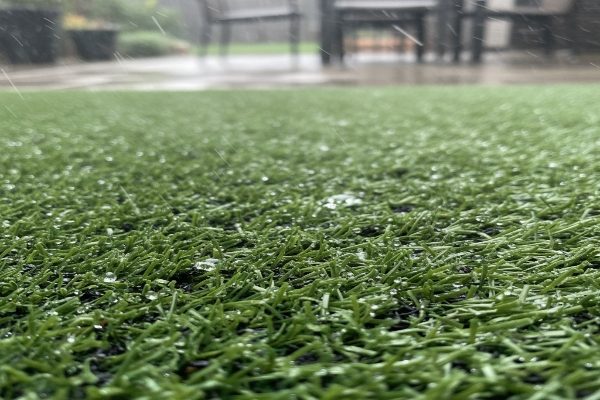
In my years working in the technical department, I learned that water is not the enemy of synthetic turf. The fibers are non-absorbent. This means water sits on the surface or drains through; it does not soak into the blade like natural grass. Whether it is a light drizzle or a heavy storm, the grass remains stable. I want to share a technical perspective that is important for your business. When we manufacture the yarn, the polymers we use are hydrophobic. This means they repel water rather than holding it.
Natural grass behaves differently. It turns into mud. It dies if it gets too much water or too little. Artificial turf maintains its quality. I have helped customers in very rainy regions, and their fields stay green while natural fields turn brown. We must ensure the quality of the backing material is strong. If you buy cheap turf with weak latex, the backing might weaken after years of water exposure. But with our stable quality control, the backing stays strong. Water does not change the physical shape of the grass blade. It will not swell or shrink.
| Feature | Natural Grass | Artificial Grass |
|---|---|---|
| Water Absorption | High (leads to mud) | None (hydrophobic fibers1) |
| Shape Stability | Variable | Constant |
| Recovery Time | Slow (needs to dry) | Fast (immediate drainage) |
| Rot Risk | High | Extremely Low |
Can Water Pass Through Artificial Grass?
Puddles make a field unusable and look terrible to your clients. You need to know where all that water actually goes during a storm. Does it stay on top?
Water passes through artificial grass efficiently thanks to drainage holes engineered into the backing. These holes are spaced evenly to ensure rapid water flow. This system prevents standing water and allows the ground underneath to absorb the moisture naturally.
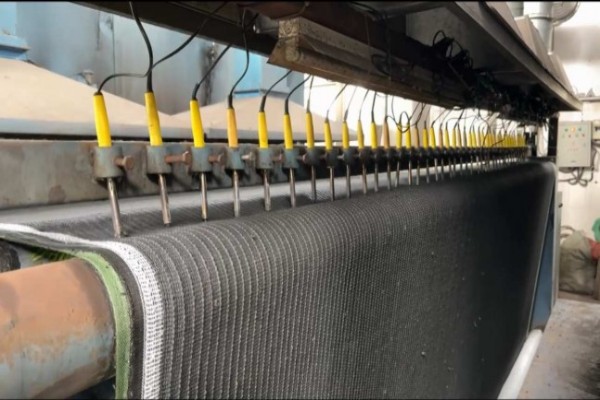
The secret lies in the backing of the turf. If you flip a sample over, you see small holes. These are punched mechanically during the manufacturing process. As an engineer, I know that the density and size of these holes matter. They allow water to flow vertically through the turf and into the ground below. However, I need to share a critical insight with you. The turf is just one part of the system.
I had a customer once who complained about water pooling on his project. He thought the turf was bad. I went to check the site. The turf had perfect drainage holes. The problem was the ground underneath. He installed the turf over a concrete base that had no slope and no drainage. The water passed through the grass but had nowhere to go. It is essential to understand this relationship. For the artificial grass system to work, the sub-base must be permeable. We recommend a crushed stone base for landscapes. This allows the water to leave the backing and enter the soil. If the base is solid, you must install a slope.
| Component | Function | Requirement |
|---|---|---|
| Turf Backing | Outflow | Consistent drainage holes |
| Sub-base | Storage/Transfer | Permeable crushed stone |
| Soil | Absorption | Natural infiltration capability |
Is Artificial Grass Slippery When Wet?
Safety is your top priority for playgrounds and sports fields. Wet surfaces usually mean dangerous slips and liability issues for owners. Is synthetic turf a hazard?
High-quality artificial grass remains non-slip even when it is wet. The texture of the fibers provides necessary friction. Unlike tile or concrete, the structure of the turf grips shoes and feet, significantly reducing the risk of slipping and falling during rainy weather.
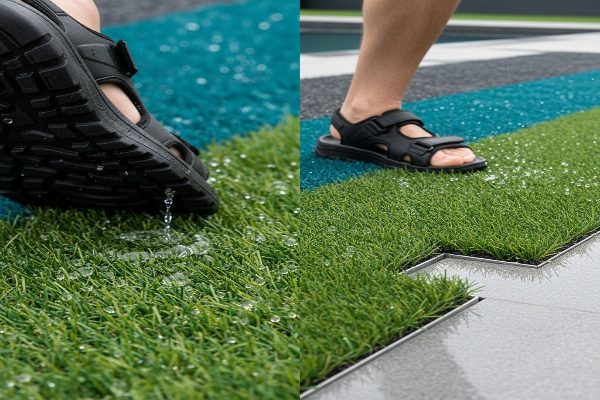
I have managed many sports projects where athlete safety is the main concern. Players run fast and change direction quickly. Rain happens during games. If the surface is slippery, players get hurt. Artificial turf is designed to provide traction. The friction coefficient2 of synthetic grass is much better than smooth surfaces like tile or wood decking when wet. The fibers stand up and create a textured surface that grips the sole of a shoe.
There are specific fiber shapes that help with this. A "C-shape" or "W-shape" fiber holds its structure better than a flat fiber. This structure prevents the grass from becoming a flat, slippery sheet. Also, for sports and many landscapes, we use infill. Infill is usually sand or rubber granules. This infill adds weight and stability. It also adds a rougher texture to the base of the fibers. This increases traction significantly. I always tell my clients that while no surface is perfectly accident-proof, artificial grass is one of the safest options in the rain. It is certainly safer than muddy natural grass, where you lose footing entirely.
| Surface Type | Reaction to Rain | Slip Risk |
|---|---|---|
| Artificial Grass | Drains, retains friction | Low |
| Natural Grass | Becomes mud | High |
| Ceramic Tile | Becomes slick | Very High |
| Concrete | Variable | Medium |
How Does Artificial Grass Handle Water Exposure?
Buying cheap materials ends in disaster after a few storms. You want long-term value and profits for your business. How does this material survive water?
Artificial grass handles water exposure effectively through durable polymers and robust backing systems. It does not swell, shrink, or rot. The product is designed to endure years of wet conditions while maintaining its tensile strength and visual appeal without degradation.
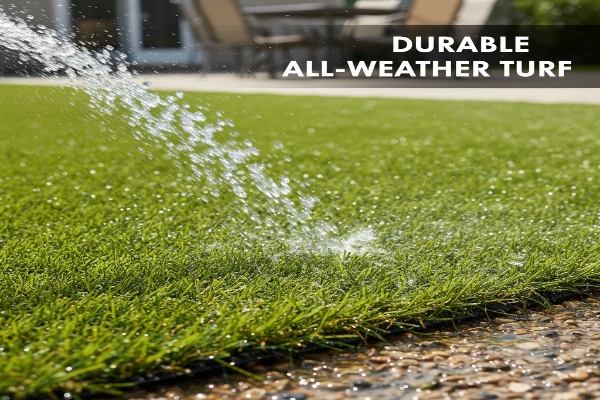
Let’s talk about the chemistry simply. As I mentioned, the yarn is plastic. But the backing is a mix of fabric and glue (SBR Latex or PU). In the factory, we apply strict quality control to ensure this glue binds the grass permanently. Water does not dissolve this glue. A high-quality turf can sit in water without falling apart. This is why strict production quality control is vital. If a supplier cuts costs on the glue, the tufts might pull out after heavy rains.
In humid countries, people worry about mold. I have customers in climates like Southeast Asia and South America. They ask about fungus. Artificial grass does not provide food for mold. Mold needs organic matter to eat. Since our grass is synthetic, mold cannot grow inside the fiber. It can only grow on top if there is dirt or food debris left there. But the rain actually helps here. Rain acts as a natural cleaner. It washes away dust, pollen, and sugar from sodas. So, regular water exposure is actually good for keeping the turf clean. It is a self-cleaning mechanism to some extent.
Can Artificial Grass Be Used Around Pools or in Rainy Climates?
Pool decks need to look luxury but be functional. Heavy rain kills natural landscapes and floods patios. Is this the right solution for wet zones?
Artificial grass is an excellent choice for pool surrounds and rainy climates due to its superior drainage and aesthetics. It provides a lush, green look year-round. However, you must avoid splashing high-concentration chlorine directly on the turf to prevent fiber damage.
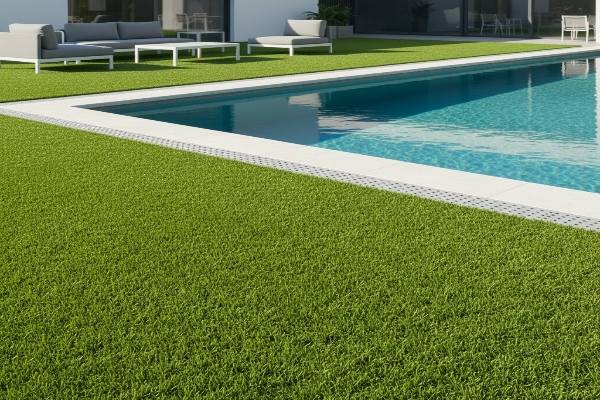
Installing artificial turf around a swimming pool is an excellent choice. It offers a high-end, elegant, and sophisticated look that pavers often lack. It is soft on bare feet and is not slippery like wet tile. However, you need to use critical thinking for the installation. If you are in an area with high rainfall, standard drainage is not enough. You must request turf with the highest density of drainage holes. The more holes, the faster the water leaves. And again, the drainage performance of the underlying ground must be excellent. Otherwise, even if the turf drains well, poor ground drainage will lead to waterlogging.
There is one big warning I give to all my friends and clients. Be careful with pool chemicals3. The water in the pool is diluted and safe. But the concentrated chlorine or disinfectant handles are dangerous. If you spill raw, high-concentration chlorine on the grass, it can cause irreversible damage. It might bleach the color or weaken the plastic. You should mix chemicals away from the grass area. If you manage these two things—drainage density and chemical safety—artificial grass is the best material for these wet environments.
| Factor | High Rainfall Area | Pool Surround |
|---|---|---|
| Drainage Need | Maximum hole density | Standard / High |
| Base Requirement | High permeability rock | Permeable or sloped concrete |
| Chemical Risk | None | High (Chlorine spills) |
| Aesthetic Value | Stays green in mud season | Soft, luxury feel |
Conclusion
Artificial grass is fully water-resistant, safe, and drains well, provided the base is prepared correctly. It is a smart investment for rainy areas and poolsides with proper care.
-
Learn about hydrophobic fibers and how they enhance the performance of materials like artificial grass in various conditions. ↩
-
Understanding the friction coefficient can help you choose safer surfaces for sports and recreational areas. ↩
-
Understand the risks of pool chemicals on artificial grass and how to protect your investment. ↩
_画板-1.png)