_画板-1.png)
Many landscape contractors struggle with balancing immediate aesthetic requirements and long-term project survival rates. Traditional seeding leaves bare dirt for weeks, while conventional artificial grass often fails local environmental greening quotas. If you are facing this dilemma, understanding the benefits of hybrid turf offers a highly profitable, compliance-friendly solution.
The core benefits of hybrid turf include immediate visual greening upon installation, robust root protection for natural grass, and seamless compliance with municipal greening regulations. By utilizing an open-woven backing, it allows natural grass to grow through the synthetic fibers, significantly reducing long-term replanting and maintenance costs for commercial projects.
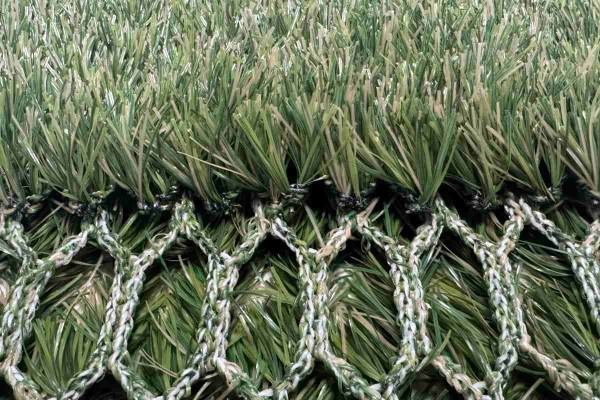
To fully grasp why this premium product commands a higher price tag, we need to look beyond the surface. Let us break down how this engineered system transforms project timelines, protects your landscaping investment, and creates lucrative new wholesale opportunities for distributors.
How does the project lifecycle advantage work?
Waiting for natural grass to grow often delays project handovers, frustrating stakeholders and delaying final payments. Covering the area with standard synthetic turf is not always an option due to site rules. Hybrid turf solves this timeline crisis instantly.
The project lifecycle of hybrid turf begins with immediate visual greening the moment it is laid over seeded soil. Over the following weeks, natural grass grows organically through the open-woven backing. This creates a fully integrated, dual-layer system that satisfies immediate handover requirements while ensuring long-term ecological growth.
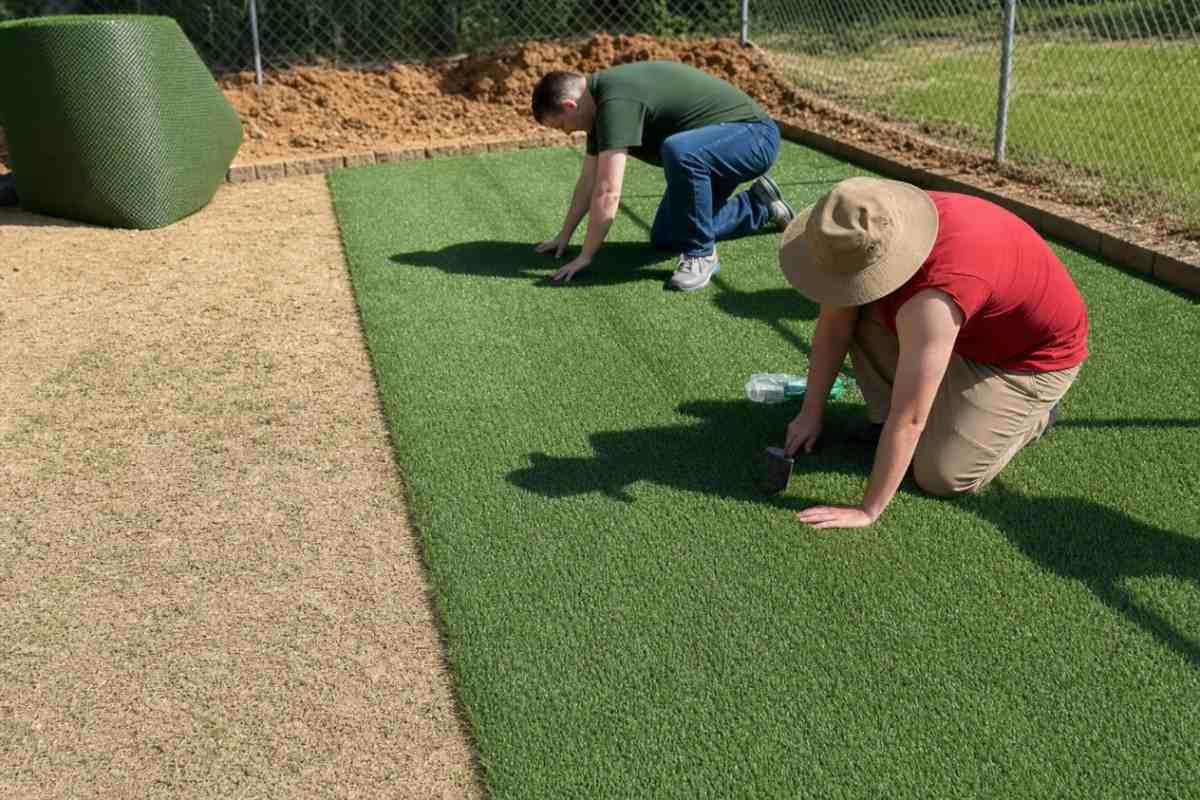
I frequently speak with municipal contractors who misunderstand the actual installation process. They assume hybrid turf is a complex, multi-layered engineering nightmare requiring specialized equipment. In reality, the process is incredibly straightforward and designed for rapid commercial deployment.
You prepare the soil and sow your natural grass seeds just as you normally would for a standard park or roadside green belt. However, instead of leaving the seeded soil exposed to wind, birds, and severe erosion, you immediately unroll the hybrid artificial turf directly on top of the soil.
The Timeline of Integration
Understanding this timeline highlights the practical benefits of hybrid turf for large-scale landscaping:
- Day 1 (Installation): The site instantly looks vibrant and green. The synthetic blades provide immediate aesthetic appeal. This is crucial for passing initial visual inspections, satisfying government project owners, and finalizing immediate construction phases.
- Weeks 2 to 4 (Germination): The open-woven structure acts as a protective micro-climate. It shields the vulnerable grass seeds from heavy rain washouts and direct, scorching sunlight, keeping moisture locked in the soil.
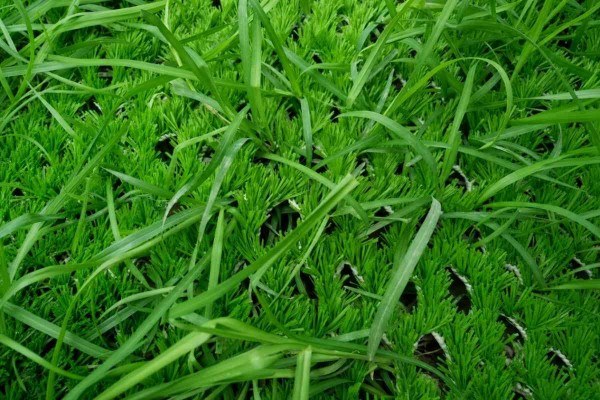
- Months 2 to 3 (Full Integration): Natural grass shoots push through the open-woven backing. The natural and synthetic blades blend together visually and structurally.
Because the backing is open and breathable, water, oxygen, and nutrients pass through freely. The result is not just leaky artificial grass. It is a carefully timed biological and synthetic partnership. B2B distributors can leverage this exact timeline to sell to contractors who are heavily penalized for delayed project completions. The initial aesthetic buys critical time for the natural grass to establish itself without holding up the commercial handover.
Why is root protection the core value of woven hybrid turf?
High-traffic areas in public parks and schools inevitably suffer from severe soil compaction and torn grass. Constant foot traffic destroys natural grass roots1, leading to endless municipal replanting budgets. A woven hybrid turf system intercepts this mechanical damage before it ever reaches the soil.
Root protection is the primary mechanical benefit of woven hybrid turf. The strong, synthetic open-woven backing absorbs the shear stress from heavy foot traffic2. By shielding the crown and root system of the natural grass, it prevents the living plants from being uprooted or crushed during commercial use.
When importers look at the premium price of our hybrid turf, they often ask me to justify the higher cost compared to standard landscaping grass. I always redirect their attention away from the synthetic blades and toward the foundation. The true value lies entirely in the physics of root protection.
Traditional natural grass fails in heavy-use municipal areas because heavy boots and landscape maintenance equipment tear the grass at the crown. The crown is the critical point at the soil surface where the grass shoot meets the root. Once the crown is destroyed by friction, the entire plant dies.3
How the Open-Woven Backing Works
To fully appreciate the long-term benefits of hybrid turf, you must understand how the physical structure defends the plant:
- Shear Stress Absorption: When someone steps, runs, or pivots on the hybrid grass system, the friction is absorbed by the synthetic fibers and the durable woven backing. It does not transfer to the fragile natural plant tissue.
- Soil Anti-Compaction: The physical barrier of the synthetic backing distributes surface weight more evenly across the ground. This prevents the topsoil from turning into a hard, impermeable brick over time. Loose soil allows roots to breathe and expand deeper into the earth.
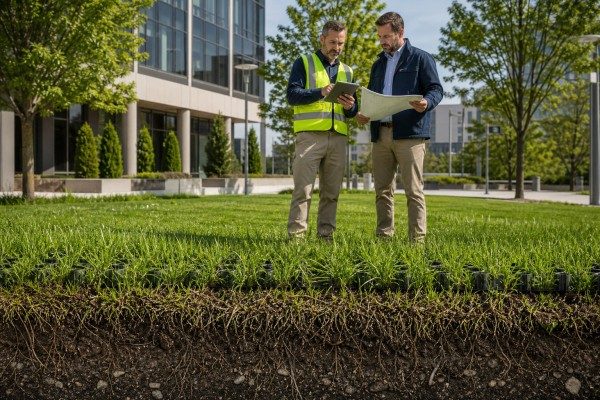
- Crown Shielding: The crown of the natural grass sits safely below or perfectly within the woven mesh. Even if the top blades of the natural grass are worn down by a busy weekend festival, the root system survives completely intact, ready to regrow the following week.
For B2B buyers and landscape engineers, this means fundamentally shifting the sales pitch. You are not just selling plastic grass. You are selling an anti-destruction shield for municipal landscaping. This mechanical protection alters the lifespan of public green spaces, keeping them lush where standard natural grass would quickly turn into a costly, muddy pit.
How does hybrid grass improve ROI and environmental compliance?
Bidding on government and commercial tenders is fiercely competitive today. If your proposal relies exclusively on standard artificial turf, you risk failing mandatory greening rate inspections. Hybrid grass bridges the gap between strict environmental compliance and long-term financial viability.
Hybrid grass improves ROI by drastically reducing the need for seasonal replanting and frequent soil aeration. Simultaneously, because natural grass grows organically through the system, it qualifies for municipal greening rate quotas, helping contractors pass environmental compliance checks that conventional artificial turf would fail.
Let us talk specifically about the premium justification. Hybrid synthetic turf certainly requires a higher upfront financial investment than conventional artificial grass. For distributors looking for a profitable escape from the relentless price wars of standard landscaping turf, mastering this ROI logic is your key to securing high-margin, blue-ocean commercial opportunities.
The Compliance Advantage
In many modern urban development projects, local governments mandate specific "greening rates." This means a certain percentage of the construction land must contain living, breathing plants to combat the urban heat island effect4 and properly manage stormwater runoff. Standard artificial grass is usually classified legally as hardscaping. Therefore, it does not count toward the project’s greening quota.
A hybrid turf system, however, functions as a living landscape once installed over seeded soil. The natural grass photosynthesizes, absorbs ambient carbon dioxide, and transpires water into the atmosphere5. Consequently, landscape contractors can utilize this engineered product to meet strict environmental acceptance criteria without inflating their long-term maintenance budgets. Furthermore, our open-woven structure utilizes highly recyclable materials, adding another layer of environmental responsibility to your project bids.
The ROI Breakdown
When comparing systems over a five-year municipal cycle, the financial benefits of hybrid turf become undeniable:
| Cost Factor | Traditional Natural Grass | Conventional Artificial Grass | Woven Hybrid Turf |
|---|---|---|---|
| Initial Purchase Cost | Low | Medium | High |
| Annual Replanting Costs | Very High | None | Very Low |
| Greening Compliance | Yes | No | Yes |
| Long-Term ROI | Low (Due to extreme upkeep) | Medium (But fails eco-rules) | High (Lasts longer, passes rules) |
The higher initial purchase price of the hybrid system is rapidly offset. Contractors save massive amounts of money because they do not have to return every spring to re-sod dead, heavily trafficked areas. For wholesale importers, this dynamic creates a compelling B2B sales narrative focused on total project lifecycle costs rather than just competing on the lowest price per square meter.
What must you evaluate before ordering hybrid turf?
Buying hybrid turf blindly for a commercial project can lead to costly failures. If the natural grass dies because of poor site evaluation, you are left with an expensive, half-empty synthetic lawn. Successful deployment requires careful pre-sales analysis of local biological conditions.
Before ordering hybrid turf, you must evaluate your local climate, soil drainage capacity, and natural grass seed compatibility. The system relies heavily on the biological health of the natural grass. Assessing these factors ensures the open-woven backing functions correctly and prevents agricultural failures in commercial projects.
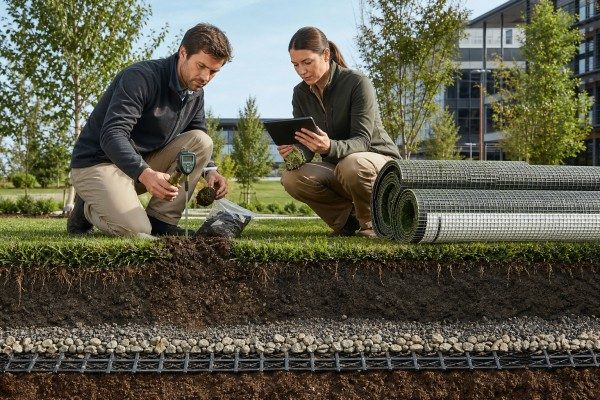
I always emphasize to my wholesale clients that we are dealing with a biological hybrid system. That means the living component—the natural grass—still requires proper agricultural care. There is absolutely no such thing as a "maintenance-free" living landscape. The benefits of hybrid turf are only fully realized when the synthetic product is paired with correct environmental choices.
To secure high-quality B2B container orders that result in successful, showcase projects, you must ask your contractor end-users the right questions before finalizing your import specifications.
Key Evaluation Metrics
- Local Climate and Seed Selection: What exact grass species thrives in your project’s specific latitude and local climate? Hybrid turf does not magically make a warm-season grass survive in a freezing winter climate. The grass seed selected must be matched perfectly to the local weather patterns.
- Soil Composition and Drainage: Our open-woven backing provides excellent water permeability. However, if the native soil beneath the backing is heavy, compacted clay, rainwater will pool directly at the roots, causing severe rot. Proper soil grading, sand mixing, and drainage preparation are mandatory prior to installation.
- Intended Maintenance Regime: Will the local municipality or property owner regularly irrigate and mow the hybrid grass? The natural grass will eventually grow high above the synthetic fibers and requires regular cutting to maintain a neat appearance.
By setting clear boundaries and managing project expectations, you build immense trust with professional contractors. Educating buyers that this product prevents root damage rather than eliminating all landscaping work entirely positions you as a trusted expert consultant. You elevate yourself above being just another factory vendor pushing a quick sale.
Frequently Asked Questions
Does hybrid turf require maintenance?
Yes. While the benefits of hybrid turf include massively reduced replanting costs, the natural grass component still requires standard agricultural care. This includes regular watering, mowing, and occasional fertilizing to keep the living plants healthy within the synthetic matrix.
Is hybrid turf considered environmentally friendly?
Yes. Because it allows natural grass to grow, it supports natural water drainage, reduces the urban heat island effect, and helps commercial projects meet mandatory municipal greening rates. Furthermore, our open-woven backing utilizes fully recyclable materials.
What is the minimum order quantity for wholesale hybrid turf?
As a factory-direct manufacturer, QH focuses strictly on wholesale and full-container orders. Our custom Minimum Order Quantity (MOQ) is 3,000 square meters per specification, designed to support large-scale municipal, sports, and commercial landscaping projects.
Can hybrid grass be installed on concrete?
No. The primary design of a grow-through hybrid turf system requires a permeable soil base. The open-woven backing is engineered specifically to be laid over seeded soil so natural grass roots can establish themselves deep into the earth.
Conclusion
Understanding the distinct benefits of hybrid turf transforms how B2B buyers approach commercial landscaping tenders. It is not merely an expensive alternative to conventional turf. It is a highly engineered, root-protecting system that provides immediate project greening, aggressive physical durability, and crucial environmental compliance. By factoring in the project lifecycle and long-term ROI, wholesale distributors can successfully bypass standard turf price wars and offer genuine, high-margin value to municipal contractors.
If you are a wholesale distributor, sourcing agent, or landscape contractor ready to elevate your commercial project portfolio with premium hybrid turf, contact QH today. Email me at [email protected] or reach out via WhatsApp at +86 185 7566 0746 to discuss full-container pricing, factory capacity, and custom specifications for your next major tender.
-
"Trampling, defoliation and physiological integration affect …", https://pmc.ncbi.nlm.nih.gov/articles/PMC3310488/. Details the mechanism by which foot traffic increases soil bulk density and damages turfgrass root systems, noting that soil moisture levels at the time of traffic heavily influence the severity of compaction. Evidence role: mechanism; source type: education. Supports: Foot traffic increases soil bulk density and damages turfgrass root systems.. Scope note: Soil moisture levels at the time of traffic heavily influence the severity of compaction. ↩
-
"[PDF] Early Life Benefits of Hybrid Sports Turf – Purdue e-Pubs", https://docs.lib.purdue.edu/cgi/viewcontent.cgi?article=1084&context=resec-isea. Demonstrates that hybrid turf systems with synthetic backing distribute shear stress more effectively than natural grass alone, although the degree of protection varies based on the synthetic fiber density and backing material. Evidence role: mechanism; source type: paper. Supports: Hybrid turf systems with synthetic backing distribute shear stress more effectively than natural grass alone.. Scope note: The degree of protection varies based on the synthetic fiber density and backing material. ↩
-
"Winterkill of Turfgrasses", https://extension.psu.edu/winterkill-of-turfgrasses/. Explains the botanical function of the turfgrass crown and confirms that its destruction prevents regrowth, though some rhizomatous species may recover if subterranean nodes remain intact. Evidence role: mechanism; source type: education. Supports: The botanical function of the turfgrass crown is critical, and its destruction prevents regrowth.. Scope note: Some rhizomatous species may recover if subterranean nodes remain intact. ↩
-
"The effect of synthetic grass sports surfaces on the thermal environment", https://pmc.ncbi.nlm.nih.gov/articles/PMC11272752/. Quantifies the cooling effect of natural grass in mitigating the urban heat island effect, noting that this benefit is contingent upon adequate soil moisture for continuous evapotranspiration. Evidence role: general_support; source type: paper. Supports: Natural grass mitigates the urban heat island effect through surface cooling.. Scope note: This benefit is contingent upon adequate soil moisture for continuous evapotranspiration. ↩
-
"Evapotranspiration and the Water Cycle", https://www.usgs.gov/water-science-school/science/evapotranspiration-and-water-cycle. Describes the physiological process of turfgrass transpiration and its role in atmospheric cooling, though the rate of transpiration fluctuates significantly with ambient humidity and temperature. Evidence role: mechanism; source type: encyclopedia. Supports: Turfgrass transpiration plays a key role in atmospheric cooling.. Scope note: The rate of transpiration fluctuates significantly with ambient humidity and temperature. ↩