_画板-1.png)
You invested heavily in high-quality artificial turf, but accidental damage can ruin its look and value instantly. Don’t let simple mistakes destroy your lawn; follow these essential protection tips.
To prevent damage to synthetic grass, keep intense heat sources like grills on concrete pads and block sunlight reflected from energy-efficient windows. Avoid using sharp stakes that puncture the backing, and never let concentrated chemicals or bleach contact fibers. Regular, careful maintenance ensures your landscape stays profitable and beautiful.
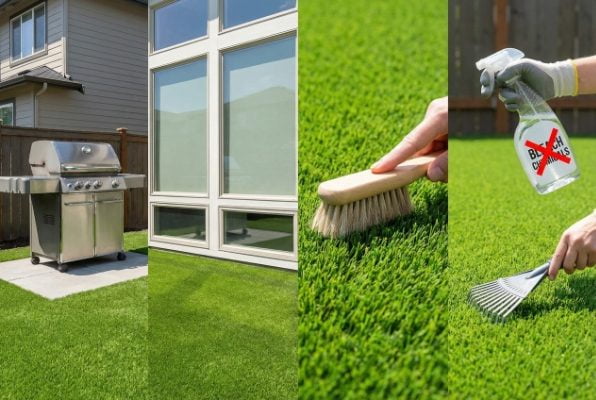
I have seen many clients ruin good grass with bad habits. Maintaining the quality of your product is just as important as buying it at a competitive price. If you treat the turf well, it will serve your business for years. Now, let’s look at the specific ways to stop damage before it starts.
How should you be careful with barbecues and fire pits to protect synthetic grass?
Fire melts plastic instantly, and this damage is usually permanent and ugly. You must keep hot coals and open flames far away from your synthetic lawn areas.
Artificial turf is made of synthetic fibers that will melt when exposed to the high heat of fire pits or stray embers. Always place barbecues and fire features on a dedicated concrete or stone patio, ensuring a safe distance between the heat source and your grass.
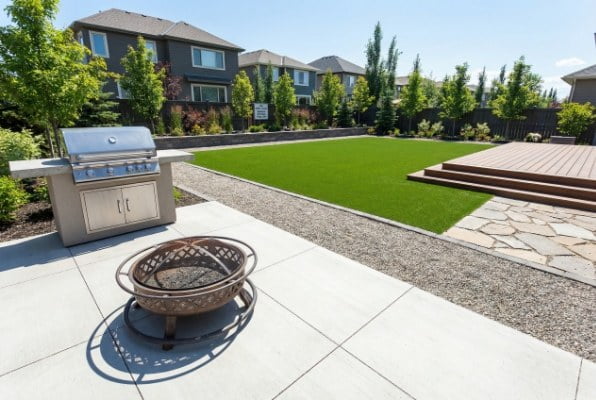
As an engineer who has spent years in the artificial turf industry, I have seen many cases where a beautiful project was ruined by a single summer party. People often forget that artificial grass is, at its core, a plastic product.
Understanding Fire Risks
Whether you are dealing with real grass or artificial turf, fire is always a risk. However, with synthetic turf, the issue is not just about catching fire. At QH Grass, we manufacture our products to be fire-retardant1. This means that if a spark lands on it, the whole lawn won’t burn down. But, the fibers will melt together. This leaves a hard, black, melted spot that ruins the visual appeal.
Create a Designated Safe Zone
To solve this, you need to think about knowledge and planning. You should separate the cooking area from the green area.
- Use Hardscapes: Build a concrete or stone patio for the grill.
- Create Distance: Keep the fire pit at least 3 meters away from the turf edge.
- Use Screens: If the area is small, use a screen to catch flying embers.
Surface Comparison Table
Here is a simple breakdown of how different surfaces handle heat from a grill:
| Surface Type | Reaction to Hot Embers | Repair Difficulty |
|---|---|---|
| Artificial Turf | Melts immediately, fibers fuse | Difficult (Requires patch work) |
| Concrete Paver | No damage, maybe a soot mark | Easy (Wash off) |
| Natural Stone | Very heat resistant | Easy (Wash off) |
| Wood Deck | Burn marks, risk of fire | Moderate (Sanding/Replacing) |
I always tell my customers: keep the heat on the stone, and the green stays green. It is a simple rule that saves a lot of money on repairs.
How can you avoid damage from reflecting sunlight on artificial turf?
Energy-efficient windows are great for power bills but can act like a magnifying glass on your lawn. The concentrated beam of sunlight creates extreme heat spots.
Window, specifically Low-E glass, can reflect sunlight onto your artificial turf, creating temperatures high enough to melt the fibers. To prevent this, you should install screens or shade structures like awnings to break up the reflection and keep the grass cool.
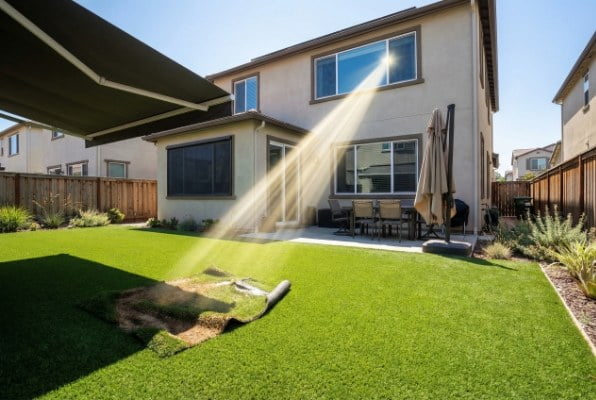
This is a problem that surprises many experienced professionals. I remember a customer, David from the US, who called me saying his grass was fading in a straight line. We found out it was his neighbor’s new windows.
The Science of Analysis
Modern energy-efficient windows (Low-E glass2) are designed to reflect heat away from the house. Often, the glass is slightly curved. This curve acts like a magnifying glass. It takes the sunlight and focuses it into a laser-like beam. This beam hits the artificial turf. The temperature in that focused beam can reach over 90 degrees Celsius (around 200 degrees Fahrenheit).
Identifying the Problem
While artificial turf will not yellow just from sitting in normal sun, these "hot spots" are different. They exceed the melting point of standard Polyethylene (PE) fibers.
- Fading: The color starts to look washed out in specific streaks.
- Melting: The tips of the grass curl up and feel hard like crispy bacon.
Practical Solutions
You do not have to replace the windows. You just need to block the path of the reflection.
- Shade Structures: Setting up umbrellas or shade sails over the affected area blocks the beam. It also makes the yard more comfortable for you.
- Window Films: You can apply a non-reflective film to the outside of the window.
- Screens: Installing a simple mesh screen over the window breaks up the light so it cannot focus.
Taking these steps protects the integrity of the product. It ensures the lifespan that I promised you when we manufactured the goods.
How should you handle sharp objects to prevent harm to your turf?
Piercing the backing of your turf destroys its drainage and structural integrity. You need to avoid using stakes and sharp tools on the finished lawn.
Sharp objects like tent poles, holiday decoration stakes, and garden tools can puncture the mesh backing of artificial turf. Instead of driving stakes into the ground, use weighted items like sandbags or concrete blocks to secure objects without causing permanent damage.
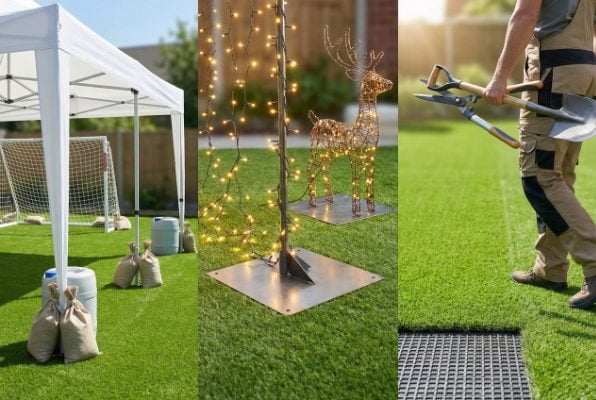
In the factory, we pay strict attention to the backing of the turf. It holds everything together. If you puncture it, you undo our hard work.
The Importance of Backing
The backing of artificial turf is usually a grid of fabric coated with latex or polyurethane. It holds the grass blades in place. It also manages water drainage. When you drive a metal stake through it for a party tent or a holiday decoration, you create a permanent hole.
- Weed Growth: Weeds can grow up through these new holes.
- Instability: The turf can shift or wrinkle around the hole.
- Drainage Issues: Water might pool in the wrong places.
Managing Garden Tools
When you are doing other gardening work around the turf, be careful. Dropping a pair of sharp shears or a shovel blade-first can slice the fibers and the backing.
- Storage: Always store tools properly after use. Don’t leave them lying on the grass.
- Handling: Carry tools across the turf carefully.
Detailed Alternatives to Staking
I know you need to put things on your lawn sometimes. Here is how to do it safely:
| Item | Old Method (Bad) | New Method (Safe) |
|---|---|---|
| Party Tent | Metal ground spikes | Water barrels or sandbags on legs |
| Soccer Net | U-shaped metal pins | Weighted frame base |
| Holiday Decor | Plastic/Metal stakes | Heavy base plates or twine tied to fences |
As a former sales executive, I want your business to grow. Avoiding these installation mistakes helps you maintain a reputation for quality work.
How does chloride affect synthetic grass, and what precautions should you take?
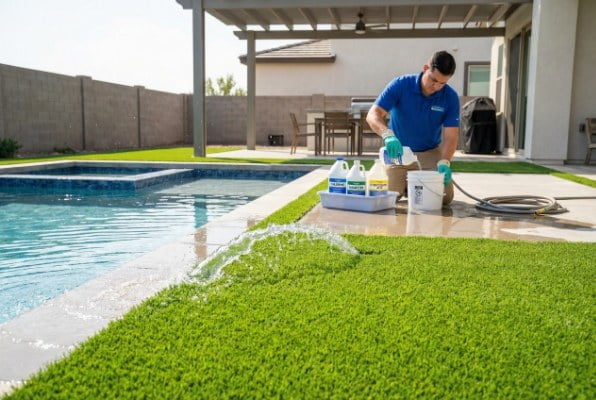
Pool water is usually fine, but pure chemicals are a disaster for plastic fibers. You must handle cleaning agents and pool additives with extreme care.
While splashed pool water is generally safe, highly concentrated disinfectants, bleach, and hydrochloric acid are corrosive. They can strip the color from fibers and weaken the plastic, so keep these chemicals far away from your artificial turf.
I have had many detailed discussions with purchasing managers about chemical resistance3. Polyethylene is tough, but it is not invincible.
Pool Water vs. Pool Chemicals
There is a big difference between the water in the pool and the bottle of chemicals you pour into it.
- Diluted Water: Normal pool water has a low concentration of chlorine. If kids splash this onto the grass, it is fine. Our QH Grass synthetic material is water-resistant.
- Concentrated Chemicals: The bottle of liquid chlorine, algaecide, or hydrochloric acid is very strong. These are oxidizers.
The Damage Process
If you spill strong bleach or acid on the turf, a chemical reaction happens. The chemical attacks the pigment (color) in the grass blade. It can turn the green grass white or yellow instantly. Even worse, it can make the plastic brittle. This means the grass will snap off when you walk on it later.
Best Practices for Safety
To keep the turf safe near pools, follow these rules:
- Designated Mixing Area: Never mix pool chemicals on the grass. Do it on the concrete deck or in the garage.
- Immediate Action: If you spill chemicals, rinse the area with a garden hose immediately. Use a lot of water to dilute it.
- Storage: Store chemicals in a spot where they cannot tip over onto the lawn.
- Rinsing: If the pool is used heavily, rinse the nearby grass with fresh water once a week to wash away salt and chemical buildup.
By understanding these chemical properties, you protect the investment. This is the kind of critical thinking that helps you avoid expensive replacement costs.
Conclusion
To keep your synthetic grass in top condition, protect it from fire pits, reflective window heat, sharp stakes, and concentrated chemicals. These simple steps ensure long-lasting quality and value.
-
Discover the science behind fire-retardant turf and how it can safeguard your lawn from fire hazards. ↩
-
Understanding Low-E glass can help you prevent damage to your artificial turf from sunlight reflection. ↩
-
Understanding chemical resistance helps you choose the right turf and maintain it effectively. ↩
_画板-1.png)