_画板-1.png)
You invest heavily in non-infill sports turf, but unsightly cracks and balding patches can ruin your field’s reputation quickly. Are you neglecting the hidden technical specs?
Common issues include seam splitting due to single-component adhesives and fiber shedding caused by weak backing. To fix these, ensure you use high-density turf (over 21,000 tufts/m²) with high Dtex fibers and verify the latex pull-out force exceeds specific industry standards before installation.
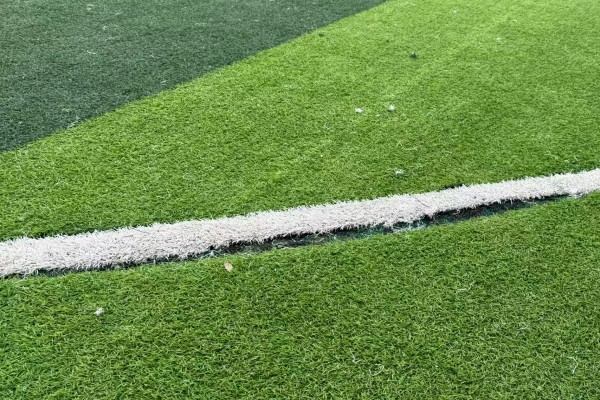
I have seen many fields fail simply because the installer ignored basic material science or skipped crucial checks. Do not let this happen to your project; you need to know exactly what separates a professional field from a disaster.
Why Seam Reinforcement is Critical for Player Safety and Field Longevity?
A split seam is not just ugly; it is a major liability risk for players tripping during a game. Why do so many installations fail here?
The seams are the strongest part of the field if bonded correctly, but they crack easily on uneven ground using cheap glue. Using a two-component polyurethane adhesive1 ensures a bond that withstands intense athletic movement and environmental stress.
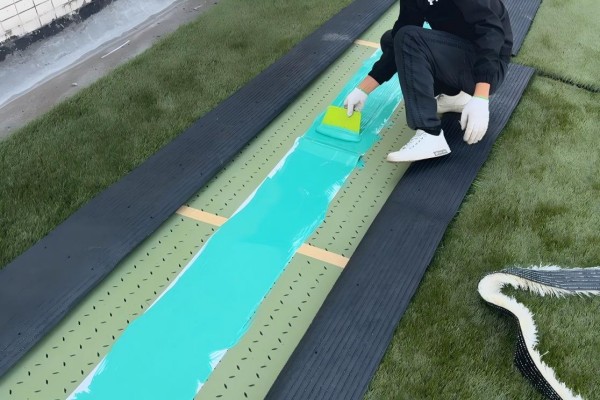
I cannot stress this enough: the seam is usually the most stable area, but only if you treat it right. If the seams are not secure, cracks appear. This looks terrible and allows water to seep under the backing, destroying the base.
From my experience in technical support, I advise you to never use single-component adhesive for sports fields. You must use high-quality two-component polyurethane adhesive. This glue creates a chemical reaction that bonds the backing tape and the turf permanently.
Before you even open the glue, you must look at the ground. Uneven surfaces put massive stress on the seams. If the ground shifts or has humps, the best glue in the world might fail. We instruct our teams to ensure the ground is perfectly flat before rolling out the turf.
Here is a checklist for perfect seams:
| Step | Action Required | Reason |
|---|---|---|
| 1. Ground Check | Inspect for bumps/dips. | prevents physical stress on the joint. |
| 2. Adhesive Selection | Use 2-component Polyurethane. | provides a structural, chemical bond. |
| 3. Compaction | Hammer/roll the joint immediately. | ensures full contact with the glue. |
Understanding the Density Difference: Why Non-Infill Grass Needs Higher Dtex and Stitch Rates?
Playing on thin non-infill grass feels like running on concrete, causing injuries and rapid fiber wear. Is your turf specification too low for heavy sports use?
Unlike filled systems, non-infill turf bears all the friction directly. You must specify a Dtex2 above 12,000 and a density of at least 21,000 tufts/m² to ensure upright fibers, adequate cushioning, and long-term durability against athlete traffic.
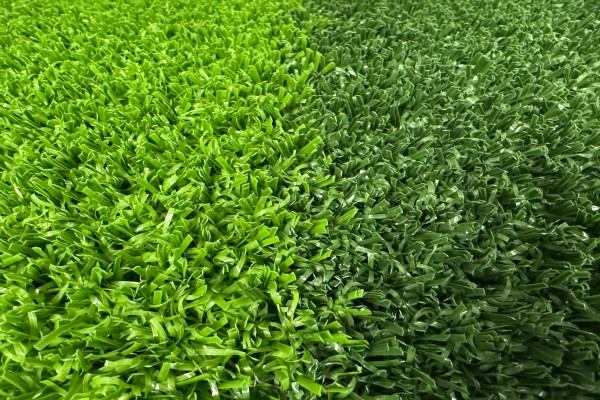
Do not confuse non-infill turf with standard landscape grass or football turf that requires sand. In a standard field, sand and rubber support the fiber. In a non-infill system, the fiber stands alone against the cleats of the players.
If the fiber is thin, it will crush flat instantly. Playing football on flattened plastic represents playing on a hard concrete surface. This causes skin burns and joint injuries for athletes. You must require high specifications to solve this.
I recommend looking for two specific numbers in your spec sheet. First, the Dtex (decitex) must be above 12,000. This means the fiber is thick and heavy. Second, the stitch density needs to be very high, at least 21,000 tufts/m².
High density achieves two things:
- Uprightness: The fibers support each other, standing straight up.
- Cushioning: A dense mat creates a sponge-like effect that protects the players when they fall.
| Feature | Standard Infill Turf | Non-Infill Sports Turf |
|---|---|---|
| Fiber Dtex | 8,800 – 11,000 | 12,000+ (Required) |
| Density (Tufts/m²) | 8,000 – 10,500 | 21,000+ (Required) |
| Wear Source | Taken by Infill | Taken by Fiber |
The Role of Backing Latex: Preventing Yarn Loss and "Balding" Spots?
Nothing looks worse than a pitch with bald patches exposing the black backing after just one season. How do you prevent your valuable fibers from simply shedding?
Fiber shedding is caused by weak backing adhesion. To prevent "balding," you must inspect the pull-out force: verify PU latex exceeds 45N and SBR latex exceeds 35N. Requesting production quality videos specifically testing this metric is essential for quality control.
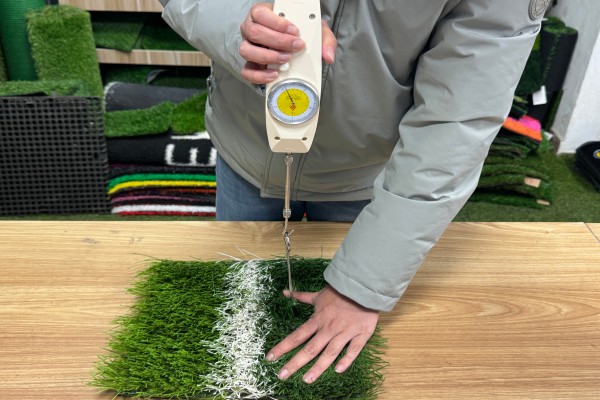
When I visit older fields, I often see "bald patches." This happens when the fiber is pulled out of the backing, exposing the black base fabric. It implies the glue holding the tuition failed.
The industry term for this grip is "pull-out force3." The FIFA standard requires at least 30N. However, for a high-quality field, 30N is too low. In our factory, we aim higher.
You need to know the difference between backing glues. SBR (Styrene Butadiene Rubber) is common and cheaper. If you choose SBR, ensure the pull-out force is above 35N. For premium projects, ask for PU (Polyurethane) backing4. PU is stronger and does not degrade as fast in water. We expect PU to have a force above 45N.
My Advice for Buyers:
Don’t just trust the catalog. Before you order, communicate clearly with your supplier. Ask them: "What is the guaranteed pull-out force?" Furthermore, demand proof. I always tell my clients to ask for photos or videos of the pull-out test during production.
Pull-Out Force Standards:
- FIFA Minimum: 30N
- Good Quality SBR: >35N
- High Quality PU: >45N
Conclusion
To ensure durability, select high-density turf with strong pull-out force and use two-component glue for seams. These technical details guarantee a safe, long-lasting investment for your business.
-
Explore this link to understand how two-component polyurethane adhesive enhances durability and safety in sports field installations. ↩
-
Understanding Dtex is crucial for selecting durable turf that withstands heavy sports use, ensuring player safety. ↩
-
Understanding pull-out force is crucial for ensuring the longevity and quality of artificial grass, preventing bald patches. ↩
-
Exploring PU backing benefits will help you make informed decisions for high-quality turf that lasts longer. ↩
_画板-1.png)