_画板-1.png)
You spend a lot of money on a soccer project for your client. But soon, the field looks bad and players complain. This ruins your reputation and costs you future business.
Poor-quality artificial grass soccer fields often face issues like rapid color fading, fiber splitting, and abnormal shedding. These problems usually stem from using cheap recycled materials, insufficient UV stabilizers, low-quality backing glue, or weak base fabrics. Understanding these signs protects your investment and ensures player safety.
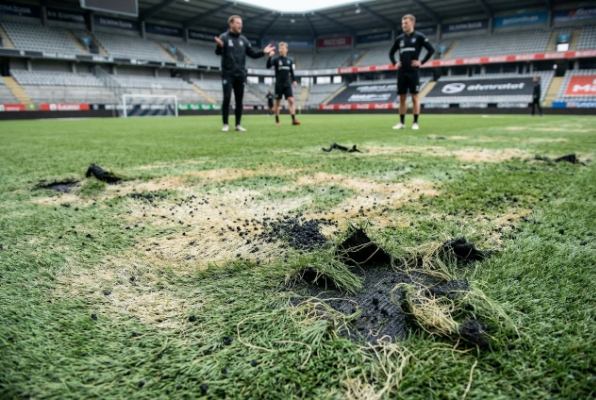
I see these issues often in my years as an engineer at QH Grass. I want to tell you why they happen. Read this, and you will know how to avoid bad suppliers.
Why Does the Artificial Grass Color Change or Fade?
Your green field turns yellow or grey quickly after installation. It looks old and cheap. Clients will think you sold them a bad product.
Artificial grass fades mainly because manufacturers use cheap color masterbatch or inferior recycled materials. UV radiation and acid rain also speed up this process. High-quality masterbatch costs more but protects color stability for years against harsh weather.
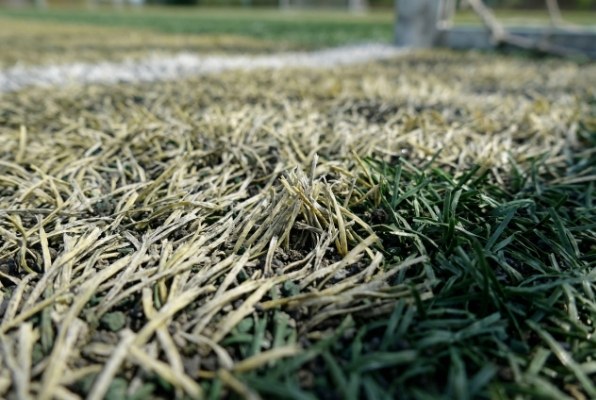
No artificial turf product lasts forever. But high-quality turf slows down aging. The key is the "color masterbatch1." These are granules that give the grass its green color. I know production costs well. High-quality color masterbatch is expensive. It costs at least $2000 more per ton than cheap versions.
Many factories want to lower prices to get your order. They choose cheap masterbatch. Or, they use granules made from recycled materials. This is risky. These materials cannot hold the color for a long time. The grass will fade very fast.
We also look at where you install the grass. Some areas have strong ultraviolet (UV) radiation. Other places have acid rain2 or heavy industrial pollution. These factors attack the grass. If the manufacturer does not confirm your location, they might give you standard grass. You need grass with extra protection for these areas.
Here is a breakdown of what determines color life:
| Factor | High-Quality Turf | Poor-Quality Turf |
|---|---|---|
| Material Source | Virgin PE materials | Recycled scrap materials |
| Masterbatch Cost | Premium (+$2000/ton) | Cheap / Budget |
| UV Resistance | High stability formula | Low or none |
| Result | Color stays green for years | Turns yellow/grey quickly |
When I managed the workshop, I saw that adding the right amount of high-quality masterbatch is the only way to ensure quality. Do not let a low price trick you.
Why Do Soccer Turf Fibers Split?
Players find broken plastic bits on their clothes after a game. The field surface becomes rough and dusty. This hurts the players and ruins the game experience.
Fibers split when manufacturers fail to add enough UV stabilizers or use weak recycled PE materials. Also, a low Dtex (denier) rating means the fiber is too thin and weak to withstand the heavy wear and tear of soccer matches.
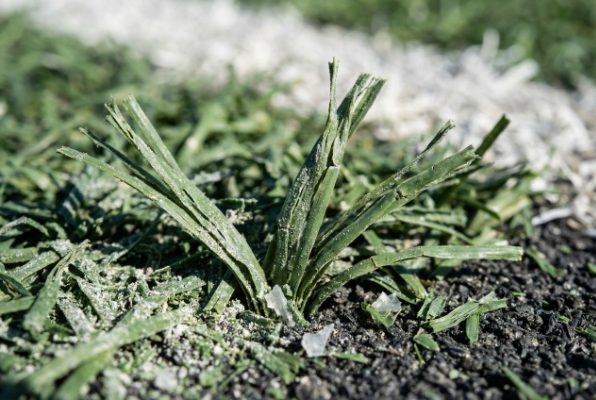
You might see the grass fibers crack or turn into powder. This is a serious quality problem. The main reason is the material formula. Manufacturers must add UV stabilizers3 during the production of fibers. These stabilizers stop the sun from destroying the plastic molecular chain. If they add too little, the sun breaks the fibers easily.
Recycled PE material is another cause. When plastic is melted down and used again, it loses strength. The structure is not stable. It cracks under pressure. I always advise using virgin materials for sports fields.
Another technical term you should know is "Dtex4." This measures the weight and thickness of the fiber. Low Dtex means the specific fiber is thin. It is not strong enough for a soccer field. Soccer involves a lot of running and kicking. Thin fibers will split down the middle.
Comparison of Fiber Integrity:
- Virgin Material + High Dtex: The fiber acts like a strong rubber band. It bends but does not break.
- Recycled Material + Low Dtex: The fiber acts like dry spaghetti. It snaps and powders when you step on it.
You must ask your supplier about the Dtex and the material source. This decides if your field lasts 8 years or 2 years.
Why Is There Abnormal Fiber Loss?
You see green tufts pulling out of the ground easily. The field gets bald spots in the goal area. This is a nightmare for maintenance and safety.
Abnormal fiber loss occurs when the backing glue has insufficient adhesive strength. This happens due to inferior latex5, excessive fillers like calcium powder, or over-baking6 during production. Improper installation, like dragging heavy rolls, also damages the backing.
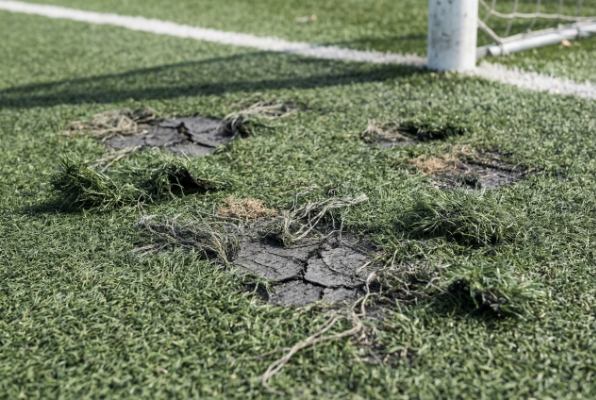
Fiber shedding usually happens because the glue on the back is bad. The glue holds the grass blades to the fabric. If the glue fails, the grass comes out.
Why is the glue weak?
First, the latex quality matters. Some factories use inferior latex. To save more money, they add "fillers" like water or calcium powder. This increases the volume of the glue but reduces its strength. It looks the same, but it does not grip the fibers.
Second, there is the production process. We coat the backing and then put it in an oven to dry. If the line speeds are wrong, problems happen. Baking the latex for too long makes it dry and brittle. It cracks, and the grass falls out.
Third, I often see installation mistakes. A roll of soccer turf is very heavy. It can weigh between 200kg and 600kg. Installers sometimes drag the entire roll across the rough ground. The glue cannot handle this friction. It detaches from the fabric. This damages the backing before you even play on it.
Causes of Fiber Loss:
- Production: Adding cheap fillers (water/calcium) to latex.
- Process: Over-baking causes brittle glue cracks.
- Installation: Dragging heavy rolls destroys the backing bond.
I always inspect the backing strength personally. You should verify the "tuft bind" strength in the specification sheet.
Why Does the Backing Get Damaged?
The carpet underneath rips or cracks. The whole system becomes unstable. You might have to replace the entire field because it cannot hold the shape.
Backing damage is often caused by using a single, thin layer of PP fabric or recycled materials that lack strength. Uneven base surfaces and poor drainage can also weaken the backing over time by keeping it soaked in water.
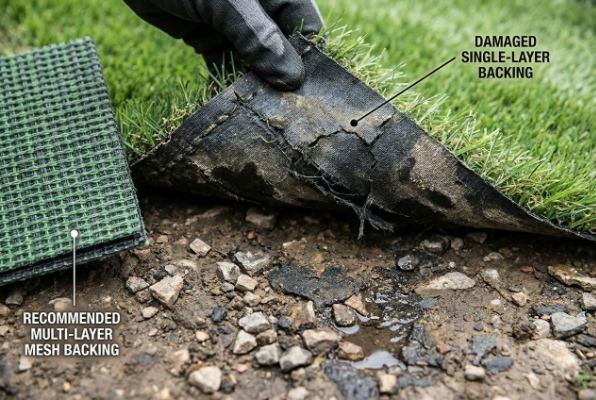
The backing is the foundation of the turf. If the foundation breaks, the turf is useless. Backing damage usually comes from poor material thickness. Standard backing relies on PP (polypropylene) cloth. Cheap turf uses a single, thin layer. It is weak. Better turf uses a multi-layer structure or adds a net for strength.
Also, check if the backing material is recycled. Recycled backing rips easily. It cannot handle the expansion and contraction from heat and cold.
Another issue comes from the coating. If the factory uses inferior coating materials, it eats into the backing cloth. Or, if they apply too much heavy coating, it puts stress on the fabric.
We must also look at your site conditions. Is the base surface smooth? Is the drainage good?
- Rough Surface: Sharp stones on the ground will cut the backing from underneath.
- Poor Drainage: If water sits under the turf for days, it rots the backing materials.
I recommend a "double backing" system for soccer fields. It costs a little more, but it prevents the field from tearing apart during a game.
Why Is the Color Inconsistent Across the Artificial Grass Surface?
The field looks striped or patchy. It looks unprofessional. This visual defect makes the client doubt the quality immediately.
Inconsistent color usually results from using recycled PE granules that vary in shade during secondary processing. However, sometimes it is just the pile direction, which you can fix by brushing the fibers. Fading infill materials can also alter the appearance.
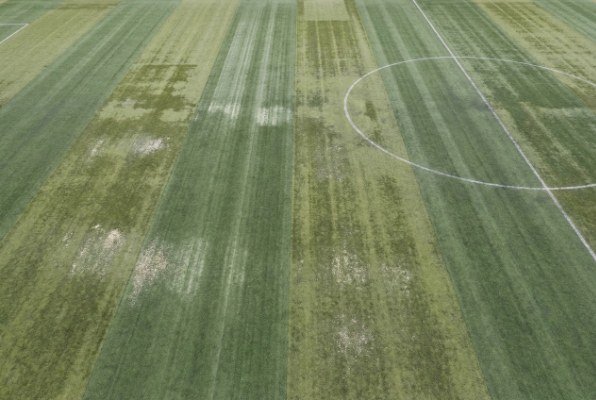
Uneven color is a common headache. The biggest cause is recycled PE granules7. When a factory re-melts old plastic, the color is already there. They mix different batches. Secondary processing cannot guarantee that every pellet is the exact same green. When they extrude the fiber, you get slight variations. A whole field of this looks patchy.
Sometimes, the grass is fine, but it looks uneven. This is about "pile direction8." Grass fibers lean in one direction when they come off the roll. If you lay two rolls with fibers facing opposite ways, they look like different colors because of the light reflection. This is not a quality defect. You can solve this. Use a turf grooming machine9. Brush all fibers to stand up or face the same way.
The ground below also affects the look. If your base is uneven, with high and low spots, the light hits the grass differently. It creates shadows that look like color bands.
Lastly, check your infill. You put rubber granules inside the grass. If you buy low-quality infill, it might fade or turn white. This changes the overall color of the field surface.
Checklist for Color Consistency:
- Material: Ensure virgin PE is used, not mixed recycled batches.
- Installation: Check pile direction before gluing.
- Base: Ensure the ground is perfectly level.
- Infill: Test the color stability of your rubber granules.
Conclusion
Bad artificial turf causes fading, splitting, shedding, and backing failures. You must demand high-quality masterbatch, virgin materials, and strong glue. A strict inspection of these details secures your profit and reputation.
-
Understanding color masterbatch is crucial for ensuring the longevity and vibrancy of artificial grass. ↩
-
Learn about the effects of acid rain on artificial grass to protect your investment effectively. ↩
-
Understanding UV stabilizers can help you choose better turf materials, ensuring durability and performance on the field. ↩
-
Learning about Dtex will guide you in selecting the right turf fibers, enhancing the longevity and quality of your soccer field. ↩
-
Learn how inferior latex impacts the durability and performance of artificial turf, ensuring you make informed choices. ↩
-
Discover the critical role of baking in turf production and how over-baking can lead to significant quality issues. ↩
-
Understanding recycled PE granules is crucial for ensuring color consistency in artificial grass, enhancing your project’s quality. ↩
-
Learning about pile direction can help you avoid visual defects in your turf installation, ensuring a professional look. ↩
-
Exploring turf grooming machines can provide insights into maintaining your artificial grass, ensuring it looks its best. ↩
_画板-1.png)