_画板-1.png)
Procurement managers face a massive headache when sourcing hybrid grass systems for international projects. If you misunderstand the different types of hybrid turf, you risk ordering incompatible materials that destroy project budgets and engineering timelines. The solution lies in matching the exact woven grid structure to your specific project demands.
The different types of hybrid turf are primarily categorized by their bottom structure and yarn composition. Open-woven systems include hexagonal bottoms for municipal landscaping, diamond or square bottoms with curly yarn for pet areas, and high-strength square bottoms for sports fields. These differ significantly from heavy-machinery stitched systems.
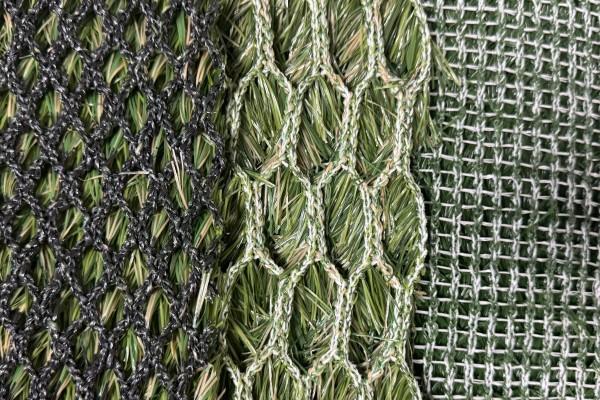
When international contractors ask me for quotes, the first question I always ask is: "Is your project a professional stadium, or municipal/landscape greening?" Let us break down how to evaluate these products to mitigate your procurement risks.
Why Do Buyers Misunderstand the Types of Hybrid Turf?
Many sourcing agents struggle because the artificial grass industry uses conflicting terminology. You might think you are buying a simple landscape product, but you end up receiving expensive quotes for complex stadium installations that require specialized construction crews.
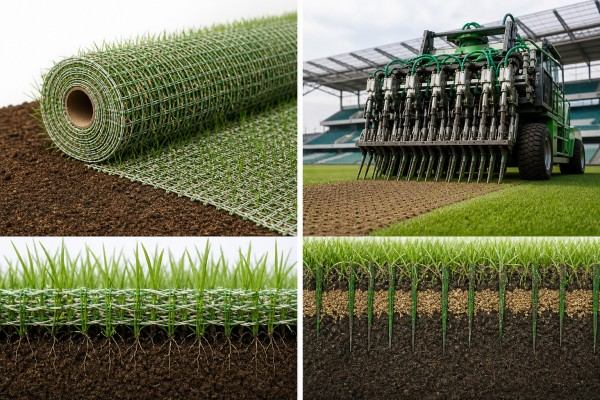
Buyers often confuse stitched or injected systems with open-woven types of hybrid turf. Stitched systems require expensive heavy machinery to implant artificial fibers into a natural sand profile. In contrast, woven hybrid turf is a roll-based protective matrix that allows real grass seeds to grow through its open grid.
Shattering Industry Misconceptions
I speak with importers daily who think "hybrid turf" just means standard artificial grass with a brown thatch layer. That is a dangerous misconception. Standard turf uses a solid polyurethane or latex backing that blocks natural growth completely. True hybrid systems integrate living grass with synthetic fibers.
When evaluating suppliers, you must first distinguish between machine-stitched systems and open-woven systems. Stitched systems are highly specialized, often used for elite professional stadiums, and require massive upfront investment in heavy machinery. If you are a municipal contractor or landscape distributor, this is rarely what you need.
You need an open-woven system, often called grow-through turf. This product acts as a protective matrix. You lay the mesh on prepared soil, sow real grass seeds, and the natural grass grows through the gaps. The natural roots anchor the synthetic grid deeply into the soil.
The Risk of Choosing the Wrong Structure
As a B2B buyer, your primary risk management task is selecting the correct woven bottom structure. If you choose a weak structure for a high-traffic sports field, the turf will tear. If you choose a tight, restrictive structure for a municipal garden, the real grass will struggle to penetrate the backing.
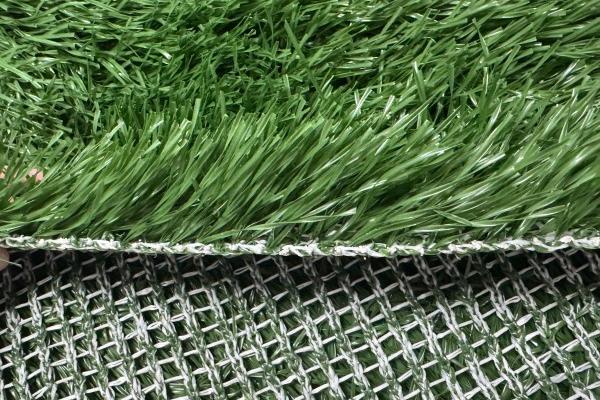
(Insert factory HD macro-photos of our three different grid bottoms here to show the structural differences.)
By understanding the distinct grid patterns—hexagonal, diamond, and square—you can ensure your container orders align perfectly with your clients’ engineering requirements.
What Are the Types of Hybrid Turf for Landscaping?
Municipal contractors face tight deadlines for roadside green belts and public parks. Failing to achieve a lush, green look quickly can result in delayed project handovers, unsatisfied government clients, and heavy financial penalties.
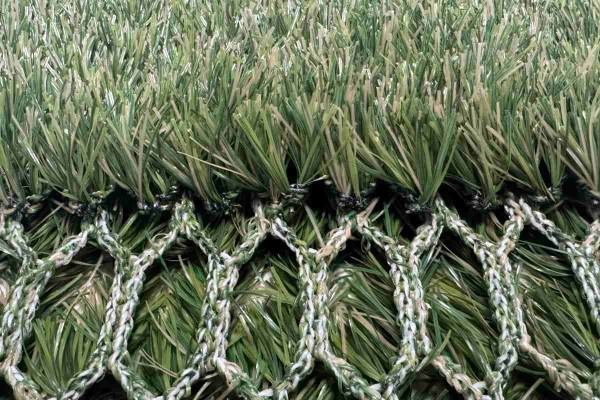
For landscaping, the best types of hybrid turf use a hexagonal bottom structure with monofilament yarn. This design features large open gaps that maximize real grass penetration. It provides immediate green coverage while protecting vulnerable natural grass roots during their initial growth phase.
Maximizing Natural Aesthetics
When evaluating materials for municipal landscaping, parks, and large-scale courtyards, the primary goal is visual appeal and environmental integration. The hexagonal bottom structure is the go-to solution. The hexagonal grid creates wider gaps than other patterns, which allows maximum sunlight, water, and space for real grass seeds to germinate and push through the backing.
I always recommend this specification to buyers supplying public green areas. The open-woven hexagonal mesh uses 100% recyclable, eco-friendly materials, which helps contractors meet strict municipal environmental standards.
The Instant Greening Effect
One of the main selling points you can offer your landscape clients is the instant greening effect. Traditional natural grass seeding leaves a site looking like bare dirt for weeks.1 Standard artificial grass looks unnatural in woodland settings.
The hexagonal woven hybrid turf solves both problems. As soon as you unroll and secure the turf, the project area instantly appears green. While the real grass takes time to grow, the synthetic monofilament fibers provide a beautiful, uniform landscape. Once the natural grass grows through, the two blend seamlessly.
Procurement Evaluation: Landscaping vs Standard Turf
| Evaluation Metric | Hexagonal Hybrid Turf | Standard Landscape Turf |
|---|---|---|
| Water Permeability | 100% permeable open grid | Relies on punched drainage holes |
| Environmental Impact | Eco-friendly, allows natural root systems | Blocks natural soil ecology |
| Visual Progression | Gets more natural as real grass grows | Remains static over time |
| Primary B2B Market | Municipal contractors, eco-parks | Commercial retail, indoor displays |
For wholesale buyers, this product offers excellent container optimization and appeals directly to government project suppliers looking for sustainable, green-building solutions.
Which Types of Hybrid Turf Are Best for Pets and Residential Areas?
Pet facility contractors and residential developers need surfaces that withstand heavy paw traffic and constant wear. If the turf lacks proper structural support, it degrades rapidly under animal use, leading to costly replacements and unhappy property owners.
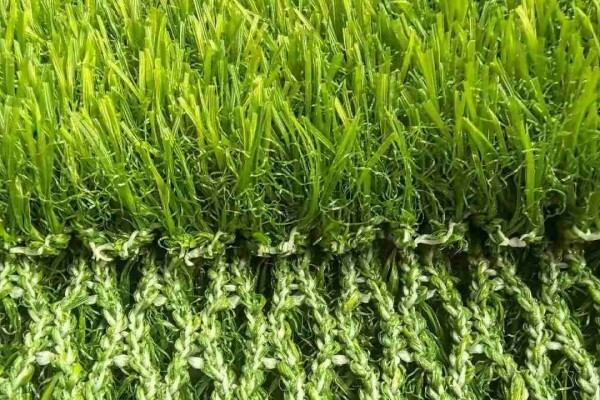
The most effective types of hybrid turf for pets feature a diamond or square bottom combined with monofilament and curly yarn. The curly yarn provides essential cushioning and support, while the grid structure ensures excellent drainage, easy cleaning, and healthy real grass integration.
Balancing Growth with Support
When sourcing for pet parks, luxury residential yards, or hotel resorts, the material requirements shift. You need a system that supports real grass growth but also offers robust physical support for foot and paw traffic. This is where the combination of a diamond or square bottom with both monofilament and curly yarn becomes crucial.
The addition of curly yarn fundamentally changes the performance of the turf. It acts as a dense shock-absorbing layer. It keeps the straight monofilament blades standing upright, preventing the surface from matting down under heavy use.
Advanced Drainage and Maintenance
For pet applications, drainage is a critical quality control factor. Standard artificial grass can trap pet urine odors if the punched drainage holes clog. Open-woven hybrid turf eliminates this issue entirely.
The open grid allows liquids to pass through the backing instantly into the soil below. The curly yarn prevents the underlying soil from compacting, maintaining a highly permeable layer. This makes cleaning incredibly easy for end-users and reduces the risk of odor buildup.
- Prevents Digging: As the real grass roots intertwine with the woven mesh, it creates a reinforced surface that prevents dogs from digging holes in the yard.
- Surface Cooling: The integration of living natural grass helps regulate the surface temperature, keeping the turf cooler for animal paws compared to 100% synthetic lawns.2
- Structural Integrity: The diamond/square grid offers higher tensile strength than the hexagonal grid, balancing the need for grass penetration with the need for wear resistance.
I advise my distributor clients to stock this specific configuration if their target market includes high-end private estates and specialized pet facilities.
What Are the Types of Hybrid Turf for Sports Fields?
Constructing sports fields carries severe liability risks for engineering companies. A weak turf structure will tear under the aggressive twisting, turning, and sliding of athletes’ cleats, completely ruining the massive financial investment of the stadium.
For athletic applications, the required types of hybrid turf utilize a tight square bottom structure with high-durability monofilament yarn. This specific engineering provides the exceptional tear resistance and structural stability necessary to withstand heavy foot traffic on football fields.
Engineering High Tear Resistance
Sports field contractors operate in a high-stakes environment. When you purchase materials for sports grounds, schools, and campuses, the physical properties of the woven backing must take priority over maximum grass penetration.
The tight square bottom structure is engineered specifically for this purpose. The tighter structural grid significantly increases the tensile strength and tear resistance of the rolls. When a football player plants their cleats and changes direction quickly, the immense shear force is distributed across the reinforced square grid, preventing the turf from ripping.
Protecting the Natural Grass Crown
The beauty of the square-bottom hybrid grass system lies in its protective capabilities. In a standard natural grass football field, heavy matches destroy the grass crowns (the vital part of the plant just above the soil). Once the crown is destroyed, the grass dies, leading to muddy, unplayable pitches.
The woven hybrid turf protects the crown below the synthetic wear layer. Even if athletes wear away the natural grass blades extending above the artificial fibers, the synthetic monofilament remains to provide a green, playable surface. Meanwhile, the protected natural grass crowns will recover and regenerate new blades quickly.
(Insert real-project "before/after" photos here demonstrating the turf before a match, immediately after a match, and after the recovery period.)
Verifying Quality for B2B Procurement
I strongly advise buyers to approach sports turf procurement with strict quality control standards. Do not blindly trust generic claims of "professional grade" materials.
- Request Test Reports: Always ask your factory supplier for verifiable physical property test reports regarding tear resistance and UV stability.
- Verify Certifications: Treat certifications as documents you must verify. Unless a supplier provides specific testing documents for a specific product model, do not assume it meets international professional competition standards.
- Evaluate the Yarn: Ensure the monofilament yarn used is extruded for high wear resistance, not just soft landscaping aesthetics.
By prioritizing the tight square grid structure, sports field contractors can confidently deliver durable, high-performance hybrid fields to their institutional clients.
Frequently Asked Questions
Can I use landscaping hybrid turf for sports fields?
No. Landscaping hybrid turf typically uses a hexagonal bottom with wider gaps for maximum grass growth. It lacks the tight structural grid required to provide the high tear resistance needed for athletic cleats and heavy sports traffic.
How long does it take for real grass to grow through the woven turf?
The timeline depends heavily on the local climate, soil preparation, and the specific grass seeds used. Generally, seeds germinate within a few weeks. However, the synthetic fibers provide an immediate green aesthetic while you wait for the natural grass to mature.
What is the MOQ for wholesale hybrid turf orders?
As a B2B manufacturing factory, our Minimum Order Quantity (MOQ) for custom woven hybrid turf is 3,000 square meters per specification. We exclusively process wholesale and full-container orders to ensure optimized production and shipping efficiency.
Is open-woven hybrid turf environmentally friendly?
Yes. Unlike traditional artificial turf that uses heavy latex or polyurethane backings, our open-woven hybrid turf utilizes 100% recyclable materials. It promotes natural soil ecology by allowing water, air, and organic matter to interact naturally with the earth.
Conclusion
Understanding the different types of hybrid turf is the foundation of successful B2B project procurement. By correctly identifying whether your client needs a hexagonal grid for municipal landscaping, a diamond grid with curly yarn for pet areas, or a high-strength square grid for sports fields, you eliminate costly installation failures. Choosing the right open-woven system guarantees a seamless integration of synthetic durability and natural grass aesthetics.
If you are an importer, distributor, or engineering contractor looking to source premium woven hybrid artificial grass in container volumes, we can help you optimize your specifications. Contact me, Alice Chen, at QH Grass today to discuss your next major project.
-
"Starting a New Lawn | University of Maryland Extension", https://extension.umd.edu/resource/starting-new-lawn. University extension guidelines indicate that standard turfgrass species typically require two to four weeks to germinate and several more weeks to establish full visual coverage from seed. Evidence role: general_support; source type: education. Supports: Outlines the standard germination and establishment timelines for common turfgrass species from seed.. Scope note: Germination times vary significantly based on climate, soil temperature, and grass species. ↩
-
"The effect of synthetic grass sports surfaces on the thermal environment", https://pmc.ncbi.nlm.nih.gov/articles/PMC11272752/. Research on sports surface thermography demonstrates that the evapotranspiration of natural grass within hybrid systems significantly lowers surface temperatures compared to 100% synthetic turf. Evidence role: statistic; source type: paper. Supports: Measures the surface temperature differences between 100% synthetic turf and natural or hybrid grass systems under direct sunlight.. Scope note: Cooling effects depend heavily on the moisture content and health of the natural grass component. ↩