_画板-1.png)
Importing artificial grass looks profitable, but unexpected fees can kill your margins. Understanding the full cost structure is the only way to secure real profits for your business.
Buying artificial grass in bulk involves more than just the factory price. You must calculate total landed costs, including ocean freight, customs duties, document fees like Saber or ACID, and local trucking. To get the best value per square meter, always order a full 40HC container instead of smaller loads.
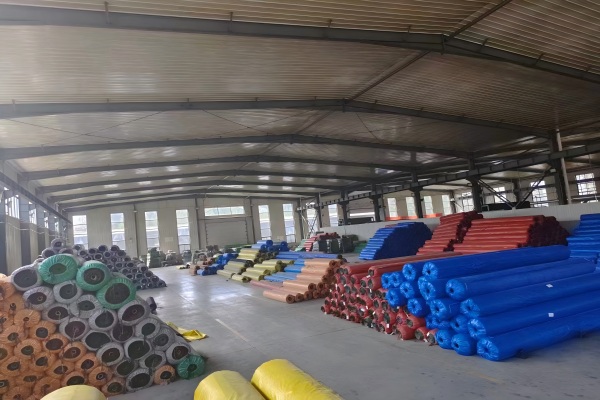
Many buyers focus only on the FOB price from the manufacturer. This is a common mistake that leads to budget overruns and lower profits. I have seen many new importers get excited about a low factory price, only to lose money on shipping and taxes. I will explain exactly how to break down these costs so you can import with confidence.
What Variables Determine the Cost of Bulk Artificial Grass?
Variable costs can change the final price significantly. Do you know what affects the manufacturing price and landed cost before shipping even begins?
The primary variables are raw material quality (face weight, pile height), backing type, and yarn Dtex. High-density turf uses more material, increasing costs. Also, the country of origin1 matters; purchasing from Vietnam versus China can change the tariff rate you pay upon entry.
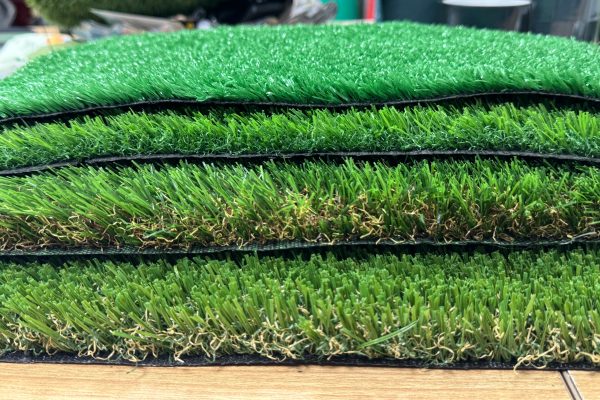
As an engineer, I look at the product specs first. The cost of the grass itself depends on how much material we use. A tall pile height with high density costs more because we use more yarn. However, the biggest variable for you as an importer is often the country of origin. This is something I learned while managing sales teams. We have to look at global trade policies.
Different countries have different tax rules. If you import from China, you might pay a different duty rate than if you import from Vietnam. You need to research this before you place an order. For example, let’s look at the market in India. If you buy Chinese artificial turf, the value might be $1.00 per square meter. However, India charges a basic customs duty of roughly 30% on this Chinese product. Your real cost becomes $1.30.
Now, compare this to Vietnam. The same product from Vietnam might cost $1.10 per square meter at the factory. This looks more expensive initially. But, India has a free trade agreement2 with Vietnam. There is 0% tariff. So, your final cost stays at $1.10. You save money by buying the "expensive" product.
Here is a breakdown of how origin affects cost:
| Feature | Option A (China Origin) | Option B (Vietnam Origin) |
|---|---|---|
| Factory Price | $1.00 / sqm | $1.10 / sqm |
| Import Tariff | 30% (Example) | 0% (Example) |
| Tariff Cost | $0.30 | $0.00 |
| Total Product Cost | $1.30 / sqm | $1.10 / sqm |
You must check the tariffs for your specific country, whether you are in the USA, Brazil, or Saudi Arabia.
How Can You Maximize Savings on Bulk Artificial Grass Purchases?
Everyone wants the best price, but few buyers know the "Golden Rule" of shipping logistics to save money.
The most effective way to save money is ordering a 40HC container3. The fixed costs for shipping and port charges are similar to a smaller 20GP container, but a 40HC holds over twice the cargo, drastically reducing the shipping cost per square meter.
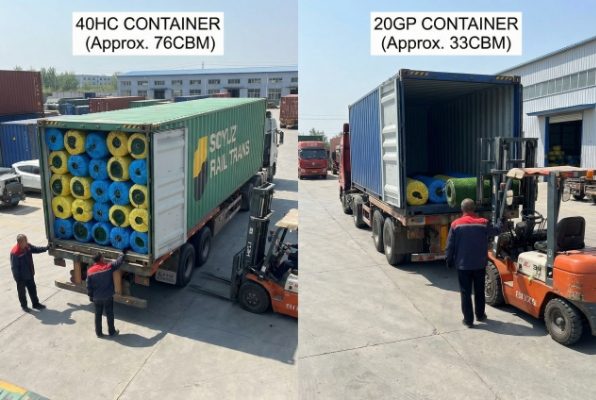
In my experience with foreign trade, shipping is a fixed cost game. Cost-effectiveness is key for your profit model. The trucking fees, port handling charges, and ocean freight for a small 20GP container are almost the same as a large 40HC container. The price difference is usually only about 10% more for the big container. However, the big container holds much more product.
A 20GP container is small. It runs out of space quickly. A 40HC (High Cube) container is tall and long. It can carry more than twice the cargo of a 20GP. When you spread the shipping cost over more square meters of grass, your unit cost goes down.
Never buy LCL (Less than Container Load)4 if you are a serious distributor. LCL means your goods share a container with others. The ocean freight might look cheap, but the destination port charges are terrible. The warehouse at the port will charge you high fees to separate your goods. It is always better to wait until you can fill a full container.
Let’s look at the math for a shipment to understand the savings:
| Cost Item | 20GP Container | 40HC Container | Analysis |
|---|---|---|---|
| Ocean Freight | $3,000 | $3,300 | Only 10% higher |
| Local Trucking | $500 | $600 | Small difference |
| Port Charges | $300 | $350 | Small difference |
| Capacity (sqm) | ~3,000 sqm | ~7,000 sqm | Double the unexpected cargo |
| Shipping Cost/sqm | $1.26 / sqm | $0.60 / sqm | Huge Savings |
As you can see, using a 40HC container cuts your logistics cost in half. This is direct profit for you and helps you beat your local competitors on price.
What Logistics and Hidden Costs Should You Be Aware of When Buying in Bulk?
You paid the factory and the shipping company. Are you done? No. Hidden fees at the border can surprise you.
You must prepare for customs clearance specific to your country, such as Saber for Saudi Arabia or ACID for Egypt. Additionally, factor in destination port handling charges, warehousing fees, and the cost of trucking the container from the port to your final warehouse.
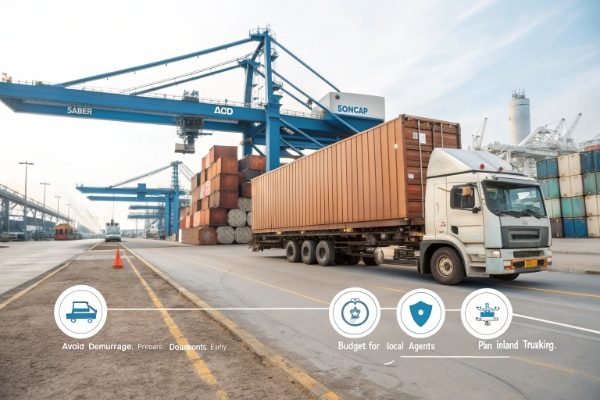
Logistics involves many small steps. Each step costs money. When I help customers plan their orders, I always ask about their local requirements. Many countries have strict import rules. If you do not have the right paper, your goods will get stuck at the port. This leads to demurrage fees, which are fines for taking too long to move your container.
For my friends in Saudi Arabia, you need the Saber certificate5. Without this, you cannot clear customs. For clients in Egypt, you must register for the ACID number before we even ship the goods. These documents cost money. You often need to pay an agent to handle this for you.
Also, consider the inland costs. The ship arrives at the port, but your warehouse is far away. You need to hire a truck. Unloading the container also takes time and labor. If you are a distributor, you need a large warehouse to store the rolls.
Here is a checklist of "Hidden" costs you must add to your budget:
- Customs Clearance Fees: Money paid to a broker to handle paperwork.
- Document Fees: Specific certifications like Saber (Saudi Arabia), SONCAP (Nigeria), or ACID (Egypt).
- Import Duties and Taxes: The percentage your government charges on the value of the goods.
- Port Handling Charges: Fees the port charges to move the container off the ship.
- Inland Trucking: The cost to move the container from the port to your door.
- Warehousing: Renting space to store the 40HC of grass if you do not sell it immediately.
Do not let these costs surprise you. Ask your supplier or a local logistics agent for an estimate before you pay the deposit.
How Do You Assess the Long-Term Value of a Bulk Artificial Grass Investment?
Cheap grass looks good on an invoice, but replacing it early destroys your reputation and costs you more later.
Long-term value comes from balancing initial cost with durability and warranty. Cheap turf may degrade in UV light or flatten quickly. You should calculate the cost per year of lifespan, rather than just the initial purchase price, to ensure true profitability.
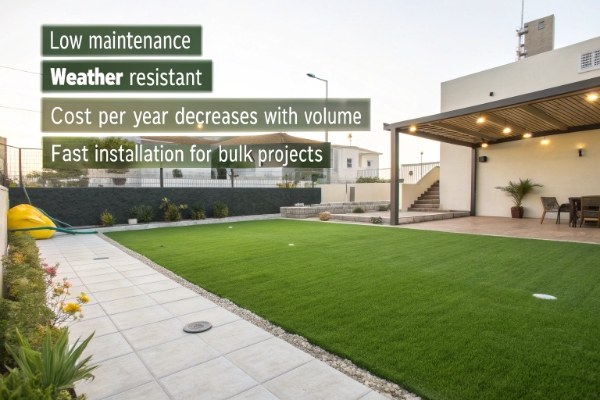
I started in technical production. I know that low price often means low quality basics. We can make grass cheaper by using less UV stabilizer or weaker backing. But this is bad for you. If you sell grass that fades in one year, your customers will be angry. They will demand a refund. You will lose your reputation. In business, trust is money.
When you buy in bulk, you are taking a risk. If the whole container is bad, you lose a lot of money. You need to look at the "Total Cost of Ownership6." This means looking at the price over time. A slightly more expensive grass that lasts 8 years is cheaper than cheap grass that lasts 2 years.
Make sure your supplier has good quality control. At QH Grass, we are strict. We check the goods during production. We check them before they leave. You should ask for UV test reports. You should ask for pull-force tests to see how strong the yarn is.
Here is how to think about Value vs. Price:
- The "Cheap" Option: Price is $2.00/sqm. Lifespan is 2 years.
- Cost per year: $1.00/sqm per year.
- Result: High complaints, lost customers.
- The "Quality" Option: Price is $6.00/sqm. Lifespan is 8 years.
- Cost per year: $0.75/sqm per year.
- Result: Happy customers, repeat business, strong brand.
Do not just look at the bottom line of the invoice. Look at the product specification sheet. Quality helps you sleep well at night. It ensures your business grows steadily without sudden crises.
Conclusion
To maximize profit, always order a 40HC container to lower shipping costs, research tariffs for your specific country, and calculate all landed costs including certificates and local taxes.
-
Exploring the influence of country of origin can help you save significantly on import costs. ↩
-
Learn how free trade agreements can lower your costs and improve your import strategy. ↩
-
Explore the advantages of 40HC containers to maximize your shipping efficiency and cost savings. ↩
-
Understand why LCL shipping can be costly and how it impacts your overall logistics. ↩
-
Learn about the Saber certificate to ensure smooth customs clearance and compliance with Saudi regulations. ↩
-
Understanding TCO helps you make informed decisions about long-term investments in artificial grass. ↩
_画板-1.png)