_画板-1.png)
Your artificial turf field looks worn out, which hurts your facility’s professional image. Do not ignore these physical changes. Key signs reveal exactly when you must replace your aging field.
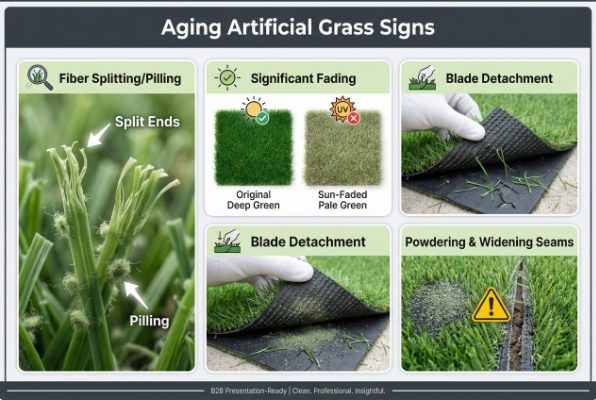
The most obvious signs of aging artificial turf include fiber splitting or pilling, significant fading, and grass blades detaching from the backing easily. If you see powdering fibers or widening seams, the material is decomposing, indicating the product has reached the end of its 6 to 10-year lifespan.
Artificial turf is a durable investment, but nothing lasts forever. I have seen many clients keep turf too long, which risks athlete safety and looks terrible to customers. In this article, I will walk you through the physical evidence of decay. I want to help you distinguish between normal wear and total failure.
What Does It Mean if Grass Fibers Become Hairy, Pilled, or Powdered?
Fibers looking fuzzy or turning into dust ruin the aesthetic of your projected area. This physical breakdown creates a mess and indicates the plastic brings no more value.
If the fibers look hairy or pilled, the yarn shape has deformed permanently. If they turn to powder when touched, the material is chemically decomposing and requires immediate replacement.
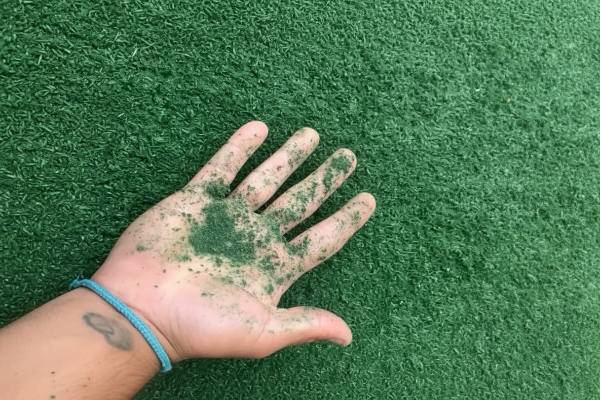
When you look closely at the grass blades, you might see the tips splitting. We call this "fibrillation" or pilling. In my experience at the factory, this happens when the yarn manufacturing shape deforms. The fiber cannot stand up straight anymore. It looks bad, but the structure is still there. Powdering is much more serious. If you rub the grass and get green dust on your hand, the yarn is decomposing.
At this stage, the UV inhibitors1 have failed completely. The plastic polymer chains are breaking apart. I often see this in inferior turf made with recycled materials. That type of grass might age in just 10 months to 2 years outdoors. Quality turf typically lasts 6 to 10 years before this happens.
You need to understand the stages of fiber degradation2 to make the right decision:
| Degradation Stage | Visual Sign | Meaning | Action Required |
|---|---|---|---|
| Stage 1 | Fuzzing/Hairy Tips | The yarn has lost its "memory" and shape. | Maintenance brushing helps, but it is permanent. |
| Stage 2 | Matting | Fibers lay flat and stick together. | The performance is dropping. Plan for replacement. |
| Stage 3 | Powdering | Green dust appears on shoes or clothes. | The product is dead. Replace immediately. |
What Does It Indicate When Grass Fibers Start Detaching from the Backing?
Loose grass blades scattered everywhere create a maintenance nightmare for your staff. This is not just messy; it means the structural integrity of the turf is gone.
This signals a failure of the adhesive bond in the backing. The glue meant to lock the yarn into the backing cloth has broken down due to age or poor quality.
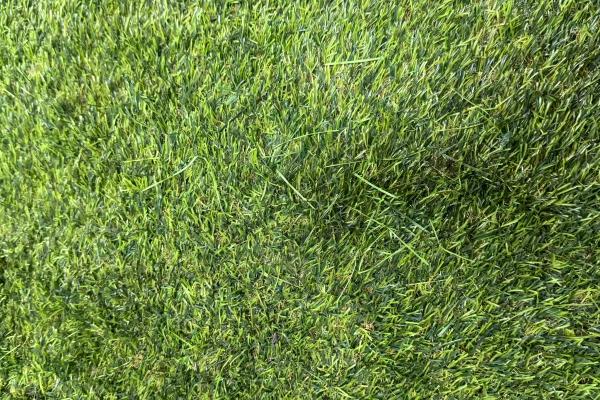
This issue is a clear structural failure. In the industry, we call the strength of this bond "tuft lock3." The quality of the backing greatly affects the time it takes for the yarn to detach. If the manufacturer used a cheap backing fabric or insufficient adhesive, you will see this problem early.
I always check the coating on the back of the turf. There are generally two types of coating: SBR Latex and Polyurethane (PU). SBR Latex is common and cheaper, but it hardens and cracks over time, especially in wet climates. PU adhesive is much stronger. It resists water and bacteria better.
If you pull on a grass blade and it comes out with almost no resistance, the coating has failed. Using a better backing fabric and superior PU adhesive significantly extends the time before fiber shedding occurs. For my clients in regions with heavy rain or heat, I always recommend paying close attention to the coating specifications to avoid this specific aging sign.
Is Fading a Normal Sign of Aging in Artificial Grass?
A pale, washed-out green field looks cheap and implies you neglect your facility. You need to know if this color loss is natural or a defect.
Slight fading over many years is normal for outdoor products. However, rapid or patchy color loss involves poor UV stability and indicates the manufacturer used inferior raw materials.
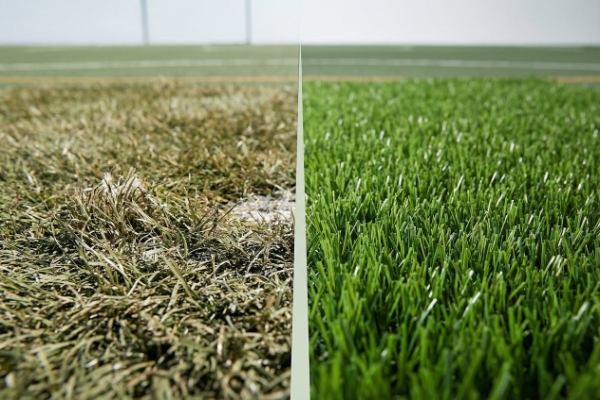
You must accept that some degree of fading is normal for outdoor artificial turf. Currently, no material on earth can completely resist ultraviolet rays forever. The sun is very powerful. However, the rate of fading tells you about the quality of the product.
During production, we add UV inhibitors to the masterbatch (the raw plastic mix). These inhibitors protect the pigment molecules. High-quality turf uses virgin materials and strong UV stabilizers. This effectively slows down aging. The pigment molecules will eventually decompose, but it should take 6 to 10 years to become noticeable.
If your turf looks grey or white after only one or two years, the factory likely used recycled materials. Recycled plastic already has degraded polymer chains. It cannot hold the color against the sun. I have seen "budget" turf turn almost white in less than 24 months. This is how different quality levels perform regarding color retention4:
| Material Type | Expected Color Lifespan | Cause of Fading |
|---|---|---|
| Virgin PE with UV Stabilizer | 6-10 Years | Slow, natural breakdown of pigment. |
| Recycled Mixed Plastic | 1-2 Years | unstable molecular structure breaks fast. |
| Low-Quality Masterbatch | 2-4 Years | Insufficient UV inhibitor percentage. |
How Can You Identify a Decaying or Damaged Artificial Grass Base?
The problem might lie underneath the green surface you see every day. A rotting base compromises the whole system and ruins the drainage capability.
A rotting base manifests as a brittle, cracking backing that snaps when bent. Lift a corner to inspect; if the back looks like dried mud, total replacement is necessary.
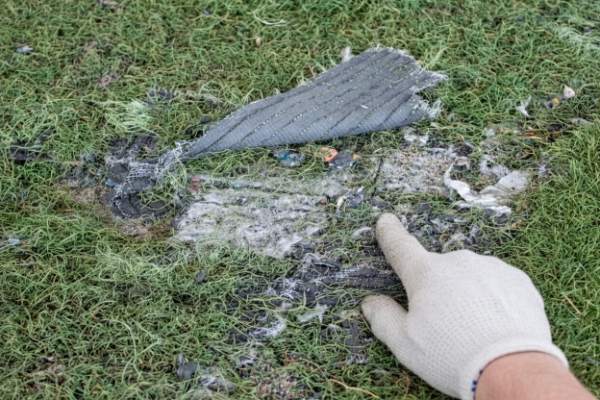
Identifying a rotten or damaged artificial turf substrate is quite simple. You do not need complex tools. Just lift the turf and inspect it visually. The backing provides the anchor for everything.
When I visit older sites, I flip the edge of the turf over. I try to bend the backing. Fresh backing is flexible. Aged, decaying backing is brittle. If you hear a "crack" sound or see the black coating crumbling away, the latex has oxidized.
Once the backing cracks, the structural tension is lost. The turf will wrinkle and move. Also, try pulling on the yarn during this inspection. If the backing is rotting, it loses its grip on the grass blades. You will see the stitch rows coming loose. This decay usually happens because the latex quality was poor, or the drainage was bad, causing the backing to sit in water for years.
Signs your base/backing is dead:
- Cracking: The coating snaps when you bend the turf.
- Transparency: You can see light through holes where the coating flaked off.
- Powdering: The black coating rubs off on your hands like dirt.
Are Widening Seams a Sign of Turf Aging or an Installation Issue?
Gaps opening up in your field are dangerous trip hazards for athletes and children. You need to fix these immediately to avoid liability and injury.
While turf shrinks slightly with age, wide seams usually point to poor installation. Using weak glue or installing on an uneven sub-base causes these gaps to open prematurely.
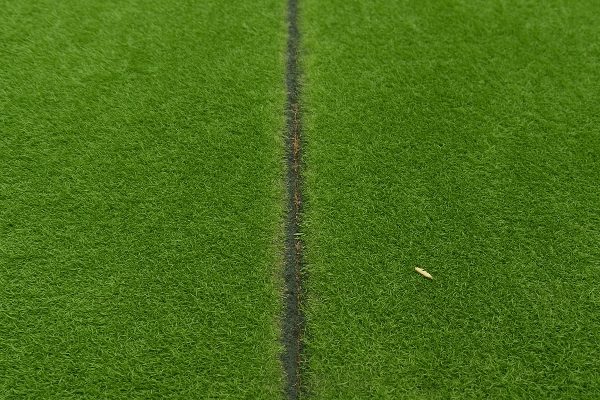
Widening seams are a complex issue. Yes, artificial turf ages and the backing hardens, which causes slight shrinkage. This can pull seams apart. However, in my experience, big gaps are mainly due to installation issues, not just the age of the grass.
The adhesive choice is critical here. Some installers use ordinary, single-component adhesives to save money. This glue is not strong enough for the expansion and contraction of outdoor weather. I always recommend two-component polyurethane adhesive5. It creates a bond that is often stronger than the turf itself. even with age, the seam should hold.
Another factor is the subfloor. If the ground underneath is uneven, the turf bridges over dips. When people walk on it, the tension pulls the seam apart. Even a level surface or the use of two-component polyurethane adhesive will significantly delay the appearance of seams. If your seams open up in the first 3 years, blame the installer. If they open after 8 years, it is likely due to the material shrinking from age.
- Installation Fault: Gaps appear within 1-3 years. Glue is brittle or ground is uneven.
- Aging Sign: Gaps appear after 7+ years. The backing has shrunk and stiffened universally.
Conclusion
Every product has a lifespan. If your turf shows powdering, shedding, or cracking backing, it is time to replace it. Quality materials last 6-10 years; cheap options fail quickly.
-
Learn how UV inhibitors work to protect your artificial grass and ensure it lasts longer in outdoor conditions. ↩
-
Understanding fiber degradation stages helps you maintain your artificial grass effectively and prolong its lifespan. ↩
-
Understanding tuft lock is crucial for maintaining artificial grass, ensuring durability and performance over time. ↩
-
Exploring color retention helps you make informed decisions about artificial turf quality and longevity, ensuring a better investment. ↩
-
Exploring the benefits of this adhesive can enhance your turf’s durability and performance, making it a worthwhile investment. ↩
_画板-1.png)