_画板-1.png)
You invest a significant amount of money in artificial turf to create a beautiful landscape. It is heartbreaking to see that investment ruined by accidents or neglect that could have been avoided. I understand the frustration of seeing melted fibers or stubborn stains, but the good news is that most damage is entirely preventable.
Artificial grass can be damaged by extreme heat (fire, reflected sunlight), harsh chemicals (oil, bleach), sharp objects, heavy static loads, and organic growth like weeds or moss. Poor installation also leads to premature failure. Preventing these issues involves proper placement, using correct cleaning agents, and professional installation.
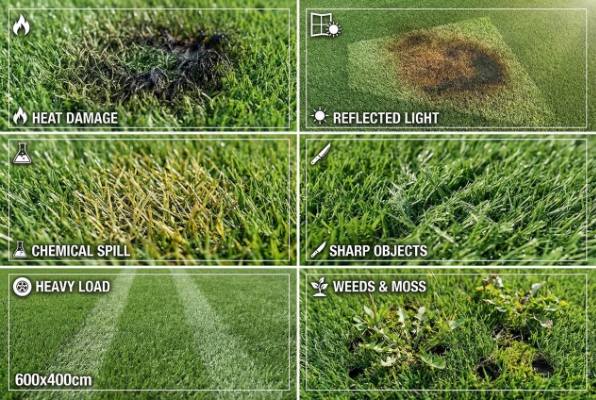
I have spent years in the artificial turf industry, moving from the technical floor to sales management here at QH Grass. Throughout my career, I have seen customers destroy high-quality turf simply because they did not know these potential dangers. Let me explain exactly what harms synthetic grass and how you can protect your business and projects.
How Do Heat and Sunlight Damage Artificial Grass, and How Can You Prevent It?
The sun is natural, but melting plastic is a disaster. It is shocking how quickly a barbecue or a reflection from a window can destroy your lawn.
Excessive heat sources like open flames, cigarettes, or hot coals will melt turf fibers instantly. Furthermore, ‘hot spots’ caused by sunlight reflecting off Low-E windows1 can scorch the grass. To prevent this, keep fire sources away and install glare-reducing screens2 on windows.

We need to look closely at how heat interacts with plastic fibers. Artificial turf is durable, but it has a melting point.
There are three main heat threats3 you must manage:
- Direct Fire: Hot coals from barbecues, dropped cigarette ash, or sparks from fireworks land on the grass and melt the fibers immediately. The plastic creates hard lumps that you cannot repair without cutting them out. Always place BBQs on hard pavers or concrete, never directly on the grass.
- Reflected Heat: This is a silent killer. Modern energy-efficient windows, specifically Low-E glass, reflect sunlight like a magnifying glass. This creates a concentrated beam that moves across your lawn as the sun moves. This beam can reach temperatures high enough to scorch the turf in minutes. You must install awnings or apply anti-glare film to these windows to stop this solar lensing effect.
- UV Exposure4: Not all heat is visible damage. If you buy cheap turf, constant sunlight will break down the chemical bonds in the plastic. This causes fading and makes the fibers brittle. At QH Grass, we ensure our products have high-grade UV stabilizers, but you must be careful when sourcing.
| Heat Source | Damage Type | Prevention Method |
|---|---|---|
| BBQ / Fire Pit | Instant Melting | Place on hard surface (stone/concrete). |
| Window Reflection | Scorching / Curling | Install exterior window screens or layouts. |
| General Sunlight | Fading / Brittleness | Choose UV-stabilized high-quality turf. |
What Chemicals and Stains Can Harm Synthetic Turf, and How Do You Remove Them Safely?
Spilling oil or paint feels like a total disaster. You might panic and scrub it with the wrong cleaner, which often makes the damage much worse.
Petroleum-based products, harsh acids, and strong adhesives can break down the backing or permanently discolor fibers. Avoid bleach and engine oil. For sticky messes like gum, use ice to harden it before removal; for spills, rinse immediately with mild soap and water.
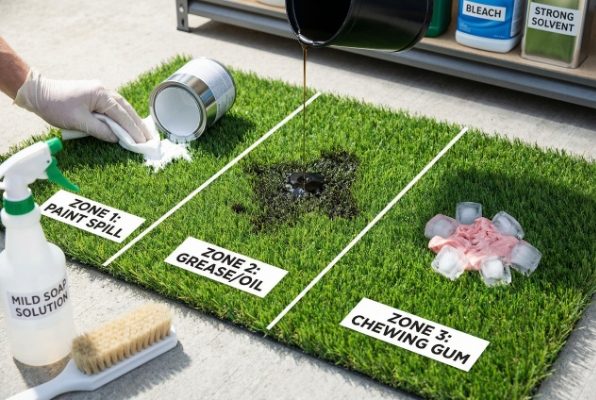
Chemicals act differently on plastic than they do on natural grass. Natural grass might die and grow back, but synthetic turf damage is permanent.
You need to be strict about what liquids come near your installation.
- Petroleum Products5: Engine oil, grease, gasoline, and even some oily sunscreens are dangerous. They do not just stain; they chemically react with the latex or polyurethane backing of the turf. Over time, this weakens the structural integrity, and the grass falls apart.
- Adhesives and Paints: Paint, glue, and chewing gum bond tightly to the fibers. If you drop wet paint, blot it gently with paper towels—do not rub it in. For chewing gum, never scrape it while it is soft. Use ice cubes to freeze the gum until it is hard, then crack it off the fibers.
- Harsh Cleaners6: I see people try to clean stains with bleach or chlorine. This is a mistake. Strong oxidizers cause discoloration and can make fibers snap. Always store paints and fuels far away from the lawn area. If an accident happens, speed is key. Rinse the area with massive amounts of water and a mild, neutral detergent immediately.
What Physical Damage Can Affect Fake Grass, and How Can You Protect It?
A lawn is for walking, but not for sharp or heavy abuse. Sharp heels or heavy cars can ruin the flatness and texture you paid good money for.
Sharp loads from metal rakes, high heels, or vehicle traffic can cut fibers and puncture the backing. Heavy stationary furniture causes permanent flattening. Use plastic tools, avoid driving on the turf, and rotate heavy items or use protective pads to maintain the vertical pile.
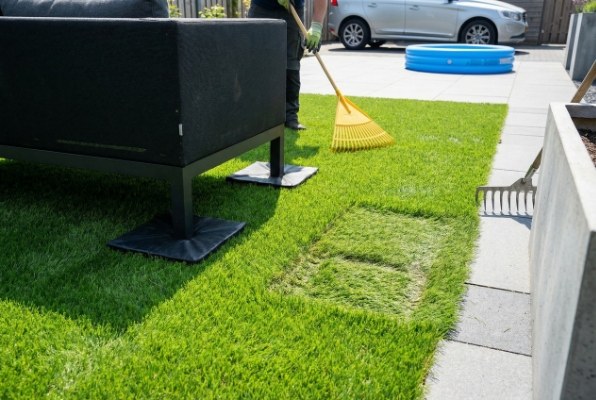
Physical damage usually happens because we treat artificial grass like concrete. It is a textile surface, and we must respect its limits.
Here is how to analyze physical risks:
Sharp Objects vs. The Backing
The backing holds everything together. Sharp tools like metal rakes, garden forks, or even high heels and sports cleats can slice through this backing. Once the backing is cut, the tuft lock is lost, and fibers pull out. I always advise my clients to use plastic or rubber rakes for clearing leaves. These are soft enough to protect the fibers but effective at cleaning.
Static Load and Flattening
If you place a heavy swimming pool or a car on the grass for weeks, the fibers will mat down. While brushing can restore some lift, extreme weight causes permanent deformation.
- Solution for Furniture: Use protective pads or trays under table legs to spread the weight.
- Design Tip: If you know a specific area will host a playground set or heavy equipment, plan for a hard paved area (decking or patio) in that spot instead of turf.
- Traffic Volume: Be honest about how many people will use the area. If you install a landscape turf in a high-traffic sports area, it will wear out fast. You must match the product resilience to the expected foot traffic.
What Biological and Environmental Risks Threaten Artificial Turf, and How Do You Mitigate Them?
You bought fake grass to avoid gardening work. Seeing weeds or moss appear is frustrating and defeats the purpose of buying a low-maintenance product.
Biological threats include weeds growing through drainage holes due to poor barrier installation, and moss or algae thriving in damp, shaded areas. Extreme weather like freeze-thaw cycle7s also affects stability. Install a high-quality weed barrier and ensure proper sub-base drainage to prevent these issues.
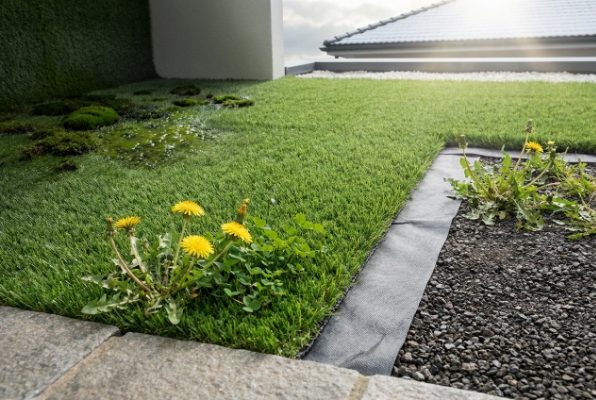
Many people think "artificial" means "immune to nature." This is false. Nature always tries to take over.
We face three main environmental challenges:
- Weeds and Roots: Weeds are strong. They can grow through the drainage holes if the ground underneath is not prepared right. Aggressive tree roots can also push up from below, creating bumps in your flat lawn. You must install a verified, high-quality weed barrier fabric before laying the turf. If you skip this layer to save money, you will pay for it later in labor effectively weeding a plastic lawn.
- Algae and Moss: These love moisture. If your base drainage is poor and water sits in pools, or if the area is constantly in the shade, algae will grow. This makes the surface slippery and dangerous, not just ugly. Good drainage planning during the base construction is the only real cure.
- Extreme Weather: I deal with clients from Russia to Saudi Arabia. Heat and cold stress the materials. In very wet or rainy climates, I recommend a permeable backing or a PU (Polyurethane) backing. PU resists moisture and temperature swings much better than standard latex. It does not crack in the freeze-thaw cycle, ensuring your investment lasts through harsh winters.
What Installation and Maintenance Mistakes Can Damage Synthetic Grass, and How Can You Avoid Them?
Bad installation makes good grass look terrible. Uneven ground or peeling seams turn a professional project into a tripping hazard and a waste of budget.
Improper base compaction leads to sinking and wrinkles, while poor seam bonding causes gaps and edge curling. Neglecting pet waste leads to deep-set odors and bacteria. Avoid this by hiring certified professionals for the groundwork and cleaning up pet messes daily to maintain hygiene.
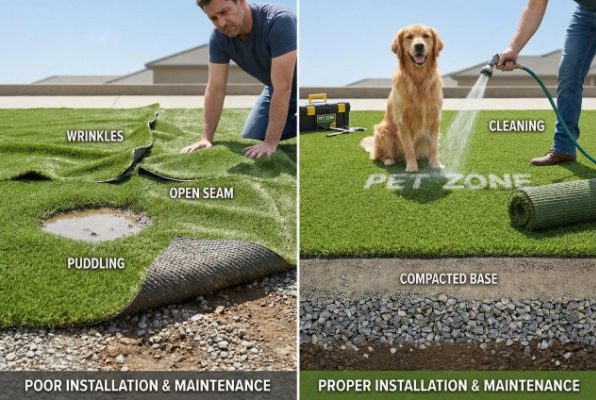
I have worked in technical departments and sales, and I can tell you that 50% of turf failures are not the product’s fault—they are installation faults.
It is critical to understand the foundation of your lawn.
- Base Preparation is Everything: If you do not compact the gravel and granite dust layer correctly, the ground will settle unevenly. This creates dips where water collects (leading to moss) and causes the turf to wrinkle. You cannot fix a bad base after the grass is laid.
- Seams and Edges: The weak points are always where two rolls meet. Weak gluing or insufficient nailing allows these seams to split. Once a seam opens, wind gets under it, people trip on it, and the damage spreads. You must monitor the edges.
- The Pet Factor: Pets love turf, but their waste is a maintenance issue. Urine and feces do not "damage" the plastic instantly, but if left alone, they create bacteria and smells that make the lawn unusable. You must rinse pet areas frequently.
- Pro Tip: Always keep a few square meters of spare turf from the original batch. If you need to patch a damaged area often years later, you will want grass that matches the exact color lot of your original purchase.
Conclusion
To keep your artificial grass perfect, you must protect it from fire, reflected heat, harsh chemicals, and heavy loads. Most importantly, ensure you use a professional installer for the base work. At QH Grass, we help you choose the right quality turf to resist these risks and secure your profit.
-
Understanding Low-E windows can help you prevent damage to your artificial grass from sunlight reflection. ↩
-
Explore how glare-reducing screens can safeguard your lawn from harmful sunlight reflections. ↩
-
Identifying heat threats is crucial for maintaining your artificial grass and preventing damage. ↩
-
Learn about UV exposure to ensure your artificial grass remains vibrant and durable for years. ↩
-
Understanding the impact of petroleum products on synthetic turf can help you prevent damage and maintain your lawn’s integrity. ↩
-
Exploring the dangers of harsh cleaners will help you choose safe cleaning methods and protect your synthetic grass from damage. ↩
-
Learn about the effects of freeze-thaw cycles on turf materials to ensure your installation withstands harsh weather. ↩
_画板-1.png)