_画板-1.png)
Your customers complain about flat grass. It looks old and bad. You worry about the quality of your project. I know why this happens and how you can manage these expectations.
Artificial grass blades flatten due to continuous foot traffic, heavy furniture pressure, and high temperatures that weaken the fiber structure. Like any synthetic material, turf wears down over time. Gravity and friction simply overcome the blade’s memory, making matting an inevitable part of the product’s lifespan.
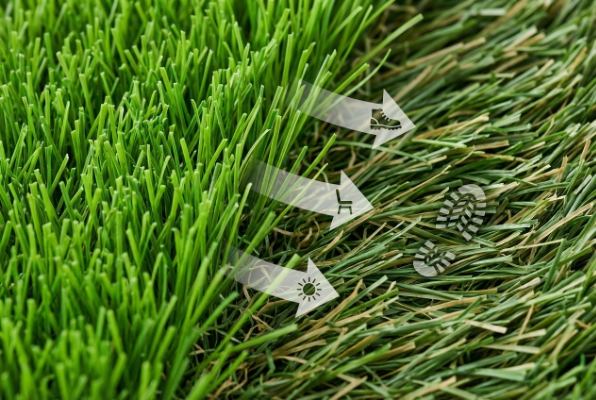
I have seen many fields fail early. But I also see fields last a long time. The difference is understanding the material. Let us look at the details of why this happens.
Why don’t permanent fixes for flat artificial grass blades exist?
You try brushing the grass. It looks good for a day. Then it gets flat again. You wonder why the labor does not last.
The brushing temporarily lifts the fibers, but it cannot restore the plastic’s structural integrity once it has weakened. The polymer memory1 fades after repeated stress, meaning the blades will naturally return to a flattened state faster each time you brush them.
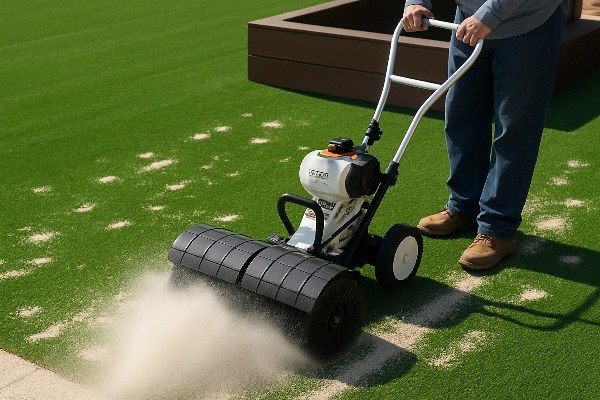
I talk to many business owners like you. Clients often ask me for a magic machine. They want a tool to fix flat grass forever. I must tell them the truth. Plastic has a "memory." When we make the grass in the factory, the fibers stand up. But heavy weights crush this memory. Think about a paper clip. If you bend it back and forth, it breaks or stays bent. Grass fibers work the same way.
External factors speed up this process. The sun plays a big part. UV rays2 hit the plastic. This makes the chemical bonds3 weak. Then, heat makes the plastic soft. When you walk on soft plastic, it bends easily. It stays down. No brush can fix the chemical change inside the blade.
We can look at the physics of the blade shape. Not all blades are the same. Some shapes are stronger. But even the strongest shape will fall eventually.
| Factor | Effect on Grass Blade | Can be fixed permanently? |
|---|---|---|
| Traffic | Bends the fiber physically. | No. The fiber weakens. |
| Heat | Softens the polymer. | No. Structure changes. |
| UV Rays | Breaks chemical chains. | No. Material degrades. |
| Gravity | Pulls the weakened blade down. | No. It is constant. |
You must explain this to your buyers. A "permanent fix" does not exist in our industry. We can only slow down the problem. We cannot stop physics.
What roles do thatch and infill play in blade uprightness?
Old fields used lots of sand. New fields look different. You might wonder which design holds the grass up better.
Infill acts as a counterweight against the fibers, physically holding them upright. Thatch creates a dense bottom layer that supports the longer blades without heavy sand. Both methods aim to fight gravity, but modern thatch systems rely more on fiber shape and density than weight.
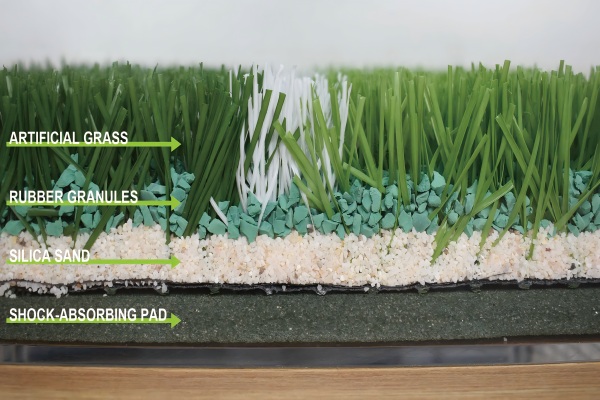
I started my career in a workshop years ago. Back then, we made sports grass. Use used a specific system. We put a lot of sand and rubber granules between the blades. This infill was heavy. It filled the space up to the top of the grass. The grass blades had no choice. They had to stand up because the sand held them there. This works very well for performance. But it is messy.
Now, I see a shift in the market. Landscape grass is different. Homeowners do not want heavy sand. So, we designed the "thatch layer." If you look closely at current samples, you see short, curly fibers at the bottom. Usually, they are brown or yellow. These curly fibers act like a spring. They push the tall green fibers up.
This new system reduces the need for sand. But it has a limit. Over time, the curly thatch also gets crushed. When the foundation layer flattens, the top layer flattens too.
Here is how the two components work together in modern grass:
- The Tall Blade: This is for looks and soft touch. It wants to fall over.
- The Thatch (Curly Yarn): This is the support structure. It holds air and space.
- The Infill (Sand): Even with thatch, you need some sand. The sand weighs down the backing. It also sits at the very bottom to protect the roots of the fibers.
In my experience, many people skip the sand on thatch grass. This is a mistake. Even a small amount of sand helps the thatch stay strong. It adds density. Without it, the thatch collapses faster.
Why can’t flat turf blades be “fixed” or “repaired” for the long term?
Clients call me angry. They paid for repairs. The grass is flat again in a month. They feel cheated by the service.
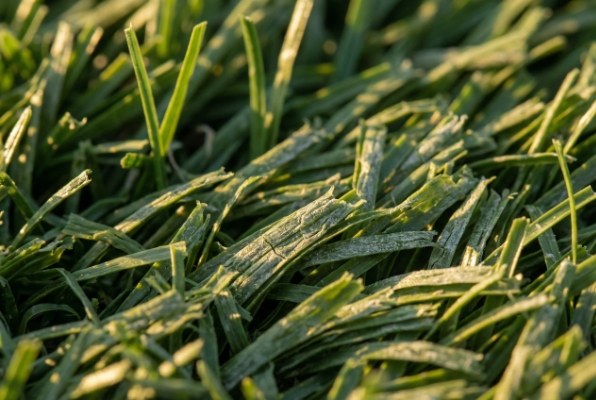
You cannot reverse material fatigue. Once the molecular structure of the polyethylene fiber breaks down from stress and UV exposure, it loses its resilience. Repairing flat grass is like trying to un-crumple a piece of paper; the creases and weakness remain forever.
I want to be very honest with you. In sales, we sometimes use soft words. But technical reality is hard. "Fixing" is the wrong word for flat grass. We can only "maintain" or "refresh" it. In the QH factory, we test every batch. We use a machine for the "Lisport test." This machine rolls heavy wheels with spikes over the grass 20,000 times. We watch how fast it flattens.
Every grass flattens. It does not matter if it is from me or a clear expensive European brand. When a company sells a "restoration service," they use a heavy power brush. This machine spins fast. It heats up the fibers a little. It forces them to stand up. It looks great for two weeks.
But the fiber is tired. The plastic is stressed. When you force it up, you create more stress cracks on the microscopic level. The next time someone walks on it, it falls down faster than before.
I had a customer in Brazil. He promised a hotel that the grass would look new for 10 years. He spent money on repairs every year. He lost all his profit. He did not understand the material limit.
- Material Fatigue: Plastic gets tired just like metal gets tired.
- Micro-Cracks: Small breaks in the surface of the blade make it bend.
- Heat Set: Once the sun heats a flat blade, it "sets" in that flat shape.
If a supplier promises a permanent repair, they are not telling the truth. I value stable quality and truth. You need to know that "repair" is just a temporary makeup for the grass.
How can you extend the life of your artificial turf?
You know the grass will flatten. You still want it to last. You need a plan to save money and keep customers happy.
Regular maintenance is the key to longevity. You must brush the fibers frequently to redistribute stress. Adding silica sand infill periodically helps support the blades. Also, preventing heavy point loads and rotating furniture placements will stop deep compaction in specific spots.
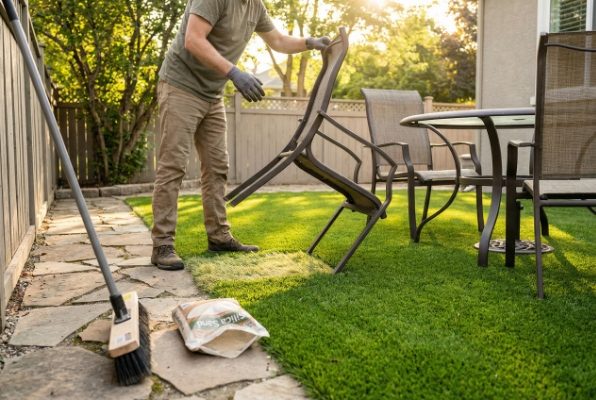
I help many customers grow their business. I tell them to teach their buyers about care. Longevity starts with the installation. The ground under the grass must be hard and flat. If the ground is soft, the grass sinks. When it sinks, the fibers bend in strange ways. They break faster.
You can take specific actions to help the grass fight gravity:
- Check Infill Levels: You should check the sand level every year. Rain washes sand away. Vacuum cleaners remove sand. If the sand level is low, add more. The sand supports the base of the blade. It acts like a cast on a broken leg. It holds it straight.
- Brushing Routine: Do not wait until the grass is flat. Brush it while it is standing. This keeps the dirt out. Dirt acts like sandpaper. It cuts the fibers at the bottom. Use a power broom if you can.
- Manage Traffic: Do not walk on the same path every day. If you have a gate, the grass in front of it will die first. Put a stone or a paver there. Do not put heavy pools on the grass for months.
- Rotate Items: If you have a heavy table on the grass, move it three inches every month. This gives the crushed grass a chance to relax.
| Action | Frequency | Purpose |
|---|---|---|
| Power Brushing | Every 3 months | Lifts fibers and cleans debris. |
| Adding Sand | Every 1-2 years | Replaces lost support structure. |
| Moving Furniture | Every month | Prevents permanent heavy dents. |
| Rinsing | Weekly | Keeps grass cool and clean. |
You must be proactive. If you wait for the problem, it is too late. Treat the grass like a carpet, not like concrete. It needs care.
Conclusion
Grass flattening is natural and inevitable due to physics. You can delay it with good thatch, sand infill, and regular maintenance, but you cannot stop it permanently.
-
Understanding polymer memory is crucial for grasping why artificial grass blades flatten and how to manage it. ↩
-
Explore how UV rays impact the longevity and performance of artificial grass, helping you make informed maintenance decisions. ↩
-
Learn about the role of chemical bonds in artificial grass durability and how they affect blade performance over time. ↩
_画板-1.png)