_画板-1.png)
Are you tired of muddy baseball games and constant maintenance costs? Natural grass wears out quickly, ruining matches and draining your budget. An artificial grass baseball field is the durable, all-weather solution you need.
An artificial grass baseball field uses synthetic fiber materials to simulate natural grass. It includes a durable turf surface, efficient drainage, and shock-absorbing pads. Designed for schools and clubs, it withstands heavy use, requires minimal maintenance, and offers consistent playability in both arid and rainy weather conditions.
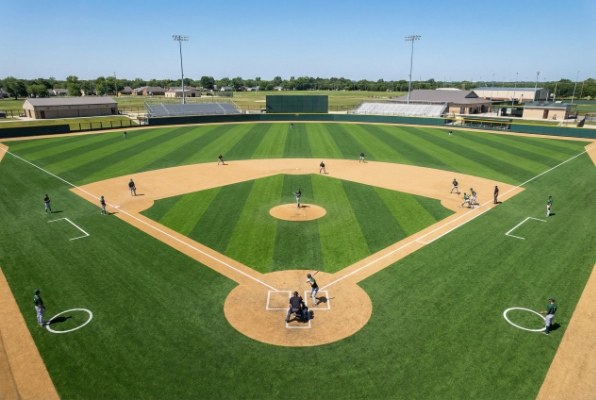
I have seen many field owners struggle with natural grass maintenance. In this article, I will explain everything you need to know about synthetic baseball fields. Read on to understand the details.
What are the main components of an artificial grass baseball field?
Buyers often get confused by the technical specifications of synthetic turf systems. If you choose the wrong components, the safety and performance of the field will suffer immediately.
The main components are the PE monofilament turf surface1, the infill layer of quartz sand and rubber, the shock-absorbing pad, and the drainage system. Together, they provide traction, cushioning, and rapid water removal for a safe game.
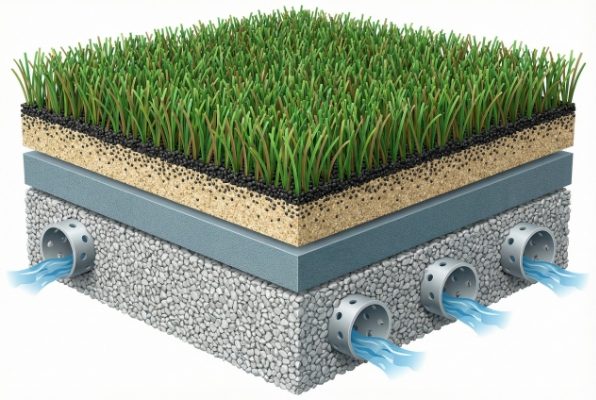
I always tell my clients that a baseball field is like a sandwich. The grass on top looks nice, but the layers underneath matter most. I started my career in a technical workshop, so I know that every layer has a specific job. Let me break it down for you.
First is the Artificial Turf Surface. We usually use Polyethylene (PE) monofilament. Sometimes we mix crimped fibers. This mimics the look of real grass. We use green for the outfield and brown for the infield dirt areas. This visual distinction helps players know where they are on the field.
Next is the Infill Layer2. This is crucial for performance. We use quartz sand and rubber granules. The sand adds weight so the carpet stays flat. The rubber adds bounce and shock absorption.
Then comes the Shock-absorbing Pad. I have worked as an engineer, and I know safety is key. This layer sits under the grass. It prevents injuries when players slide or dive. A 10mm pad is a standard choice.
Finally, the Drainage System. This handles heavy rain. Good drainage prevents the field from becoming a swimming pool.
Here is a simple breakdown of the specifications:
| Component | Material | Function | Description |
|---|---|---|---|
| Top Layer | PE Monofilament | Aesthetics & Play | Durable green or brown fibers that resist UV light. |
| Middle Layer | Quartz Sand & Rubber | Support & Cushion | Keeps fibers upright and protects player joints. |
| Base Layer | XPE/Shock Pad | Impact Absorption | Reduces impact injuries during slides. |
| Bottom Layer | Concealed Pipes | Water Management | Removes rain quickly to keep the surface dry. |
When you buy from QH grass, we check each layer strictly. Quality control is my priority because a failure in one layer ruins the whole system. This structure ensures stable quality and helps you achieve greater success with your customers.
Which areas are artificial grass baseball fields suitable for?
Are you wondering if synthetic turf fits your specific location or climate? Making the wrong choice can lead to wasted investment and a field that players hate using.
These fields are suitable for schools, professional clubs, and community sports centers. They work perfectly in integrated designs with varying colors. Whether your region plays in intense heat or heavy rain, the material resists wear and weather effectively.
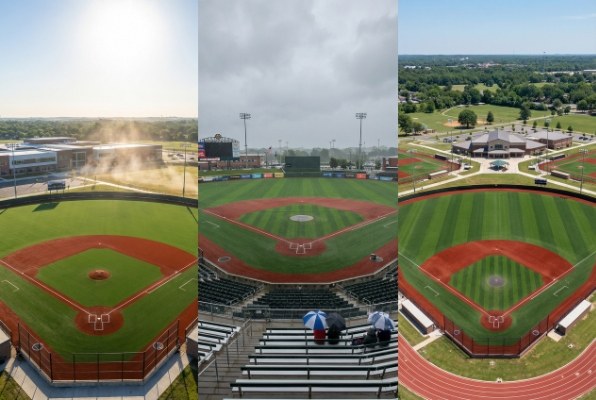
During my time managing foreign trade sales, I visited many countries. I saw how different regions use these fields. Artificial grass is very versatile. You can install it almost anywhere.
First, consider the Field Layout. We can do integrated designs. We use red-brown turf for the infield to look like clay. We use green for the outfield. This looks professional and stays clean. Natural clay turns into mud, but red turf stays perfect.
Second, think about High-Traffic Areas. Places like the batter’s box, bases, and running tracks get heavy use. Natural grass dies here fast. I suggest reinforced turf for these spots. It handles the friction from cleats much better.
Third, consider the Climate.
- Arid Regions: In places like Saudi Arabia, growing grass is hard and expensive. Artificial turf saves water.
- Rainy Regions: In places like the UK or Southeast Asia, rain stops games. Synthetic fields drain fast so games continue.
Here is a comparison of suitability:
| Area Type | Suitability Reason | Benefit |
|---|---|---|
| Infield Area | Simulates clay color without mud | Clean sliding, consistent ball bounce. |
| Batting Cage | Withstands repetitive high friction | No holes or divots near the plate. |
| Schools | Low maintenance requirement | Saves budget for educational tools. |
| Clubs/Training | High durability for daily practice | Available 24/7 regardless of weather. |
I believe this flexibility makes artificial grass the best choice for modern sports facilities. It solves the pain points of delayed schedules due to weather.
How is an artificial grass baseball field installed?
Do you fear that a poor installation will ruin your high-quality turf purchase? A bad foundation causes uneven surfaces and drainage failures, destroying your project timeline and budget.
Installation requires a strict process starting with a compacted subgrade and concrete leveling. We install drainage, lay shock pads, and carefully splice the turf. Finally, we infill with sand and rubber and mark lines. The whole process takes 20 to 30 days.
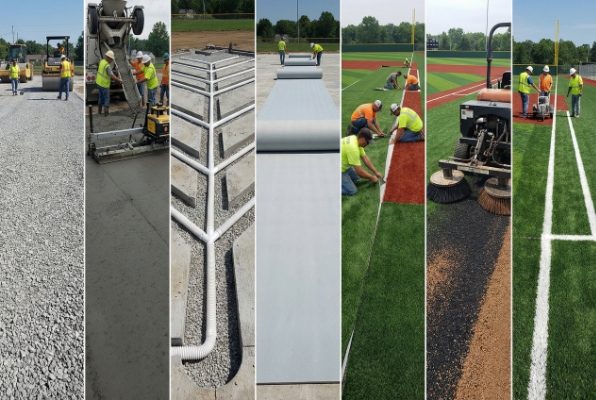
I started in the technical department of a workshop. I learned that installation is 50% of the quality. Even the best grass fails on a bad base. Here is the strict process we follow to ensure your project succeeds.
Step 1: Subgrade Treatment. We use 250mm of graded crushed stone. We compact it to very hard levels (≥95%). This prevents sinking.
Step 2: Concrete Leveling. We pour 80mm of C25 concrete. I recommend laser leveling. We need a slope of 0.5% to 1% for water to run off.
Step 3: Drainage. We use "Fishbone" shaped concealed pipes and U-shaped trenches. This clears water in 30 minutes.
Step 4: Shock Pad. We roll out a 10mm XPE pad. This absorbs the shock when a player hits the ground.
Step 5: Turf Splicing. This requires skill. The texture must face one way. If it is misaligned, you see bad color lines. We use strong two-component polyurethane adhesive.
Step 6: Infilling. We brush in sand and rubber. Vigorous brushing makes the fibers stand up straight.
Step 7: Line Marking. We use PU spray paint to separate the base and pad areas clearly.
Timeline Overview:
| Phase | Task | Time Estimate | Important Note |
|---|---|---|---|
| Ground Work | Stone & Concrete Base | 10-15 Days | Must be fully cured and dry. |
| Turf Laying | Paving & Splicing | 5-7 Days | Watch out for weather conditions. |
| Finishing | Infilling & Marking | 3-5 Days | Ensure even distribution of sand. |
A good team finishes a standard field in roughly 25 days. I know efficient communication is vital for you. Following these steps prevents delayed shipments and missed paving completion dates.
Conclusion
Artificial grass baseball fields offer durable, low-maintenance solutions for schools and clubs. With proper components and strict installation, you achieve consistent playability and long-term value for your profits.
_画板-1.png)