_画板-1.png)
Dog urine odor is the number one complaint end-users have about standard artificial grass installations. When distributors sell conventional PU/SBR backed grass to landscape contractors, the resulting smell and drainage issues often lead to damaged reputations and costly returns. Fortunately, hybrid pet turf for dogs offers a structural upgrade that permanently solves this problem.
Hybrid pet turf for dogs is a specialized artificial grass featuring a 100% permeable open-mesh woven backing rather than a solid coated backing with punched holes. This structural design allows complete, instant drainage of dog urine to physically prevent odor accumulation, serving as either a washable indoor pet pad or a plantable outdoor hybrid yard.
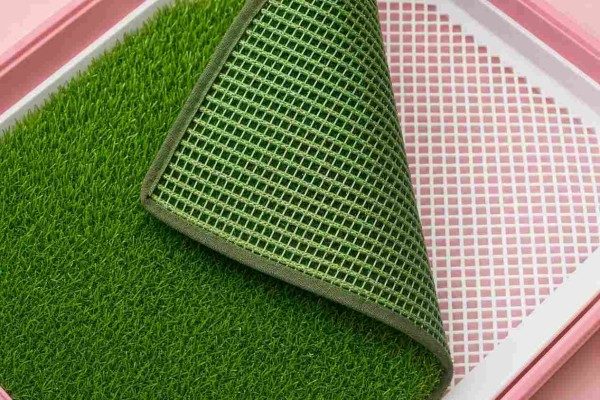
As a B2B manufacturer exporting wholesale container orders, I constantly see importers conflate this woven mesh product with standard pet turf. Let us explore the technical manufacturing differences and why this structural shift is rendering traditional pet turf obsolete in the eyes of commercial contractors.
How does hybrid pet turf eliminate dog urine odor?
Trapped ammonia from dog urine ruins outdoor commercial landscapes and indoor pet spaces alike.1 Buyers often rely on chemical treatments and antimicrobial sprays, but these only mask the smell temporarily while urine continues to pool silently beneath the surface.
Hybrid pet turf eliminates dog urine odor through physical drainage rather than chemical treatments. Its woven open-mesh backing provides 100% permeability, completely abandoning the conventional PU/SBR solid backing with punched holes. This allows urine to flow instantly through the turf without pooling, preventing odor-causing ammonia buildup.
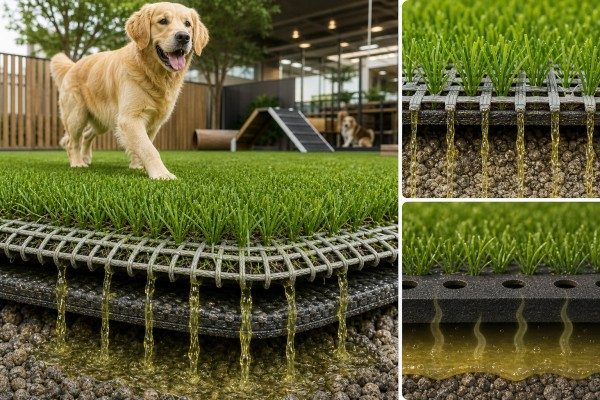
To understand why traditional landscape grass fails in pet applications, we have to look at the manufacturing process. Conventional artificial grass is tufted into a primary fabric, then heavily coated with Polyurethane (PU) or Styrene-Butadiene Rubber (SBR) latex to lock the yarns in place. Because this coating is completely waterproof, manufacturers must punch drainage holes into the backing every few inches.
When a dog urinates on standard turf, the liquid hits the solid backing and must travel laterally to find a punched hole. A significant portion of the urine gets trapped between the holes, drying onto the solid backing and creating an overwhelming ammonia stench that is nearly impossible to wash away.
I always recommend that wholesale buyers perform an "instant water flow test" to demonstrate the difference to their downstream clients. When you pour a bucket of water onto hybrid woven turf, the water drops straight through the material instantly. There is no lateral movement and no pooling.
Here is a breakdown of how the structural differences impact odor control:
| Feature | Conventional Pet Turf (PU/SBR) | Hybrid Pet Turf for Dogs (Woven) |
|---|---|---|
| Backing Structure | Solid rubber/latex coating | Open-mesh woven structure |
| Drainage Method | Punched holes (spaced inches apart) | 100% permeable entire surface |
| Liquid Movement | Lateral flow to find drainage holes | Instant vertical drop-through |
| Odor Prevention | Relies heavily on chemical masking | Solved physically via zero accumulation |
| Washing Ability | Difficult to flush trapped ammonia | Easily flushed clean with water |
By focusing on structural drainage rather than chemical additives, importers can offer contractors a permanent, physical solution to the most common pet turf complaint.
Can hybrid pet turf be used for both indoor pads and outdoor yards?
Many distributors struggle to stock different SKUs for varying pet applications. Finding a single product that caters to high-rise apartment dwellers seeking indoor pee pads and suburban homeowners wanting lush outdoor yards often seems impossible.
Yes, hybrid pet turf serves two distinct markets with one product. Indoors, it acts as a standalone pet pee pad that withstands heavy machine washing. Outdoors, it functions as a hybrid yard system where natural grass grows through the open mesh, creating a reinforced, natural-looking pet landscape.
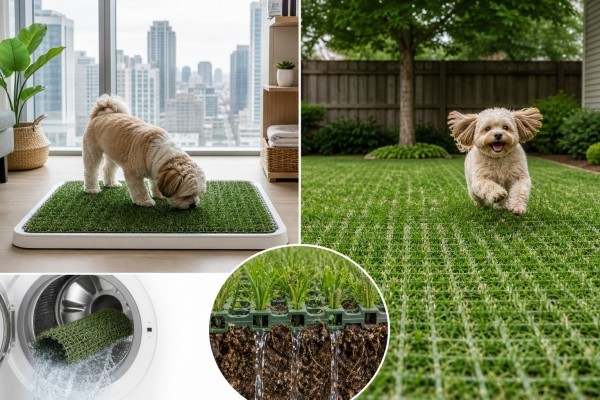
The versatility of this woven mesh design allows wholesale importers to target completely different buyer demographics from the same bulk container order. However, it is critical to educate your retail and contractor networks on the vast differences in maintenance between these two scenarios.
Market 1: Indoor and Balcony Pet Pee Pads
In this application, the turf is used without soil or natural grass. It acts as a highly durable, reusable toilet area for dogs. Because the woven backing is incredibly tough and lacks the heavy latex coating of standard turf, it can withstand rigorous commercial machine washing. PU and SBR backings tend to crack, crumble, and disintegrate after repeated agitation in a washing machine.2 The woven mesh remains intact, allowing end-users to maintain high hygiene standards effortlessly.
Market 2: Outdoor Plantable Hybrid Yards
When used outdoors in landscaping, the product functions as a true hybrid grass system. Contractors lay the mesh over prepared soil, add topsoil or sand, and sow natural grass seed. The real grass grows directly through the open grid, coexisting with the synthetic fibers.
Distributors must be extremely clear with their clients: outdoor hybrid yards are not zero-maintenance installations. They require:
- Seeding and watering: To establish the natural grass roots through the mesh.
- Routine mowing: The natural grass will grow taller than the synthetic fibers and requires regular trimming.
- Fertilization: Just like any natural lawn, the soil needs nutrients.
The value proposition here is not "zero maintenance," but rather "indestructible natural aesthetics." It combines the visual appeal and cooling effect of real grass with the heavy-duty wear resistance of synthetic turf.
Is open-mesh hybrid turf durable enough for large, destructive dogs?
B2B landscape contractors frequently ask if an open-mesh structure sacrifices overall strength. There is a legitimate fear that large, active dogs will easily dig through or tear apart a woven net design compared to a thick, heavy polyurethane backing.
Open-mesh hybrid turf is highly durable against destructive dogs due to its specialized woven manufacturing process that ensures extreme pull-out force. In outdoor installations, natural grass roots grow through the mesh into the soil, creating an interlocking "plant plus plastic" anchor system that naturally prevents dogs from digging.
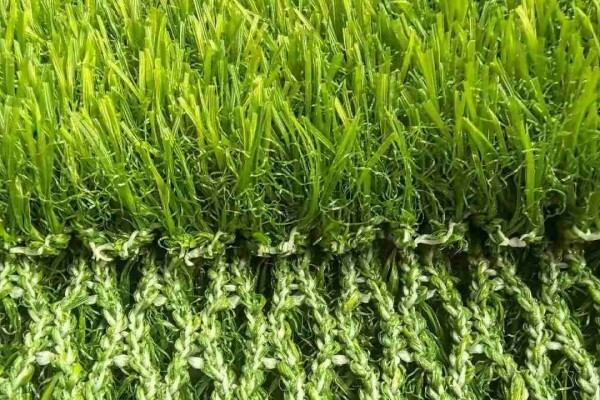
Durability is the second most critical metric for commercial pet applications, right behind odor control. When procuring standard artificial grass, contractors often worry about dogs chewing the edges, pulling out individual tufts, or completely excavating the yard. The woven design addresses these issues through two primary mechanisms.
First is the mechanical strength of the woven process. Unlike traditional tufting where yarns are punched through a backing and glued down, woven hybrid turf intertwines the synthetic grass blades directly into the backing structure during manufacturing. This creates an exceptional pull-out force. As mentioned earlier, this mechanical lock is strong enough to survive heavy industrial washing machines without shedding—a force far greater than a dog’s typical scratching.
Second is the "plant plus plastic" interlocking root system unique to outdoor hybrid installations. When installed correctly, the mesh sits just below the surface of the soil. As the natural grass seeds germinate, their roots weave down through the artificial mesh and deep into the earth.
- Anti-Digging Barrier: When a large dog attempts to dig, their claws scrape past the natural grass blades but hit the reinforced synthetic mesh. Because the mesh is anchored entirely by the natural root system of the yard, the dog cannot displace the soil or tear the turf up.
- Crown Protection: The synthetic mesh acts as a protective shield for the vital crown of the natural grass. Even if a dog runs heavily over the yard and wears down the natural green blades, the root system remains protected, allowing the real grass to regenerate quickly.
- Mud Elimination: By stabilizing the soil structure with the mesh matrix, the yard resists turning into a mud pit during heavy rain, completely eliminating the issue of dogs tracking muddy paws into the house.
This structural synergy provides landscape contractors with a bulletproof solution for high-traffic commercial dog parks, boarding kennels, and residential yards with large, active breeds.
Procurement managers often hesitate when they see the higher manufacturing cost of woven open-mesh turf. Competing on price alone with standard landscape grass is a race to the bottom, leaving wholesalers struggling with low margins and high defect rates.
B2B distributors should invest in premium hybrid pet turf because it provides a high-margin differentiator that solves genuine end-user complaints. Although procurement costs are higher, wholesalers can easily justify the premium price by educating contractors on its superior odor elimination, extreme durability, and dual-market versatility.
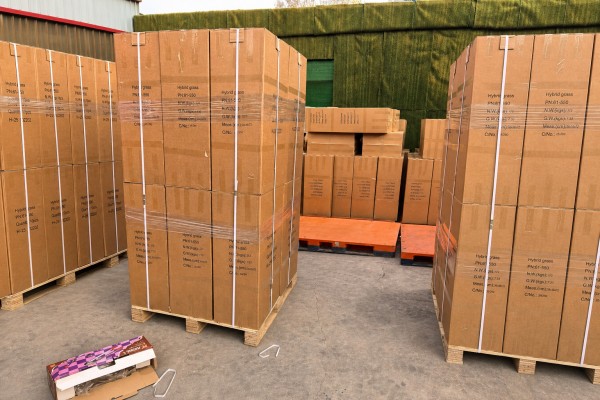
The manufacturing reality is that the open woven process is more complex, slower, and utilizes more advanced machinery than standard tufting and coating lines. Consequently, the initial B2B procurement cost for hybrid woven turf is higher than standard landscaping grass.
However, smart importers do not market this alongside cheap residential turf. They frame it as a premium, problem-solving engineering material. If you equip your downstream landscape contractors with the right market education, the higher B2B ROI becomes obvious.
Here is the exact sales positioning distributors should use to justify the premium:
- Stop selling "pet-friendly" grass; sell a structural odor solution. Standard turf relies on the vague promise of being "pet-friendly." Hybrid woven turf relies on the physical proof of 100% water permeability. Contractors can charge a premium for installations guaranteed not to trap urine.
- Target high-budget commercial projects. Municipal dog parks, luxury pet resorts, and high-end residential estates have the budget for premium materials. They care far more about longevity and odor prevention than saving a few dollars per square meter on material costs.
- Lower lifetime replacement costs. Because the interlocking root system prevents large dogs from destroying the yard, facility managers save thousands in replacement and maintenance costs over the lifespan of the product.
By importing wholesale container orders of hybrid turf, B2B sourcing agents can capture a highly lucrative niche. The goal is to move away from low-cost, low-margin conventional turf and build a reputation as the exclusive supplier of advanced, problem-solving landscaping technology.
Frequently Asked Questions
Does hybrid pet turf require sand or rubber infill?
For indoor pee pad applications, no infill is required. For outdoor plantable hybrid yards, a topdressing of sand or specially formulated soil is required to cover the mesh slightly and provide a seedbed for natural grass germination.
Can I order customized sizes for retail pee pads?
As a B2B factory, we specialize in wholesale full-container orders of bulk rolls (e.g., 2m or 4m widths). Distributors and OEM buyers typically import these master rolls and handle the custom cutting and edge binding locally for retail packaging.
How long does it take for natural grass to grow through the mesh?
Growth time depends entirely on your local climate, soil quality, and the specific natural grass seed used. Typically, visible growth occurs within two to four weeks, with the root system fully integrating and anchoring the mesh within a few months.
Can hybrid turf withstand freezing winter temperatures?
Yes. The open woven mesh is highly resilient to temperature fluctuations. Unlike solid PU/SBR backings that can become brittle and crack during severe freezes, the flexible woven structure easily expands and contracts with the frozen soil.
Conclusion
Understanding the structural superiority of hybrid pet turf for dogs is essential for any modern B2B landscaping distributor. By replacing standard punched-hole backings with a 100% permeable open-mesh design, this product physically eliminates urine odor and offers unmatched durability through an interlocking root system. While the procurement cost is higher, it opens up high-margin opportunities in both the washable indoor pad market and the outdoor commercial yard sector.
If you are a wholesale importer, landscape contractor, or sourcing agent looking to upgrade your product catalog, Hebei Qinghong Artificial Grass Co., Ltd. (QH Grass) is your direct factory partner. With over 10 production lines and a monthly capacity exceeding 1.5 million square meters, we specialize in high-quality woven hybrid turf.
Contact Alice Chen at [email protected] or WhatsApp +86 185 7566 0746 to discuss technical specifications and request a quote for your next full-container order (MOQ: 3,000 sqm per specification).
-
"Ammonia Emission from Animal Feeding Operations and Its Impacts", https://ohioline.osu.edu/factsheet/AEX-723.1. Research on animal waste indicates that urea rapidly hydrolyzes into ammonia, which can accumulate in non-porous environments and cause severe olfactory and environmental issues. Evidence role: mechanism; source type: paper. Supports: The chemical process by which urea in dog urine breaks down into ammonia, causing persistent odors and potential damage.. Scope note: The rate of ammonia volatilization depends heavily on ambient temperature and humidity. ↩
-
"Degradation of Polyester Polyurethane by Bacterial … – PMC", https://pmc.ncbi.nlm.nih.gov/articles/PMC6431909/. Material degradation studies show that standard styrene-butadiene rubber and polyurethane coatings are susceptible to delamination and crumbling when subjected to the high shear forces of mechanical washing. Evidence role: mechanism; source type: paper. Supports: The mechanical breakdown of SBR latex and PU coatings under repeated washing and agitation.. Scope note: Degradation rates vary based on the specific chemical formulation, thickness, and curing process of the backing. ↩