_画板-1.png)
Are you struggling with gaps in your turf installation? Loose edges ruin the look and safety of your project. You need a reliable solution to hold everything together.
Artificial turf seam tape is a durable, waterproof strip placed beneath turf edges. Combined with adhesive, it creates a strong, invisible bond that prevents separation. It provides structural integrity for both residential landscapes and high-traffic sports fields, ensuring a professional finish.
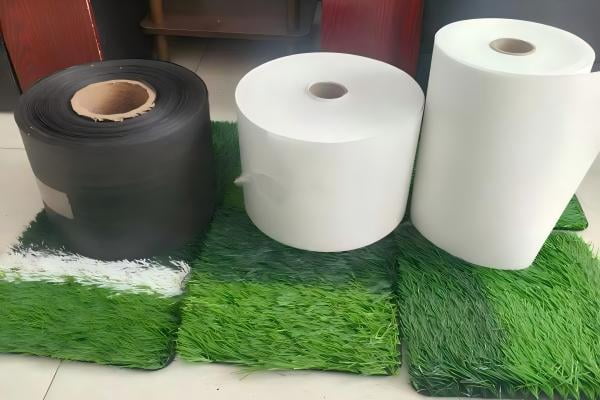
I have seen many projects fail because of bad joinery. It is painful to watch money go to waste. Let me explain exactly what this material is and why it matters for your business.
What is the best tape for jointing artificial grass?
Choosing the wrong tape causes lifting edges after just a few months. You do not want customer complaints. Let’s find the right material for your specific job.
The best tape depends on the application. For high-traffic sports fields, use non-woven PET tape1 with two-component adhesive2. For simple residential gardens, PP tape with single-component adhesive is sufficient. Self-adhesive tape offers the fastest installation for low-traffic areas.
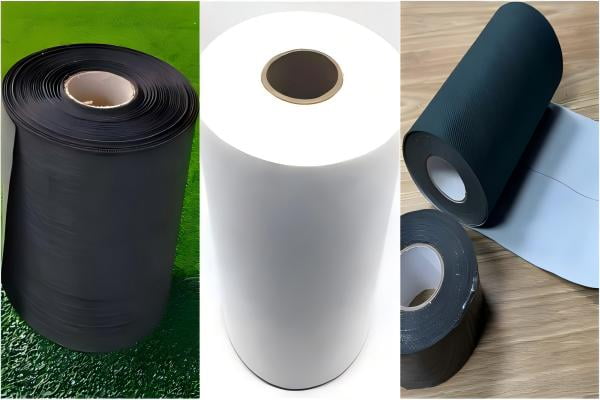
I spent years in the technical department before managing sales. I learned that not all tapes are the same. You must choose based on the traffic and the glue you use. There are three main options in the market today.
First, there is PP (Polypropylene) Seam Tape3. We usually use this for low-traffic areas like home courtyards or decorative displays. It works best with single-component glue. It is cost-effective but has limits. I do not recommend this for heavy sports use.
Second, there is PET (Polyester) Seam Tape. This is the professional choice. It is the best partner for two-component adhesive. If you are building a soccer field or a busy commercial area, you need this. It prevents adhesive leakage and creates a very strong bond. It is my preferred choice for ensuring quality.
Third, there is PP + Polyacrylic Self-Adhesive Tape4. This is very convenient. You do not need to carry buckets of glue. You can use it immediately. However, its performance is similar to the standard PP tape. It is good for small repairs or light use, but not for a professional stadium.
Here is a breakdown to help you decide:
| Tape Type | Best Adhesive match | Ideal Application | Durability Level |
|---|---|---|---|
| PP Seaming Tape | Single-component glue | Residential, Landscaping, Indoor | Medium |
| PET Seaming Tape | Two-component glue | Sports Fields, Commercial Areas | High (Strongest) |
| Self-Adhesive Tape | None (Pre-applied) | DIY, Small Gardens, Repairs | Medium |
How to Use Seam Tape for Artificial Grass?
Even the best materials fail if you install them incorrectly. Poor installation leads to visible lines and tripping hazards. You need a strict process to ensure quality.
Prepare the turf edges and place the tape underneath the gap. Apply the specific adhesive evenly onto the tape. Fold the turf edges down firmly onto the glue. Allow sufficient curing time5 before walking on the surface to ensure a permanent bond.
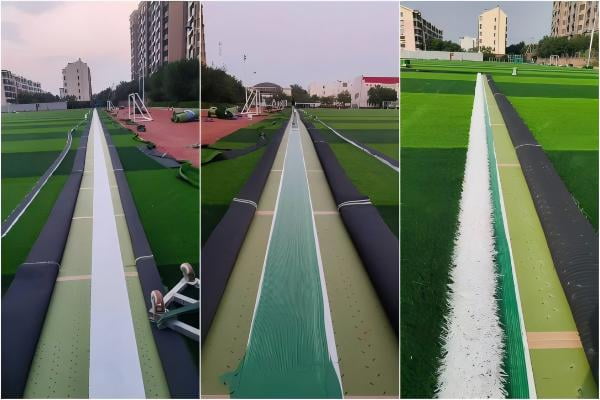
I have helped many customers fix bad installations. Usually, the problem is not the product. The problem is the process. You usually purchase turf from China or Vietnam. You want the final result to look perfect. To achieve this, you must follow these standard usage steps.
1. Preparation
First, trim the edges of the turf rolls. This is vital. You must remove the factory edge strip. Lay the turf rolls down. Leave a very small gap between them. Do not overlap them. If you use two-component adhesive, you must mix it with the hardener now. Stir it thoroughly.
2. Positioning the Tape
Place the tape directly beneath the gap. It must be in the center. If it is off-center, the bond will be weak on one side. If use self-adhesive tape, keep the adhesive side facing up.
3. Applying the Adhesive
Apply the turf adhesive to the tape. Spread it evenly. Do not use too much or too little. If you use two-component adhesive, ensure the hardener was mixed well beforehand. This is a common pain point. If the mix is bad, the glue will never dry.
4. Connecting
Fold the edges of the turf onto the tape. Press down firmly. You need good contact. If it is self-adhesive tape, peel off the protective film carefully. Make sure the grass blades do not get stuck in the glue.
5. Curing
This is the final step. You must allow sufficient drying time. Do not walk on it immediately. The chemical bond needs time to set.
Comparison of Installation Methods
| Step | Two-Component Method (Professional) | Self-Adhesive Method (DIY/Quick) |
|---|---|---|
| Prep | Must mix hardener and glue | No mixing required |
| Tools | Trowel, gloves, mixing bucket | Knife, steady hands |
| Speed | Slower, requires precision | Fast, peel and stick |
| Result | Extremely durable bond | Good bond for light use |
Conclusion
Seam tape creates the backbone of your turf project. Choose PET for sports and PP for gardens. Follow the correct gluing steps to ensure a long-lasting, profitable installation.
-
Explore this link to understand the benefits of non-woven PET tape for high-traffic areas, ensuring durability and performance. ↩
-
Discover the importance of two-component adhesives in creating strong bonds for sports fields and commercial areas. ↩
-
Learn about PP Seam Tape’s cost-effectiveness and ideal applications for low-traffic areas, perfect for residential projects. ↩
-
Find out how Self-Adhesive Tape simplifies installation for DIY projects and small repairs, making it a convenient choice. ↩
-
Find out the ideal curing time to ensure a strong bond and avoid issues after installation. ↩
_画板-1.png)