_画板-1.png)
You want to maximize your sports field rental income, but you also fear wearing out your expensive pitch too quickly. Finding the balance between high usage and long lifespan is stressful for many facility owners.
Technically, you can use artificial turf 24 hours a day, 7 days a week. But for the best return on investment and ensuring the product lasts its full 5-12 year lifespan, I recommend limiting play to 8-12 hours per day, or about 3000 hours per year.
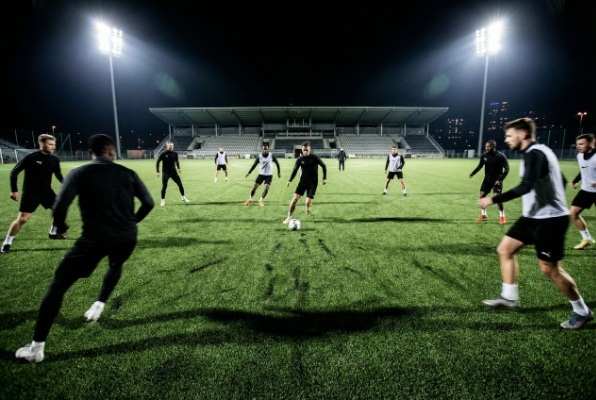
Many of my clients ask me this question. They want to know the limit. I always tell them the truth. Natural grass needs sleep. Artificial grass does not. You can play on it all day. But everything has a lifespan. If you use it more, it wears out faster. This is simple physics. So, let us look at the details.
Does Artificial Turf Last Longer Than Natural Grass on a Soccer Field?
Nobody likes cancelling a big game because of rain or a muddy field, which costs you money and upsets players. You need a surface that stays ready regardless of the weather.
Artificial turf lasts significantly longer than natural grass, easily handling around 3000 hours of play per year compared to the 300-800 hours limit of natural fields. With proper care, a quality sports field from QH Grass typically lasts 5-12 years.
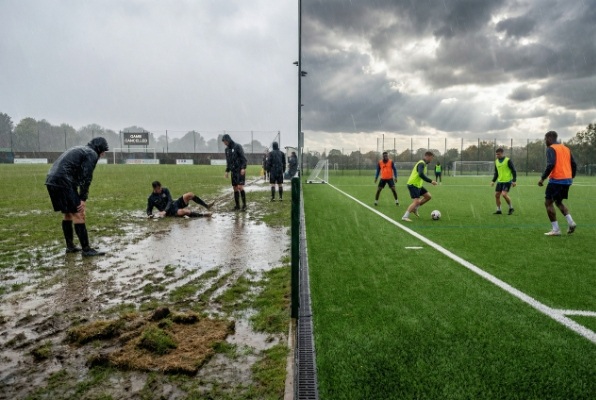
I have seen many field owners struggle with natural grass. It is fragile. In my early days as an engineer, I learned that natural grass is a living plant. It needs time to recover. If you play on it for more than 20 hours a week, it starts to die. It turns into dirt. This is bad for business.
Artificial turf completely changes this math. It does not need "rest" periods. Our sports grass acts as a heavy-duty carpet. It is engineered specifically for athletic fields to take a beating.
Here is a breakdown of why synthetic is tougher:
- Weather Resistance1: Heavy rain often floods natural fields. You have to close them. Artificial turf drains water quickly. You can play almost immediately after a storm. Also, snowy days are tricky. Natural grass freezes and breaks. For artificial turf, you must clean the floating snow from the surface before use, but the grass itself survives the cold.
- Usage Volume: Natural grass allows maybe 600-800 hours of play a year. Artificial turf allows 3000 hours. That is nearly four times the usage.
- Maintenance Downtime2: Natural grass needs mowing, watering, and fertilizing. You cannot play while this happens. Artificial turf needs brushing and combing to keep it flat and firm, but this takes much less time.
| Feature | Natural Grass | Artificial Turf |
|---|---|---|
| Daily Usage Limit | 2-3 hours | 8-12 hours (recommended) |
| Annual Capacity | ~800 hours | ~3000 hours |
| Recovery Time | Required daily | None required |
| Weather Impact | Turns to mud/dies | Remains usable |
Natural grass is vulnerable to extreme heat and flooding. Artificial turf handles these conditions much better. This durability is the main reason my clients switch. They want a field that works as hard as they do.
Is Infill Artificial Turf for Soccer Fields More Durable Than Non‑Infill Artificial Turf?
You might worry that the grass fibers will flatten or snap after just a few years of intense matches. This is a valid concern if you choose the wrong system.
Yes, filled artificial turf is much more durable because the quartz sand and rubber granules support the fibers, preventing them from falling over. In non-infill systems, the yarn bears all the weight and wears out much faster.

I always advise my clients to understand the "system," not just the grass. A soccer field is not just a rug. It is a construction project.
When we build a professional sports venue, we use a specific recipe. We do not just lay the grass. We add filling.
- Quartz Sand3: We usually fill 20-30kg per square meter. This sand sinks to the bottom. It holds the grass down. It protects the root of the yarn.
- Rubber Granules4: We add 4-7kg of rubber particles on top. This provides the bounce. It acts like soil.
Why does this matter for time?
Think of a piece of wire. If you bend it back and forth, it breaks. Grass fibers are the same. In a usage scenario without infill, the player’s foot lands directly on the fiber. It crushes the fiber against the backing. The yarn takes 100% of the friction.
In a filled system, the sand and rubber surround the grass. Only the top 1-2 cm of the tip shows. When a player steps, they step on the rubber and sand. The "infill" takes the abuse, not the plastic yarn.
This cushioning effect distributes the wear. It is like wearing shoes versus walking barefoot. The infill is the shoe.
At QH Grass, our sports grass is engineered for this. We ensure the density matches the fill. If you skip the infill to save money, you will lose money later. The field might look bald in 3 years instead of 8. The infill is the shield for your investment.
What Is the Ideal Daily Usage Time for Artificial Turf Soccer Fields?
Pushing your field to the limit instantly boosts revenue, but you risk shortening its life and facing a massive replacement bill too soon. You need a strategy that balances today’s profit with tomorrow’s asset value.
For the perfect balance of profitability and longevity, I recommend 8 to 12 hours of play daily. While the turf can physically handle 24 hours, limiting it helps you reach the maximum 12-year lifespan potentially offered by high-quality products.
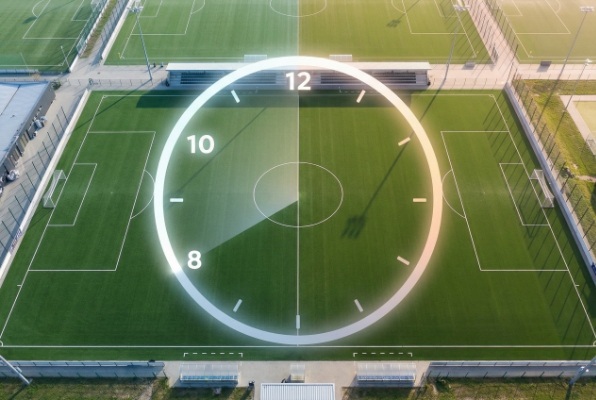
Let’s dive deep into the numbers. I am a business man as well as an engineer. I understand you want profit. Ideally, you rent the field morning, noon, and night.
But "can" does not mean "should."
The 3000-Hour Rule
Industry standards suggest a quality field has a "performance life" of roughly 25,000 to 30,000 hours of total play before the fibers degrade too much.
- If you use it 8 hours a day: $8 \times 365 = 2920$ hours/year. The field lasts about 10 years.
- If you use it 24 hours a day: $24 \times 365 = 8760$ hours/year. The field lasts about 3 years.
You see the trade-off. Extreme use creates extreme wear.
Factors That Reduce Usage Time
Even if you stay within 8-12 hours, bad habits can kill the field faster.
- Improper Footwear: We strictly forbid spiked shoes. They chew up the fibers.
- Heavy Loads: Vehicles parking on the grass crush the sub-base.
- Lack of Combing: You must use special equipment to fill the filler and comb the lawn. If you do not comb it, the sand packs down hard. Then the fibers snap.
My Recommendation for Field Owners
I suggest creating a schedule.
- Peak Hours (Evening/Weekend): 6-8 hours of high-intensity adult matches.
- Off-Peak (Daytime): 2-4 hours of light training or kids’ camps.
- Maintenance Window: Keep 1 hour free for inspection or grooming.
This gets you to that "sweet spot" of 8-12 hours. You maximize revenue without destroying the plastic yarn.
Also, consider the type of sport. Javelin and shot put are forbidden on standard soccer turf because they puncture the backing. Stick to soccer.
If you follow this, your field from QH Grass can truly last the 5-12 years we promise in our catalog. It is about managing the asset, not just rolling out a carpet.
Conclusion
Artificial turf is a powerhouse that can handle 24/7 use, but for maximum lifespan and ROI, stick to 8-12 hours daily. Using infill systems and proper maintenance ensures your field lasts over a decade.
-
Discover how weather resistance plays a crucial role in the usability of sports fields, impacting game schedules and player safety. ↩
-
Find out how maintenance downtime differs between artificial turf and natural grass, influencing operational efficiency for field owners. ↩
-
Learn how quartz sand enhances the durability and performance of artificial turf, ensuring a longer-lasting playing surface. ↩
-
Discover the importance of rubber granules in artificial turf systems and how they contribute to player safety and field longevity. ↩
_画板-1.png)