_画板-1.png)
Municipal landscaping projects often force contractors into a difficult compromise. Clients demand instant green landscapes for fast project approval, but strict environmental guidelines require long-term natural grass integration1. Finding a solution that satisfies both demands is challenging. Fortunately, turf that allows grass to grow through provides the perfect balance, offering instant visual appeal while actively protecting natural grass roots as they develop.
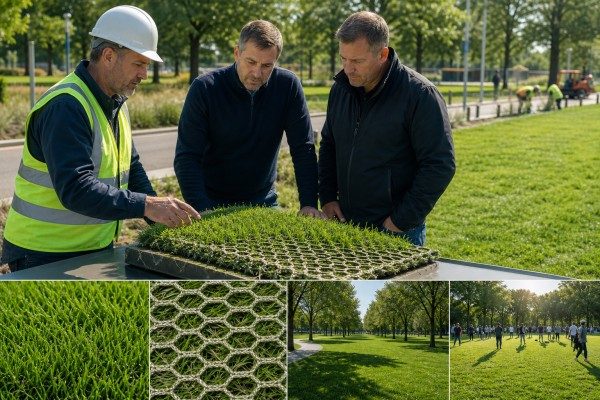
Turf that allows grass to grow through is a specialized woven hybrid artificial grass featuring an open mesh backing. This engineering structure allows natural grass roots and blades to grow freely through the synthetic fibers. It provides contractors with an instant green landscape while ensuring the long-term ecological survival of the natural grass in municipal and commercial projects.
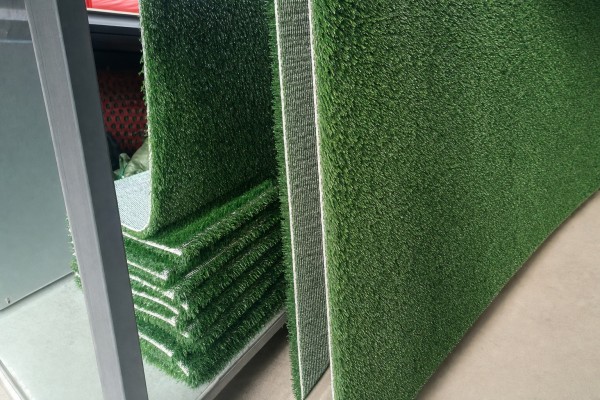
Understanding how this hybrid system works is crucial for artificial turf importers and distributors. Why do standard punched-hole turfs fail at this application, and how can you guide your downstream contractors to ensure project success? Let us dive into the mechanics and realities of woven hybrid turf.
How does the woven backing trap affect turf that allows grass to grow through?
Buyers often mistakenly assume that any artificial grass with drainage holes can function as a hybrid system. Downstream contractors realize too late that standard punched backings actually suffocate natural grass. You must understand the structural differences to avoid expensive project failures.
To succeed with turf that allows grass to grow through, you must choose a true open woven mesh backing. Standard punched backings block root expansion and restrict airflow2, causing natural grass to die. An open woven structure guarantees maximum permeability for oxygen, water, and unrestricted root development.
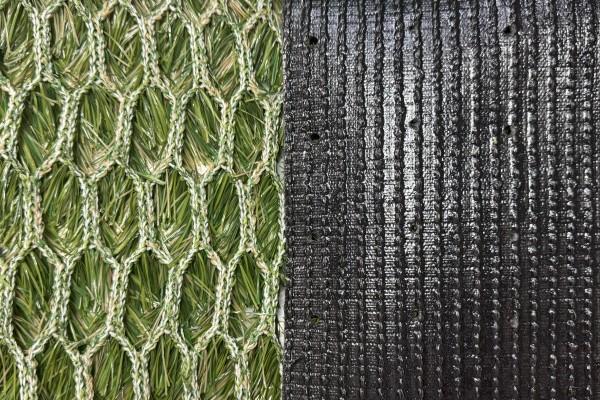
The most critical factor in evaluating hybrid synthetic turf is the backing material. Standard artificial turf is manufactured by tufting yarn into a primary backing cloth, which is then coated with heavy latex or polyurethane. To allow for drainage, manufacturers punch small holes into this solid backing. If a contractor attempts to grow natural grass through these small, isolated drainage holes, the grass roots will suffocate. The solid coating prevents adequate soil aeration, traps excessive heat3, and severely limits the physical space for grass shoots to emerge.
I have seen municipal bids rejected simply because the sourcing agent quoted standard punched grass instead of true woven hybrid turf. To protect your reputation as a trusted B2B supplier, you must educate your buyers on the "backing trap."
True grow-through grass utilizes an open woven mesh design. There is no heavy, solid latex coating sealing the bottom. Instead, the synthetic fibers are woven directly into a grid-like mesh.
Key Differences for Procurement Evaluation
| Feature | Standard Punched Turf | Woven Hybrid Turf (Grow-Through) |
|---|---|---|
| Backing Structure | Solid cloth with latex/PU coating | Open woven mesh grid |
| Drainage Method | Punched holes (spaced apart) | 100% permeable surface area |
| Root Protection | Poor (roots are blocked) | Excellent (crowns are protected) |
| Soil Aeration | Very low | Very high |
| Primary Application | Purely synthetic surfaces | Ecological integration with natural grass |
When you supply an open woven mesh system, you are providing a product that acts as a protective shield for the natural grass crown. It prevents pedestrian traffic from compacting the soil and crushing the delicate growth points4 of the natural grass, ensuring long-term survival in high-traffic green belts, parks, and school campuses.
What is the correct installation process for turf that allows grass to grow through?
Contractors frequently make the mistake of treating hybrid grass just like regular artificial turf. This fundamental error leads to uneven seed germination and dead patches. Installing grow-through turf requires a completely different approach focused heavily on agronomy and soil health.
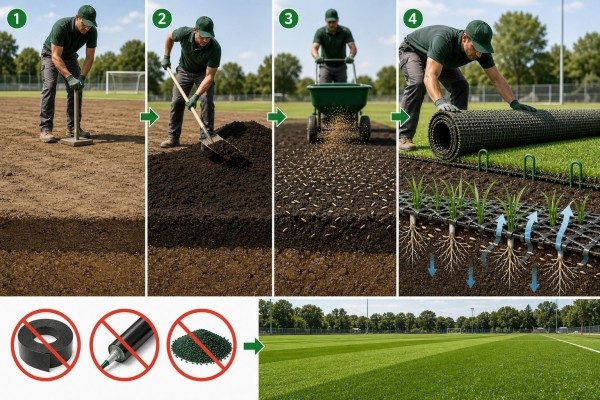
Installing turf that allows grass to grow through requires prioritizing natural soil preparation. Contractors must prepare a nutrient-rich topsoil base, lay the woven hybrid turf, and then apply grass seeds mixed with topdressing sand5. This sequence ensures seeds germinate directly through the open mesh backing.
If your downstream landscape contractors attempt to lay hybrid turf on compacted crushed stone or concrete—as they would with standard artificial grass—the project will fail. As an importer, supplying the right product is only half the battle; providing accurate technical guidance ensures your clients return for future container orders.
The Engineering Installation Sequence
The installation of a woven hybrid turf system must align with biological requirements. Here is the framework you should share with your contracting clients:
- Sub-base and Topsoil Preparation: The foundation must support plant life. Contractors must ensure proper sub-surface drainage and layer high-quality, nutrient-rich topsoil. The soil must be leveled and lightly compacted to prevent future surface depressions, but remain loose enough for root penetration6.
- Laying the Woven Hybrid Turf: The rolls of artificial grass are rolled out over the prepared topsoil. Because the material is highly permeable, edges must be carefully joined using specialized seaming tape and adhesive that will not block the open mesh structure.
- Seeding and Topdressing: Unlike standard turf which uses silica sand merely for weight and fiber support, hybrid turf requires a specific topdressing mixture. Contractors broadcast natural grass seeds directly into the synthetic fibers, followed by a layer of topdressing sand or specialized root-zone mix. This sand weighs down the turf and provides a protective incubation bed for the seeds.
- The "Instant Greening" Phase: Immediately upon laying the hybrid turf, the project site looks vibrantly green thanks to the synthetic fibers. This allows for fast project handover and satisfies municipal aesthetics while the natural grass takes its time to germinate beneath the sand.
By clearly explaining this process, you position your business as a knowledgeable supply-chain partner rather than just a transactional vendor.
Does hybrid turf that allows grass to grow through require zero maintenance?
A common selling point in the artificial grass industry is that products require zero maintenance. However, applying this marketing logic to hybrid systems is a dangerous myth. If you promise a maintenance-free performance, your contractors will inevitably face dead natural grass and angry clients.
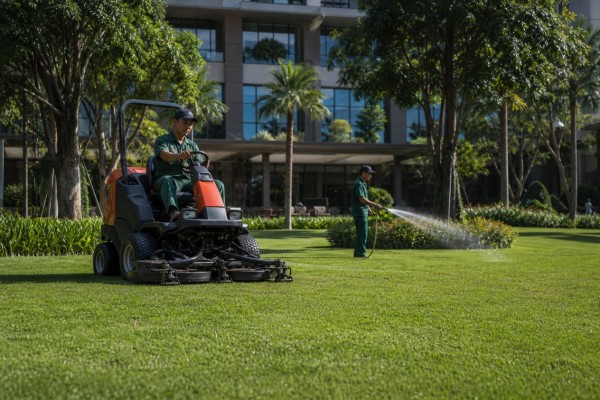
Turf that allows grass to grow through is not a zero-maintenance product. While the synthetic fibers require no upkeep, the natural grass component demands professional agronomic care. Contractors must implement regular watering, fertilizing, and mowing schedules to ensure the natural grass survives and thrives.
Building trust with B2B buyers requires transparency. Over-promising ruins supplier relationships. When evaluating suppliers for high-end municipal and commercial projects, experienced buyers look for manufacturers who tell the truth about product limitations.
The core philosophy of a hybrid grass system is synergy. The synthetic fibers protect the natural grass from excessive wear, tear, and root compaction. However, the natural grass is still a living organism.
Agronomic Maintenance Realities
To maintain a healthy hybrid landscape, contractors and facility managers must account for the following requirements:
- Irrigation Systems: Grow-through grass requires consistent moisture for seed germination and sustained growth. Commercial projects should ideally feature integrated sprinkler systems. The open woven mesh allows water to reach the soil perfectly, but someone still needs to turn the water on.
- Fertilization Programs: The soil beneath the turf will eventually deplete its nutrients7. Regular application of liquid or granular fertilizers is necessary to keep the natural grass vibrant.
- Mowing Heights: Once the natural grass grows taller than the synthetic fibers, it must be mowed. Facility managers must ensure that mower blades are set slightly higher than the synthetic pile height8 (e.g., if the artificial grass is 30mm, the mower should be set to 35mm-40mm) to avoid cutting the plastic yarns.
By equipping your distributors with this honest maintenance profile, you empower them to set accurate expectations with real estate developers, municipal governments, and landscaping firms. Transparency mitigates risk and prevents costly post-installation disputes.
How can distributors sell the ROI of turf that allows grass to grow through?
Woven hybrid turf carries a higher unit price than conventional artificial grass. Importers frequently struggle to justify this initial cost to their downstream contractors. To win these bids, you need the right technical ammunition to overcome price objections and shift the conversation to total project value.
To sell the ROI of turf that allows grass to grow through, focus on comprehensive project value. This system offers instant greening for fast project approval and long-term ecological durability. It solves municipal requirements for natural green spaces while preventing the heavy wear typical of pure natural grass.
Procurement departments at construction and engineering companies do not just look at the invoice price; they evaluate the Total Cost of Ownership (TCO) and project compliance. Here is how you frame the commercial advantages of hybrid turf to secure wholesale orders.
The "Instant Greening" Advantage
Time is money in commercial landscaping. Waiting for natural grass seeds to sprout and mature can take months, leaving construction sites looking barren and muddy. This often delays project sign-offs and final payments. Hybrid turf solves this instantly. The moment the synthetic rolls are laid, the site is visually complete. Contractors can hand over the project, get paid faster, and satisfy the aesthetic demands of their clients immediately.
Long-Term Ecological Compliance
Many government projects and green-building initiatives strictly limit the use of 100% artificial turf due to heat island effects and drainage concerns9. They demand living, breathing green spaces. Because the open woven mesh allows real grass to dominate the surface eventually, it meets these ecological requirements. Furthermore, our QH hybrid turf utilizes eco-friendly, recyclable materials (backed by CE, RoHS, and ISO9001 certifications), giving contractors the documentation they need to pass strict municipal evaluations.
Reduced Replacement Costs
Pure natural grass in public parks, school campuses, or hotel courtyards often turns into mud under heavy foot traffic10. The natural grass crowns get crushed, requiring expensive annual reseeding or sodding. Woven hybrid turf acts as a permanent physical shield for the grass crowns. Even if the visible natural blades are worn down during a busy weekend event, the root system remains completely protected by the synthetic fibers11. The natural grass will naturally recover, drastically reducing the ongoing replacement costs for the facility manager.
When you frame the price against fast project handovers, municipal compliance, and lowered long-term repair costs, the initial investment in woven hybrid turf becomes an easy choice for smart contractors.
Frequently Asked Questions
What is the MOQ for wholesale woven hybrid turf?
For customized hybrid artificial turf orders, our Minimum Order Quantity (MOQ) is 3,000 square meters per specification. We focus exclusively on B2B wholesale and full-container exports to ensure factory-direct pricing and high-quality production control.
Can we use standard artificial grass for grow-through projects?
No. Standard artificial grass features a solid backing with punched holes, which restricts airflow and suffocates natural grass roots. You must use an open woven mesh hybrid turf to allow roots and blades to grow freely.
Where is grow-through turf commonly used?
This specialized product is ideal for high-end engineering applications. Common uses include municipal landscaping, roadside green belts, public parks, school campuses, hotel resorts, and commercial green areas that experience heavy foot traffic.
Does this product have environmental certifications?
Yes. Our factory’s woven hybrid artificial grass is manufactured using eco-friendly, recyclable materials. We provide CE, RoHS, and ISO9001 certifications to help importers meet strict government and commercial procurement standards.
Conclusion
Understanding the engineering behind turf that allows grass to grow through is the key to capturing high-margin commercial and municipal projects. By guiding your clients away from standard punched backings toward true open woven mesh systems, you ensure long-term natural grass survival. While it requires proper soil preparation and honest agronomic maintenance, the ROI of instant project greening and ecological durability is unbeatable.
If you are a B2B importer, distributor, or landscape contractor looking to source premium woven hybrid turf in full containers, reliable factory-direct supply is crucial. Contact Alice Chen at QH Artificial Grass ([email protected] or WhatsApp +86 185 7566 0746) to discuss your next customized container order.
-
"Urban green space", https://en.wikipedia.org/wiki/Urban_green_space. Supports the existence of municipal environmental policies and zoning regulations that mandate a minimum percentage of living biomass in urban landscaping projects. Evidence role: general_support; source type: government. Supports: the existence of municipal environmental policies favoring natural grass over fully synthetic turf. Scope note: Guidelines vary significantly by municipality, region, and specific zoning laws. ↩
-
"Aerating Lawns – [email protected]", https://hgic.clemson.edu/factsheet/aerating-lawns/. Supports the mechanism by which solid or minimally perforated synthetic backings impede soil gas exchange, leading to hypoxic conditions that restrict root growth. Evidence role: mechanism; source type: research. Supports: the mechanism by which solid synthetic backings impede soil gas exchange and root growth. Scope note: Most studies focus on the soil health beneath fully synthetic installations rather than failed hybrid attempts. ↩
-
"The effect of synthetic grass sports surfaces on the thermal environment", https://pmc.ncbi.nlm.nih.gov/articles/PMC11272752/. Supports the claim that solid synthetic turf coatings significantly increase underlying soil temperatures and reduce porosity, negatively impacting soil microclimates. Evidence role: mechanism; source type: paper. Supports: that solid synthetic turf coatings increase underlying soil temperatures and reduce aeration. Scope note: Temperature effects depend heavily on local climate, season, and direct sun exposure. ↩
-
"Correcting Soil Compaction in Lawns", https://www.uvm.edu/extension/news/correcting-soil-compaction-lawns. Supports the agronomic principle that hybrid turf systems distribute weight and protect the basal growth points (crowns) of natural grass from mechanical damage. Evidence role: mechanism; source type: education. Supports: the agronomic principle that hybrid turf systems protect the basal growth points of natural grass. Scope note: Does not guarantee protection against extreme compaction from heavy vehicular traffic. ↩
-
"Preparing Soil for Turfgrass Establishment – Northern Utah | USU", https://extension.usu.edu/yardandgarden/research/preparing-soil-for-turfgrass-establishment-northern-utah. Supports the standard industry installation sequence for woven hybrid turf systems, emphasizing the necessity of topdressing over the synthetic matrix. Evidence role: general_support; source type: institution. Supports: the standard industry installation sequence for lay-and-play or woven hybrid turf systems. Scope note: Specific topdressing depths and seed mixtures vary by grass species and regional climate. ↩
-
"Effects of Soil Compaction – Penn State Extension", https://extension.psu.edu/effects-of-soil-compaction. Supports the agronomic requirement of balancing soil bulk density to provide surface stability while remaining below the threshold that inhibits root penetration. Evidence role: mechanism; source type: paper. Supports: the agronomic requirement of balancing soil bulk density for stability and root growth. Scope note: Optimal bulk density values depend heavily on the specific soil texture, such as sand versus loam. ↩
-
"Fertility Management For Sand-Based Systems", https://www.extension.iastate.edu/turfgrass/blog/fertility-management-sand-based-systems. Supports the necessity of ongoing fertilization in constructed turf root zones due to nutrient leaching and continuous plant uptake. Evidence role: general_support; source type: research. Supports: the necessity of ongoing fertilization in constructed turf root zones. Scope note: The rate of depletion depends on the cation exchange capacity (CEC) of the specific topsoil and sand used. ↩
-
"FS102: Your Lawn and Its Care (Rutgers NJAES)", https://njaes.rutgers.edu/fs102/. Supports the industry consensus on mowing hybrid turf systems at a height that prevents mechanical damage to the synthetic fibers while maintaining natural grass health. Evidence role: expert_consensus; source type: institution. Supports: the industry consensus on mowing hybrid turf systems to prevent mechanical damage. Scope note: Applies specifically to woven or stitched hybrid systems, not fully natural or fully synthetic fields. ↩
-
"The effect of synthetic grass sports surfaces on the thermal …", https://pmc.ncbi.nlm.nih.gov/articles/PMC11272752/. Supports the existence of municipal regulations and green-building codes that restrict fully synthetic turf to mitigate urban heat island effects and manage stormwater. Evidence role: case_reference; source type: government. Supports: the existence of municipal regulations restricting fully synthetic turf due to environmental concerns. Scope note: These restrictions are typically localized to specific cities or environmentally sensitive watersheds. ↩
-
"The Benefits of Sustainably Managed Turf – National Park Service", https://www.nps.gov/articles/000/benefits-of-sustainably-managed-turf.htm. Supports the agronomic observation that natural turfgrass subjected to traffic exceeding its wear tolerance loses canopy cover and structural integrity, leading to soil exposure. Evidence role: mechanism; source type: paper. Supports: the agronomic observation that natural turfgrass degrades under heavy traffic. Scope note: Wear tolerance varies significantly among different turfgrass species and cultivars. ↩
-
"Synthetic Turfgrass and the Nine Principles of Florida-Friendly …", https://ask.ifas.ufl.edu/publication/EP612. Supports the mechanism by which hybrid turf fibers shield the turfgrass crowns and root system, facilitating faster recovery after severe surface wear. Evidence role: mechanism; source type: research. Supports: the mechanism by which hybrid turf fibers shield turfgrass crowns and roots. Scope note: Protection is highly effective against foot traffic but may not prevent damage from heavy machinery or extreme shear forces. ↩