_画板-1.png)
Are you confused by the technical terms slit film, monofilament, and dual fiber? Choosing the wrong yarn can ruin your project’s profit margins and damage your reputation.
Slit film is a flat, net-like yarn mainly for budget landscaping. Monofilament consists of individual upright blades, ideal for high-performance sports. Dual fiber combines both for realistic landscape turf with better structural support. The right choice depends on usage, traffic, and budget.
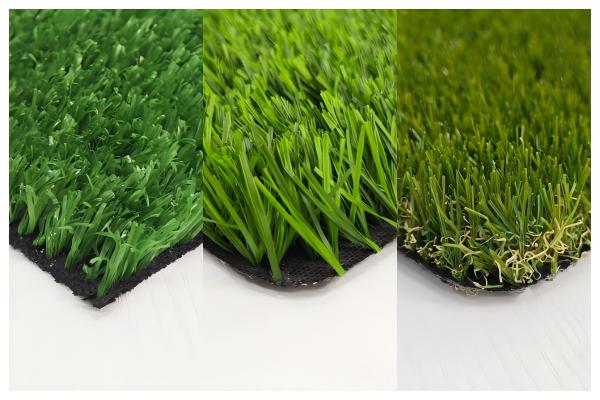
I know you want to avoid customer complaints about flat or fading grass. In this guide, I will explain these three fiber types simply. This will help you make the safest purchasing decisions for your business.
What is Slit Film Turf and When Is It the Best Option?
Many suppliers offer cheap prices, but is the quality suitable for your market? Slit film is a specific type of yarn that has distinct pros and cons.
Slit film is creating by compressing PP, color, and UV granules into a thin sheet, then slicing it. It creates a net-like structure. It is best for short-pile decorative grass or budget constraints, though its sports use is declining.
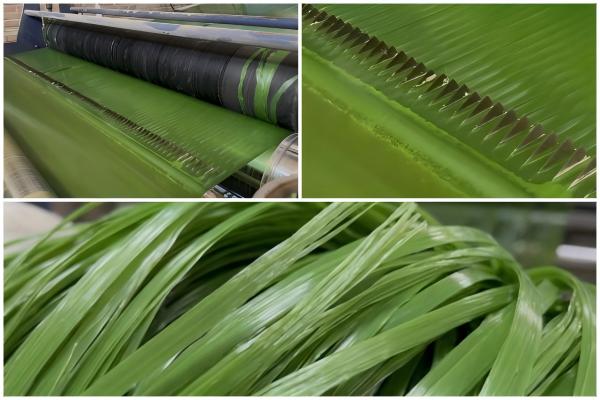
I have spent many years in the workshop watching this material being made. The process is quite simple compared to others. We take Polypropylene (PP)1 granules, mix them with color masterbatch and UV-resistant granules, and compress them. This creates a thin layer. It looks almost like a sheet of green paper. Then, a machine with a precise cutter splits this sheet into individual yarns.
Because the production is fast and the technology is mature, the cost is low. This affordable price makes it very popular if you have budget-conscious buyers. I usually see this used for decorative turf with a pile height between 7mm and 20mm. Dark green is the most popular color. However, for events or specific designs, I can also produce red, black, blue, and purple.
The Shift in Sports Applications
In the past, we used thicker slit film yarns for schools and sports fields. However, I have seen a major shift in the industry.
| Feature | Old Slit Film (Sports) | Modern Slit Film (Deco) |
|---|---|---|
| Material | PP (Polypropylene) | PP (Polypropylene) |
| Texture | Thick and wide | Thin and flat |
| Durability | Moderate | Low (for walking) |
| UV Resistance | Inferior to PE | Good for short term |
We stopped using this for high-end sports because PP is not as good as PE (Polyethylene). PP is harder but more brittle. When exposed to the sun outdoors for years, it wears down faster than PE.
What is Monofilament Turf and What Are Its Key Advantages?
Are you worried about your sports turf wearing out too quickly? Monofilament technology solves the problem of durability and performance for demanding athletes.
Monofilament turf is extruded through specific molds to create individual blades, such as S-shape or diamond shapes. It utilizes PE material for superior UV stability and wear resistance, making it the standard for modern 40-60mm sports fields.
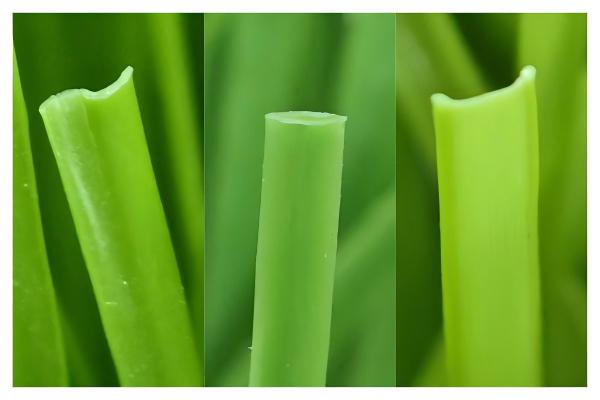
Monofilament production is different from slit film. We do not cut a sheet. Instead, we squeeze the mixture of PE granules, color, and UV protection through a mold. Think of it like making pasta. Each hole in the mold determines the shape of the grass blade. This gives us great control over the product.
I recommend monofilament for almost all sports projects today. The pile height is usually 40mm to 60mm. The main reason is the material. We use Polyethylene (PE)2. As an engineer, I know that PE has excellent abrasion resistance. It is soft enough to slide on but tough enough to handle running cleats.
The Importance of Yarn Shape
The shape of the monofilament is not just for looks. It changes how the grass performs.
- S-Shape & Wavy Shape: These are soft. They bounce back up reasonably well.
- Diamond Shape: This is very thick in the middle. It is extremely durable.
- U-Shape: This stands up straight very well.
If you are bidding for a football field project, you need to check the specs carefully. Clients will ask for specific shapes. A diamond shape might last longer, but a U-shape might look better initially. Understanding this helps you guide your customer to the right choice.
What Are the Benefits of a Dual Fiber (Hybrid) Turf System?
Do your clients want grass that looks 100% real and stays upright? A single fiber type might not be enough to satisfy high-end landscape demands.
Dual fiber turf blends straight PE monofilaments with curled PP thatch fibers. This hybrid composition provides a realistic look and structural support. The curled thatch protects the base, while the straight blades mimic natural grass, perfect for landscaping.
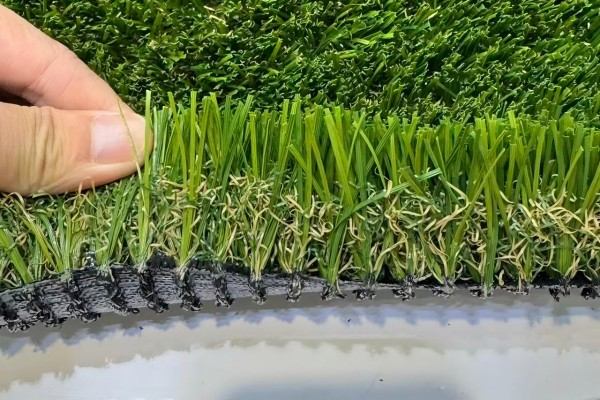
This is what we often call "Landscape Grass." In my sales career, this has been the biggest growth area. The idea is simple but brilliant. We mix two different types of yarn into one product.
- Straight Yarn: This is a PE monofilament. It looks like fresh grass.
- Curled Yarn: This is a PP crimped fiber. It sits at the bottom.
These are typically used for recreational spaces or gardens with a height of 20mm to 50mm. The visual impact is huge. The mix makes it look incredibly natural. The curled yarn looks like the dead grass or roots you see in a real lawn.
Critical Thinking: The Engineering Behind the mix
Why do we mix PE and PP here? It is about using the right material for the right job.
- Support: The short, crimped PP fibers act like a spring. They hold the tall PE grass up. Without this "thatch," the long grass would lie flat quickly.
- Protection: You might ask, "Tom, isn’t PP bad for UV?" In this specific case, it is okay. The curled PP is hidden at the bottom. The tall PE grass shades it from the sun. Also, people walk on the tips of the tall grass, not the bottom. So, the PP stays safe and durable.
This structure allows you to sell a premium product. It feels dense and lush. Your customers will see the value immediately when they touch the sample.
How Do These Three Fibers Compare in Terms of Performance and Durability?
You need to promise your customers a specific lifespan for their turf. Knowing the technical endurance of each fiber type protects your business from warranty claims.
PE monofilament offers the highest durability for sports due to its chemical structure. Dual fiber is durable for landscaping because the thatch protects the roots. Slit film (PP) has the lowest UV and abrasion resistance in outdoor settings.
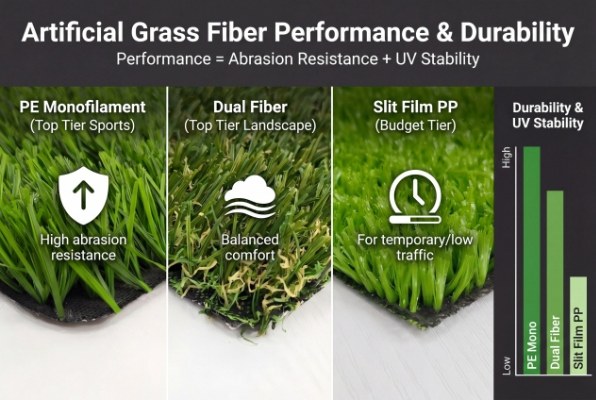
When we talk about performance, we are really talking about two things: Abrasion Resistance (wear from feet) and UV Stability (wear from the sun). I want you to be very clear on this so you do not have problems later.
Material Breakdown
I have analyzed the chemical properties of these materials extensively.
- PE (Polyethylene): This is the gold standard. It resists UV radiation very well. It does not fade easily. It is also flexible. It does not snap when athletes run on it.
- PP (Polypropylene): This is cheaper and stiffer. However, under strong UV light, the molecular chains break down faster. It can become chalky or brittle over many years in hot countries like Saudi Arabia or the UAE.
Performance Hierarchy
Here is how I rank them for your purchasing decisions:
- Top Tier (Sports): PE Monofilament. Shapes like Diamond or Stem offer the longest life.
- Top Tier (Landscape): Dual Fiber. The mix involves PE on top, protecting the PP below. It lasts a long time in gardens.
- Budget Tier: Slit Film (PP). This is fine for temporary events or low-traffic areas. If you put this on a busy football field in a hot country, it will fibrillate (split) further and wear out faster than PE.
What Are the Aesthetic and Functional Trade-offs I Should Consider Before Buying?
Price often dictates the choice, but looks matter too. You must balance the visual appeal with the functional requirements of your client’s specific project.
Slit film is functional and cheap but looks less realistic. Monofilament looks sporty and clean but requires infill to stand perfectly. Dual fiber offers the best aesthetics without infill. Choose based on the final application.
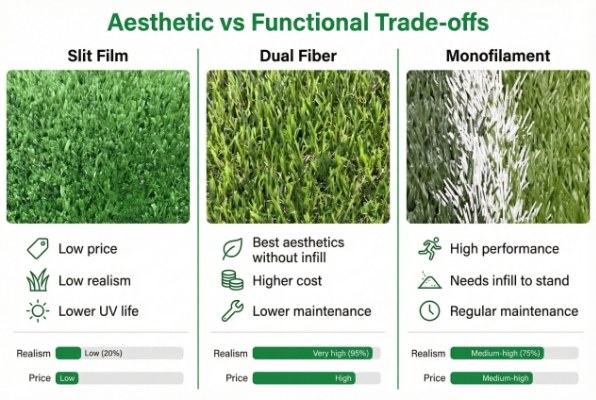
As a business owner, you always have to balance cost against quality. Here is my honest assessment of the trade-offs you will face.
The Aesthetic Trade-off
- Slit Film: It looks like a green carpet. It does not look like individual blades of grass. It reflects light differently, sometimes looking shiny. However, for a fair booth or a basic playground, it is acceptable.
- Monofilament: It looks very clean and sporty. But, without sand and rubber infill, it tends to lie flat. It needs maintenance to look good.
- Dual Fiber: This is the king of looks. It mimics nature perfectly. It is lush and matte.
The Functional Trade-off Matrix
To help you decide quickly, I have made this table:
| Fiber Type | Best Use Case | Price Point | Key Trade-off |
|---|---|---|---|
| Slit Film | Construction fences, temporary events, cheap deco. | Low | Low realism and lower UV life. |
| Monofilament | Professional Soccer, Tennis, Hockey. | High | Needs infill to perform well. |
| Dual Fiber | High-end Villas, Roof Gardens, Hotels. | High | Higher cost, but lower maintenance. |
If your customer wants a "maintenance-free" garden, sell them Dual Fiber. If they are building a futsal court for rent, sell them Monofilament. If they just want to cover dirt for a year, sell them Slit Film.
Conclusion
Slit film is for budgets, Monofilament is for sports performance, and Dual Fiber is for realistic landscaping. Choose the right structure to ensure your profit and client satisfaction.
_画板-1.png)