_画板-1.png)
You want to secure stable profits, but the variety of turf materials is confusing. Choosing the wrong plastic for your customers leads to fast wear and damaged reputations.
The best material depends on specific project needs, but Polyethylene (PE) is generally the best choice. It balances softness and durability perfectly. Polypropylene (PP) is ideal for low-budget areas, while Nylon offers unmatched strength but at a very high cost.
I have seen many buyers lose money by ignoring material science. I want you to avoid these mistakes. Read on to ensure your next order uses the correct fiber for maximum profit.
Why is Polyethylene (PE) the Most Popular Choice for Artificial Grass?
You see PE everywhere in the market. Why do most factories like my QH Grass workshop focus on this specific plastic for the majority of our production?
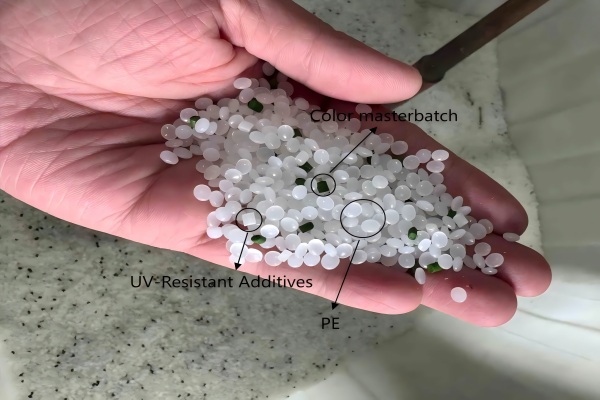
Polyethylene (PE)1 offers the perfect balance between soft feel and tough resistance. It is the mainstream choice because it provides professional performance for sports and realistic looks for landscaping at a price that ensures a good profit margin for you.
I started my career in a technical workshop. I learned early on that PE is the king of the industry. PE material is the mainstream raw material for the entire artificial turf industry. It is strong. It is durable. In my experience helping clients like Michael in the US and David in those vast Canadian landscapes, PE covers 90% of their needs.
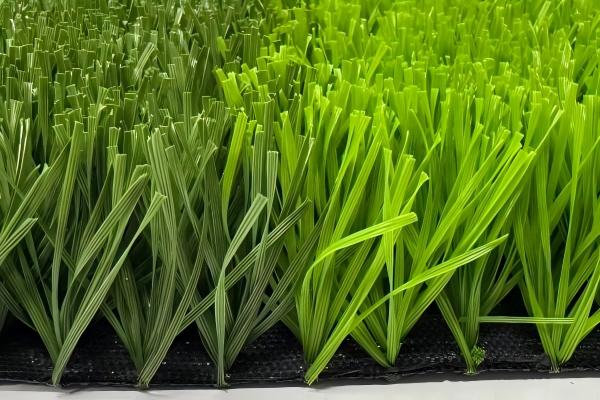
We use PE for specific parts of the grass. The upright monofilaments in sports turf are almost always PE. The straight grass in landscape turf is also PE. Why? Because it feels good. It is soft against the skin. This keeps children and athletes safe. Yet, it is tough enough to withstand running and playing.
You also care about safety and the environment. I am proud to tell you that PE is an environmentally friendly molecule. It does not contain harmful substances. There is no benzene. There is no chlorine. This makes it easier for you to sell to strict markets like Australia and Europe.
Comparing PE Features
Here is a simple breakdown of why I recommend PE for your main inventory:
| Feature | Performance Level | Benefit to You |
|---|---|---|
| Softness | High | Customers love the feel. |
| Durability | High | Few warranty claims. |
| Price | Moderate | Good profit margins. |
| Safety | Excellent | Easy to pass customs inspections. |
I always advise my friends in the industry to keep PE as their core product. It solves the problem of "price vs quality" perfectly.
When Should You Choose Lighter, Cheaper Polypropylene (PP) Turf?
You want a competitive price to win a specific bid. PP is cheap, but you must know its limits to avoid customer complaints later.
PP2 is the lightest plastic, with a density of only 0.89-0.93 g/cm³. It is best for decorative areas or golf putting greens where durability is not the main priority, offering the lowest cost for budget-sensitive projects.
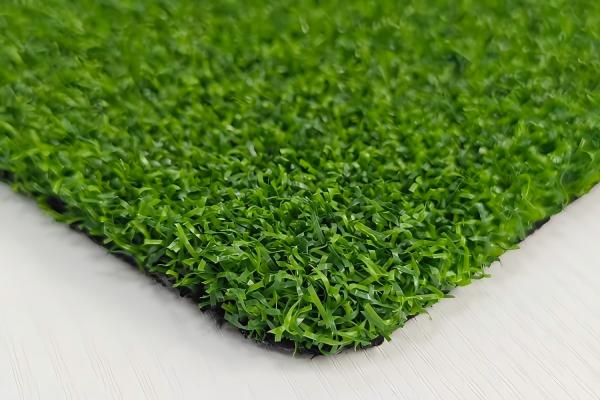
I often discuss density with my clients. PP material is lighter. The density is only 0.89-0.93 g/cm³. This makes it one of the lightest plastics currently available. This low density means we use less material by weight to fill a container. This saves you money on shipping.
However, PP has a lower melting point. It is not as tough as PE. So, where do we use it? We use it smartly. In the early days, we made whole fields of PP. They wore out too fast. Now, at QH Grass, we use PP mostly for the "thatch." This is the curly, brownish or green layer at the bottom of landscape grass.
The Role of PP
The curly PP thatch supports the straight PE blades. This mixture creates a realistic look. It also lowers the total cost of the product.
Best Use Cases for PP
Since you want to maximize value, consider pure PP or high-PP blends for these specific buyers:
- Golf Putting Greens: PP provides a smooth, consistent roll for balls.
- Decorative Roofs: Use it where people look but do not walk often.
- Short-term Events: Use it for trade shows or weddings where long life does not matter.
You must be honest with your customers. Tell them PP is for low traffic. If you sell PP for a soccer field, trust will fail. If you use it for the backing layer (thatch), it is a brilliant engineering choice to save costs.
Is Nylon’s Superior Durability Worth the Higher Cost for Your Projects?
You hear that Nylon is the strongest fiber ever made. But is this extreme strength actually necessary for your specific client base and budget?
Nylon (PA)3 has excellent weather and wear resistance, making it ideal for high-heat areas or intense sports usage. However, its high price often reduces profit margins, making it a niche choice for specific high-end requirements.
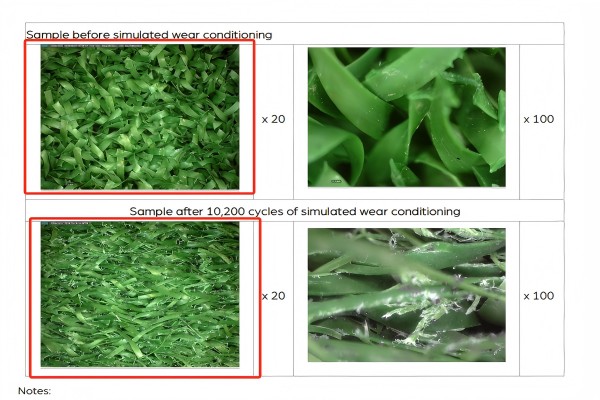
Nylon, or Polyamide (PA), is the ancestor of our industry. When I look back at the history of artificial grass, it started with Nylon. It is incredibly tough. It has amazing resilience. This means when you step on it, it springs back up immediately.
It also resists heat better than PE or PP. For my friends like Mohammed in Saudi Arabia or Ahmed in the UAE, Nylon can withstand the desert sun without melting. This is a major advantage in extreme climates.
The Downside of Nylon
However, you must consider the drawbacks.
- Cost: Nylon is expensive. It costs much more to produce than PE. This eats into your profits.
- Hardness: It is stiff. It can be abrasive. If a player slides on old-school Nylon, they might get "turf burn."
- Water Absorption: It absorbs some moisture, which can change exactly how it plays in sports.
The Evolution of Materials
With the development of the artificial turf industry, the material of artificial grass fibers has gradually evolved. We moved from the initial 100% nylon (PA) to the current mixed use of PE and PP materials.
Although nylon has superior performance in wear resistance, PE is much more cost-effective. Unless you have a client with an unlimited budget or a very specific high-heat requirement, PE is usually the smarter business choice. I recommend you reserve Nylon for special orders only. This strategy protects your cash flow.
Conclusion
PE is your best standard choice. Use PP blends to lower costs for landscaping, and reserve Nylon only for extreme heat or heavy-duty industrial projects.
-
Explore the advantages of PE in artificial grass, including its softness, durability, and environmental safety. ↩
-
Explore this resource to understand the pros and cons of PP, ensuring informed decisions for your turf projects. ↩
-
Explore the advantages of Nylon (PA) for artificial grass, including its durability and weather resistance, to make informed project decisions. ↩
_画板-1.png)