_画板-1.png)
Slippery tiles around a pool can be dangerous for your family. Muddy natural lawns will ruin your clean pool water instantly. You need a safe, clean, and beautiful solution.
Artificial grass offers a slip-resistant, soft surface that stays cleaner than natural lawns. It reduces maintenance time and adds aesthetic appeal. Unlike concrete, it stays cooler underfoot with the right specificatons. It is the safest and most comfortable choice for your swimming pool surroundings.
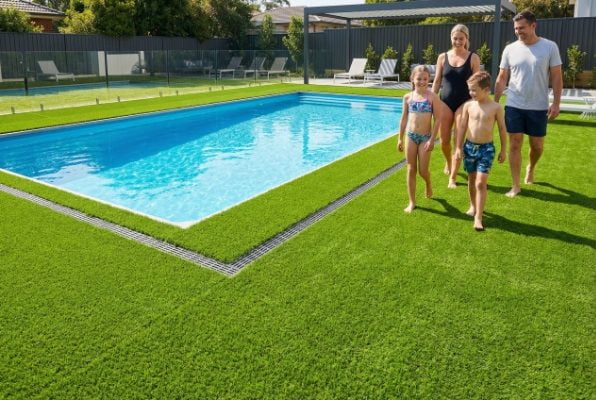
Many buyers worry about two things: drainage and heat. They think fake grass will get too hot or hold water. This is not true if you pick the right product. I have spent years in this industry. I know how to choose the right turf. I will tell you exactly what specifications you need.
What’s the Best Artificial Grass for Pool Surrounds?
Choosing the wrong turf causes waterlogging and bad smells. Poor quality grass feels scratchy and hard on your bare feet.
The best pool turf uses a blend of monofilament and curled fibers for softness. Look for a pile height of 20-40mm and a density between 16,800 and 23,000 tufts per square meter. Crucially, the backing must have maximum drainage holes to handle splashed water.
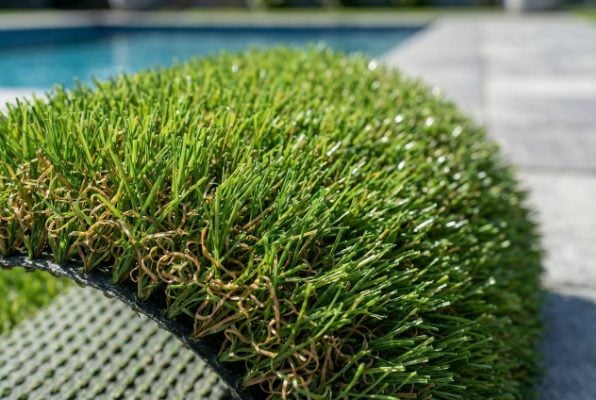
When I worked in the technical department of a workshop, we tested many fibers. For pool areas, comfort is the main goal. You walk here with bare feet. You sit here in your swimsuit. The grass must feel like a soft carpet.
To get this feeling, manufacturers must use special methods. We add environmentally friendly softening agents during production. As a buyer, you must ask for this. If you do not ask, some factories might give you stiff grass. The shape of the yarn matters too. I always recommend a "Diamond" shape or a "Flat" shape. These shapes bend easily. They are soft to the touch.
Here is the technical breakdown you should look for when ordering:
Key Technical Specifications
| Parameter | Recommended Value | Why it Matters |
|---|---|---|
| Pile Height | 20mm – 40mm | Short enough to stay upright, long enough to be soft. |
| Density | 16,800 – 23,000 tufts/m² | High density gives a cushion effect. |
| Dtex | 8,500 – 14,000 | Good weight ensures durability without being too hard. |
| Fiber Shape | Diamond or Flat | These shapes are the softest for bare skin. |
| Material | PE Monofilament + PPE Curly | Straight grass looks real; curly grass supports it. |
Drainage is critical. A pool area gets very wet. The backing of the turf must have the highest density of drainage holes. Standard turf has holes every 10cm. For pools, I verify the holes are more frequent. This lets the water pass through instantly. It prevents mold and keeps the surface dry shortly after swimming.
Is Artificial Grass Going to Heat Around the Pool?
Nobody wants to burn their feet on a hot summer day. Hot surfaces ruin the summer fun and keep kids out of the pool area.
High-quality artificial turf can actually feel cooler than concrete or tiles. To minimize heat, choose a lighter shade of green. You should also use specific cooling infills1 like cork or sand. High concentrations of UV inhibitors2 in the manufacturing process also reduce heat absorption significantly.
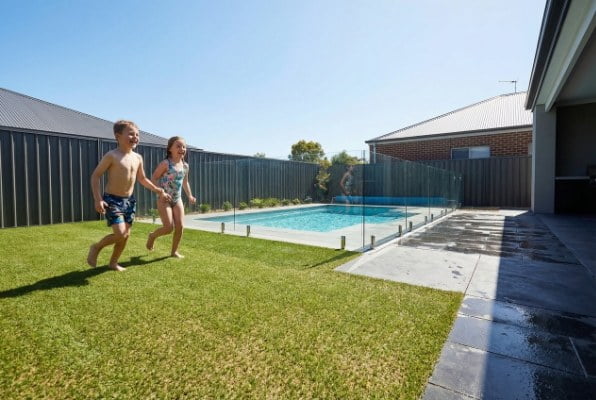
Many people think plastic grass gets hotter than rock or stone. This is a misunderstanding. Concrete and dark tiles absorb heat and hold it. They stay hot for a long time. Artificial grass cools down much faster.
I have helped many clients in hot regions like Saudi Arabia and Brazil. We use specific strategies to fight heat. The first step happens in the factory. We must add UV inhibitors at the highest concentration. This protects the fiber from sun damage. It also helps reduce heat absorption.
Color selection is the next important step. Do not choose a dark forest green. It looks nice, but it absorbs sunlight. For pools, I suggest a lighter olive green or spring green. It reflects more sunlight.
Cooling Strategies and Infill
The biggest secret is the infill. Infill is the material you put between the grass blades.
- Sand Infill: This is the most common. It holds some moisture. When the water evaporates, it cools the grass.
- Cork Infill: This is organic. It does not absorb heat. It feels very natural and cool.
I often compare surface materials for my clients. Here is how they stack up:
| Surface Material | Heat Retention | Comfort Level |
|---|---|---|
| Dark Tiles | Very High | Hard and Dangerous (Slippery) |
| Concrete | High | Hard and Rough |
| Wood Decking | Medium | Hard (Risk of splinters) |
| QH Artificial Grass | Low (with cooling infill) | Soft and Safe |
If the grass does get warm on a 40°C day, the solution is simple. You just spray it with water. The temperature drops instantly. Concrete takes hours to cool down. Grass takes seconds. This makes it a very practical choice for hot climates.
How to Maintain Artificial Grass Around the Pool?
You fear cleaning will take forever and require heavy tools. Complicated chores destroy your weekend relaxation time with your family.
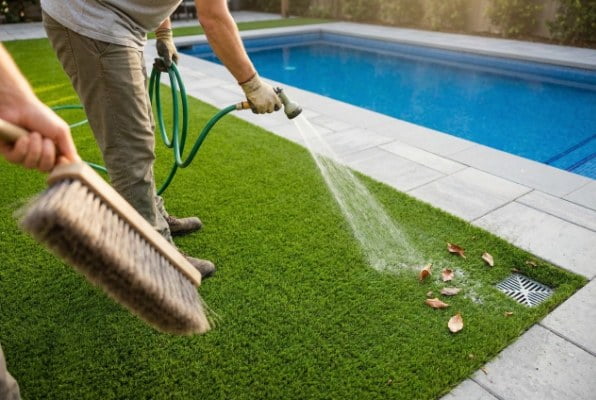
Maintenance is simple and requires very little time. Rinse the grass occasionally to remove sunscreen or dust. Brush it gently to keep fibers standing up. Remove fallen leaves for drainage. Avoid spilling strong chemicals like undiluted chlorine directly onto the turf to protect the color.
Artificial turf is designed for convenience. It is not a living plant. It does not need water to grow. It does not need fertilizer. However, around a pool, you need to follow a few simple rules.
The most common issue I see is chemical spills3. You use disinfectants and chlorides to clean your pool water. These are strong chemicals. Artificial grass is tough, but high concentrations of these chemicals can damage the color. When you add chemicals to the pool, be careful. If you spill some on the grass, do not wait. Rinse it immediately with fresh water. This will dilute the chemical and save your grass.
Routine Care Guide
I always tell my customers to treat the grass like a carpet. You want to keep it fluffy and clean.
- Rinsing: Splash marks from the pool usually contain salt or chlorine. Over time, this can leave a white residue. Use a hose to rinse the grass. This removes the residue. It also washes away dust and sunscreen oil.
- Brushing: After a busy weekend, the grass might look flat. Use a broom with plastic bristles. Brush against the grain. This makes the grass stand up again. It keeps the look fresh.
- Debris Removal: Leaves will fall on the grass. You must remove them. If you leave wet leaves, they can block the drainage holes. This causes water to pool on the surface.
This is much easier than scrubbing tiles or painting wood decks. You do not need to seal it effectively every year. You just rinse and brush. It frees up your time. You can spend more time swimming and less time working.
| Action | Frequency | Purpose |
|---|---|---|
| Rinse with water | Weekly | Remove dust and chemical residue. |
| Brush fibers | Monthly | Keep grass upright and soft. |
| Remove leaves | As needed | Ensure drainage works perfectly. |
| Deep Clean | Yearly | Professional cleaning for longevity. |
Conclusion
Artificial grass around your pool is safe, soft, and cool. It requires little work. Choose quality specs for the best result. QH Grass helps you find that success.
-
Discover the most effective infills that keep artificial grass cool and comfortable, perfect for summer days. ↩
-
Learn about the role of UV inhibitors in reducing heat absorption and prolonging the life of artificial grass. ↩
-
Learn effective methods to manage chemical spills on artificial grass to protect its color and integrity. ↩
_画板-1.png)