_画板-1.png)
You spend thousands on new turf, but it looks like a patchwork quilt. Why does this happen, and can you fix it? Here is the truth.
Uneven color in artificial turf usually stems from poor quality masterbatch, UV degradation, manufacturing inconsistencies, or incorrect installation direction. High-quality masterbatch prevents fading, while proper installation ensures fibers reflect light uniformly. Understanding these causes helps you avoid costly replacements.
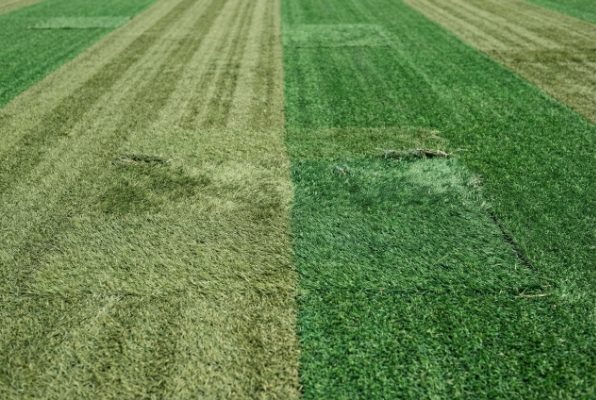
In my years as an engineer at QH Grass, I have seen many buyers frustrated by color issues. Let me break down exactly why this happens so you can avoid it.
How does material quality cause color differences in artificial turf?
Cheap turf looks great on a sample, but terrible after one summer. Why do the green blades turn white so quickly?
The culprit is often low-quality color masterbatch. Premium masterbatch costs $2000 more per ton but keeps color stable for 8-10 years. Cheap alternatives fade in 2-3 years, causing patchy, uneven coloring across your project.
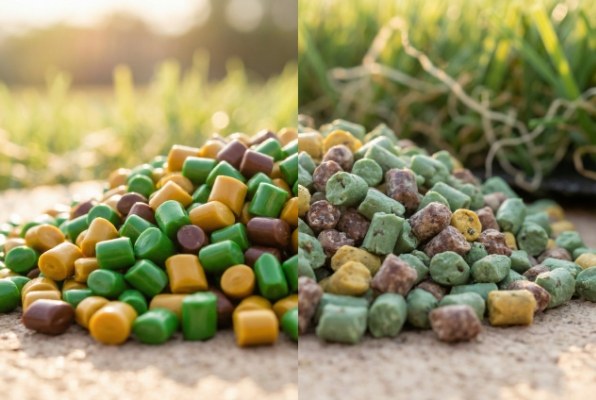
As someone who has worked in trust workshops, I know that raw materials are everything. The green, yellow, and brown colors you see in artificial turf come from "color masterbatch1 granules." These are mixed into the plastic before it becomes grass fiber.
There is a huge price gap in this market. High-quality masterbatch raw materials are expensive. They create fibers that can stay bright outdoors for 8 to 10 years. However, many suppliers want to cut costs. They use low-quality masterbatch. This material is cheaper, sometimes by $2000 per ton. But the result is bad. The turf starts to fade after only 2 to 3 years.
When you buy turf, you cannot see this difference with your eyes immediately. It takes time. But once the fading starts, it is usually uneven. Some parts turn white, while others stay green. This makes the whole field look old and cheap.
Masterbatch Quality Comparison
| Feature | High-Quality Masterbatch | Low-Quality Masterbatch |
|---|---|---|
| Material Cost | High (+$2000/ton) | Low |
| Color Lifespan | 8-10 Years | 2-3 Years |
| Fading Risk | Very Low | High |
| Overall Value | Good investment | Costly replacement later |
I always advise my clients to ask about the masterbatch brand or warranty. If the price seems too good to be true, the factory likely used cheap color ingredients.
Why does UV exposure lead to uneven color in artificial turf?
The sun is powerful. Even the best products struggle against it. Does sunlight ruin your investment?
Strong outdoor ultraviolet (UV) radiation breaks down chemical bonds in the turf fibers. Prolonged exposure makes some colors fade faster than others. This creates a washed-out look where dark green zones might lighten unevenly compared to shaded areas.
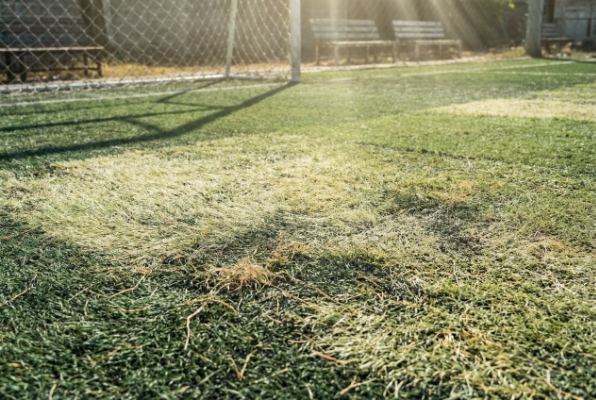
Nothing lasts forever, and artificial turf is no exception. We design turf to be tough, but the sun is stronger. Strong outdoor ultraviolet (UV) radiation2 is one of the biggest reasons for color changes.
When turf sits in the sun all day, the UV rays attack the plastic fibers. This breaks down the chemical bonds that hold the color. But here is the tricky part: not all colors fade at the same speed.
Differential Fading
A standard turf product usually has a mix of colors to look real:
- Dark Green (Blade)
- Light Green (Blade)
- Yellow or Brown (Thatch/Curly fiber)
If you use a product with mixed fibers, the darker colors often absorb more heat and UV radiation. They might fade faster than the light green fibers. This leads to a messy look. One part of the field might look washed out, while another part looks fine because it was in the shade.
This is why UV inhibitors are important. We add these chemicals during production to block the sun’s damage. But if the UV stabilizer is weak, the sun will win. The result is a field that looks spotted and uneven because different fibers give up their color at different times.
Which manufacturing process factors can trigger color variation in artificial turf?
You order the same model twice, but they look different. Is the factory playing games with you?
Production errors often cause color shifts. If the masterbatch isn’t mixed thoroughly, patches appear. Also, slight temperature or humidity changes between production batches can create subtle color differences that become obvious when you lay rolls side by side.
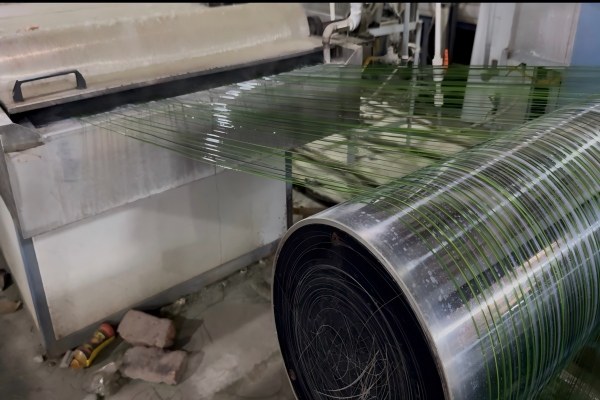
I spent a lot of time managing production lines. I know that machines are great, but they are not perfect. Producing artificial turf is a sensitive chemical process.
First, there is the mixing issue. We have to mix the color masterbatch granules with the other plastic pellets perfectly. If the machine does not mix them well, or if the ratio changes just a little bit, you get patches. You might see a strip of lighter green in the middle of a roll. This is a quality control failure.
Second, there is the issue of "Batches." It is normal to have very small color differences between different production batches. We call these "Lot Numbers," just like with paint or wallpaper.
Factors Affecting Production Consistency
- Temperature: If the factory is hotter on Tuesday than on Monday, the fiber color can shift slightly.
- Humidity: Moisture in the air affects how the plastic cools and sets.
- Time: We try to keep the material ratio fixed. However, color is very sensitive to the environment inside the factory.
These variations are hard to see with the naked eye when you look at one roll. But if you lay a roll from Batch A next to a roll from Batch B, the difference is obvious. It looks like a hard line on the ground. This is why I always tell purchasing managers: buy all the turf you need for one project at the same time. Never split the order into two production times if you can avoid it.
What installation issues can result in inconsistent turf color?
The turf arrived perfect, but the field looks striped. Did your installation team make a critical mistake?
Installation direction is the most common cause of perceived color difference. Turf fibers lean in one direction due to packaging. If you lay rolls in opposite directions, light reflects differently, making one roll look dark and the other light.
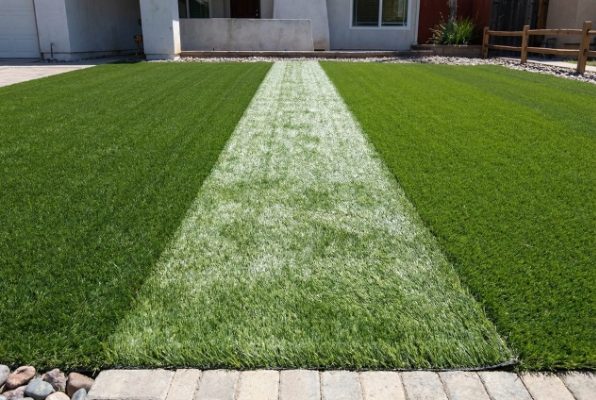
This is the most common problem I see, and it is usually not a factory defect. It is an installation mistake.
When we manufacture turf, we roll it up tightly to ship it. This causes the fibers to lean flat to one side. We call this the "grain" or "pile direction."
When you unroll the turf at the job site, all the blades are leaning the same way. The installation team must be very careful. You must lay every single roll facing the exact same direction.
The Science of Light Reflection
If you place two rolls side by side, but one is facing North and the other is facing South, the light hits them differently.
- Facing into the grain: You look into the tips of the grass. It looks dark and matte.
- Facing with the grain: You look at the shiny back of the blades. It looks light and shiny.
If the seams are not aligned, or if the rolls are flipped, you will see giant stripes. One strip looks dark green, and the next looks light green. It looks terrible.
Also, bad seams can cause color issues. If the gap between two rolls is too wide, you see a dark line (shadow). If the gap is too tight and fibers overlap, you see a raised line with a different color density. You must check the direction before you cut and glue.
How do environmental factors affect color differences in artificial turf?
Your turf faces rain, wind, and pollution daily. Can the environment change the color of your grass?
Environmental weathering impacts color over time. Temperature fluctuations cause expansion and contraction, while pollutants and dust settle deep into fibers. This accumulation dulls the vibrant green color, making older sections look significantly different from fresh or protected areas.
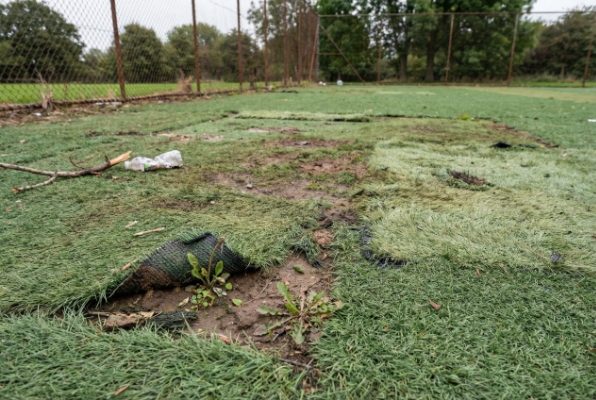
Even if you buy the best turf and install it perfectly, the environment will change it. Over time, external factors attack the color.
Weathering is a slow process. Changes in temperature and humidity cause the turf backing and fibers to expand and shrink. This stress can make the surface texture change, which affects how we see the color.
Common Environmental Threats
| Factor | Effect on Color |
|---|---|
| Acid Rain | Can slowly bleach pigments or alter the fiber surface. |
| Dust/Soil | Trapped dirt makes the bright green look dull and brown. |
| Pollution | Industrial smoke or car exhaust leaves a greasy film on the grass. |
I often see this in heavy industrial areas. The turf is not actually fading, but it is covered in a layer of grime. It creates an uneven color because high-traffic areas might get cleaned by shoes, while corners collect dust.
Also, chemical contact3 is a big risk. Fertilizers intended for nearby real plants can drift onto the artificial turf. Some fertilizers contain chemicals that react with the plastic, causing orange or brown stains. You must protect the perimeter of your synthetic lawn from garden chemicals.
Why does improper maintenance worsen color variation in artificial turf?
You think artificial grass needs zero care. But neglect turns a beautiful lawn into an ugly mess.
Lack of cleaning leads to dirt accumulation that hides the true color. Furthermore, using harsh cleaning chemicals with high chloride content can bleach fibers. Proper maintenance preserves the original look, while neglect or bad choices ruin the aesthetic.
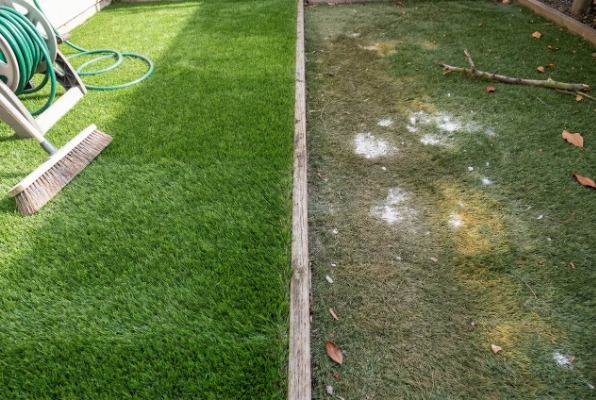
Many people buy artificial turf because they want "maintenance-free" grass. I have to correct them. It is "low maintenance," not "no maintenance." If you neglect it, the color will suffer.
The biggest issue is dirt accumulation. Without regular rinsing and brushing, dust fills the gaps between the blades. This makes the whole field look grey or brown. It looks uneven because dirt piles up more in corners or low spots.
Cleaning Mistakes to Avoid
Some owners try to clean the turf but make it worse. They use "Inappropriate cleaning products."
- High Chloride Levels: Never use strong bleach or harsh pool chemicals. These will chemically burn the green color out of the plastic. It leaves white spots that you cannot fix.
- Pet Waste: If you do not clean up pet waste immediately, the ammonia can eventually discolor the backing or the fibers.
To keep the color even, you need a routine. You should rinse the turf with water to remove dust. You should brush the fibers so they stand up straight. When fibers lie flat (matted down), they reflect light differently and look like a different color shade. Simple care keeps the green color true for years.
Conclusion
To avoid uneven color, check masterbatch quality, monitor production batches, ensure correct installation direction, and maintain the turf regularly. Quality materials and care prevent these common headaches.
-
Understanding color masterbatch is crucial for making informed decisions about turf quality and longevity. ↩
-
Understanding UV radiation’s impact on turf can help you make informed choices for maintenance and longevity. ↩
-
Exploring the effects of chemical contact can help you protect your turf from unwanted discoloration. ↩
_画板-1.png)