_画板-1.png)
Installing artificial grass feels like a significant investment for your business. You might worry that the final surface will feel too hard or unsafe for users. Does it really need an extra layer underneath to work right?
Yes, using underlay, also known as shock pads, is crucial. It minimizes impact injuries, improves drainage, and extends the turf’s lifespan. Especially on hard surfaces like concrete, it transforms a stiff carpet into a soft, safe play area for children and athletes.
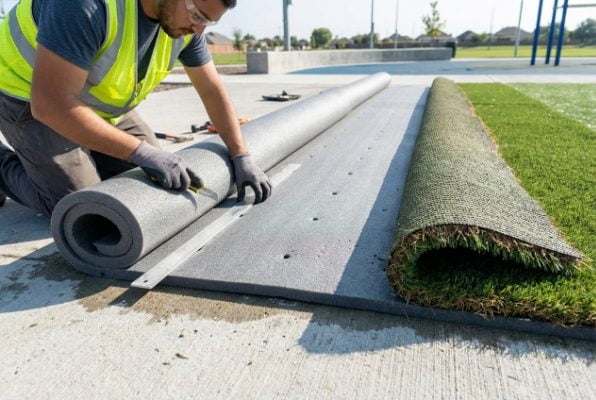
Many buyers ask me if they can skip this step to save money on shipping and material costs. Let me tell you why skipping this simple layer might cost you much more in the long run.
What are the advantages of synthetic turf underlay?
You want your customers to feel true luxury and comfort when they step on your grass products. Without padding, the experience can feel flat, hard, and cheap.
The main advantages are enhanced safety through shock absorption, vertical drainage capability, and protection for the grass backing. It creates a realistic, soft feel that mimics natural soil, preventing the turf from wrinkling or shifting over time.
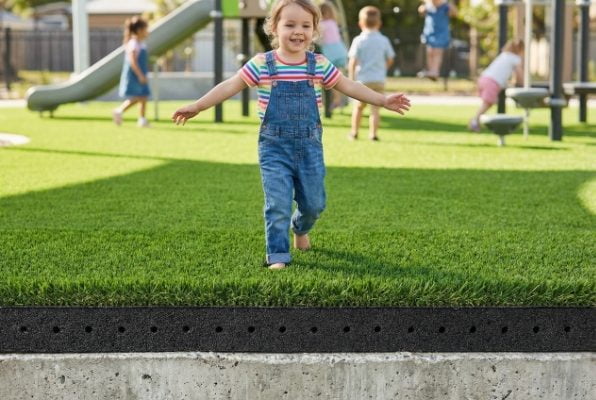
I have spent many years in this industry, first in the factory and now in sales. I see clearly how underlay changes the quality of a project. The biggest advantage is safety. We call this the Critical Fall Height1. If you install grass in a playground or a school, you need a shock pad. It acts like a cushion. If a child falls, the pad absorbs the energy. It prevents serious head injuries.
Another huge benefit is how it handles hard surfaces. Many of your customers might want to cover an old concrete patio or a wooden deck. If you put turf directly on concrete, it feels very hard. It is uncomfortable to stand on for a long time. The underlay makes the ground feel soft and natural. It also protects the backing of the grass. Concrete is rough. Over time, friction will wear out the latex or PU backing of the turf. The underlay acts as a shield. It stops this wear and tear.
Also, good underlay helps with drainage. It lifts the grass slightly off the ground. This allows water to flow away easily. It prevents water from getting trapped under the grass, which can cause bad smells.
| Advantage | Benefit to Your Customer |
|---|---|
| Shock Absorption | Protects children and athletes from injury during falls. |
| Softness | Makes concrete or wood feel like natural soil. |
| Protection | Stops rough ground from tearing the turf backing. |
| Stability | Keeps the surface flat and prevents wrinkles. |
What are the shortcomings of synthetic turf underlay?
Not every underlay works perfectly for every project you bid on. Bad choices in material or installation can ruin a good turf job and lead to customer complaints.
The specific downsides come from poor quality materials or installation. Cheap EPE foam can degrade quickly, shift underfoot, cause uneven surfaces, and block drainage holes. This leads to water pooling and a shorter lifespan for the entire artificial grass system.
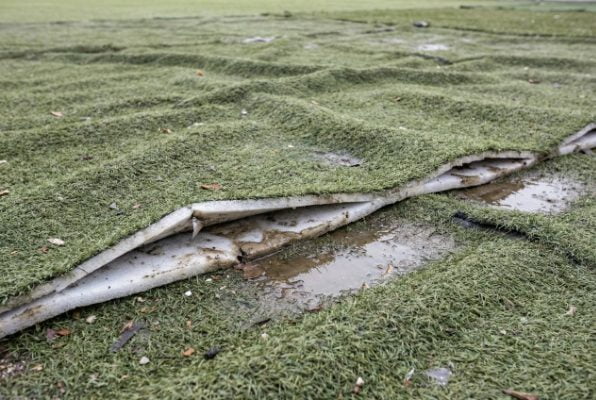
We must be honest about the risks. Not all padding is good padding. I often warn my clients about using very cheap materials just to lower the price. The most common problem I see involves low-quality EPE foam. This material is often too light. It does not have enough density.
When you install thin EPE foam, it can move. It is weak against temperature changes. It expands and shrinks. This causes the artificial grass on top to wrinkle. Your customer will see distinct lines and lumps in their lawn. It looks unprofessional.
Another major issue is drainage blockage. Artificial grass has drainage holes punched into the backing. The underlay must allow water to pass through these holes. If the underlay is cheap foam, it might flatten out and seal the holes. The water has nowhere to go. It sits on top of the grass or stays trapped between the grass and the foam. This stagnant water creates mold and bacteria.
Also, installing underlay adds a step to the process. It takes more time. You need to tape the seams of the padding carefully. If the installer is lazy or inexperienced, the pads will shift. A shifting pad destroys the stability of the whole system.
Potential Failures in Underlay
- Shifting: The pads move apart, creating gaps under the grass.
- Compression Set: Cheap foam stays flat after you walk on it and does not bounce back.
- Water Blocking: Poor design creates puddles that ruin the grass fibers.
What is the best material to use under synthetic turf?
You face too many choices in the market and supplier catalogs. Choosing the wrong material type can destroy your reputation as a reliable supplier.
The best materials balance durability and drainage. XPE foam2 is excellent for shock absorption. PP weed control fabric prevents plant growth. Polyester geotextile adds stability. For the best results, use a combination like XPE padding with geotextile layers.
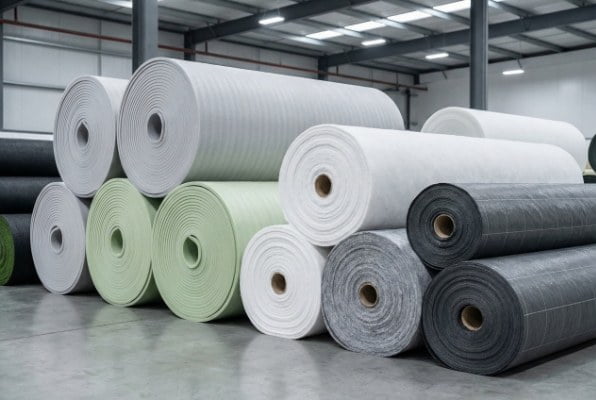
As an engineer, I always look at the data. For shock absorption and longevity, XPE (Cross-linked Polyethylene) foam is the superior choice. It is different from cheap EPE. The chemical structure is stronger. It resists water and chemicals. It does not rot underground. If you are doing a playground or a sports field, XPE is the material I recommend. It keeps its shape for many years.
But sometimes, you need more than just foam. You need to stabilize the soil and stop weeds.
Polyester Geotextile3: This is a heavy-duty fabric. It is very strong. We use it to separate the sub-base (the crushed stone) from the soil below. It improves the load-bearing capacity of the ground. It is breathable and lets water pass through instantly.
PP Weed Control Fabric4: This is a woven material. Its main job is to stop sunlight. Without sunlight, weeds cannot grow through the drainage holes of your turf.
The Winning Combinations
I suggest using a mix of materials for high-end projects. This guarantees the best performance.
-
XPE Padding + PP Weed Barrier:
Allows for a soft surface while ensuring no weeds destroy the installation. This is great for landscaping in gardens. -
XPE Padding + Polyester Geotextile:
Best for heavy traffic areas. The geotextile adds extra strength so the foam does not tear against sharp stones in the base.
| Material Type | Best Use Case | Key Feature |
|---|---|---|
| XPE Foam | Playgrounds, Sports, Concrete Decks | High shock absorption, waterproof. |
| Polyester Geotextile | Soil Stabilization, Separation | High strength, excellent drainage. |
| PP Woven Fabric | Garden Landscapes | Weed prevention. |
Conclusion
Using proper underlay like XPE or geotextile ensures safety, drainage, and softness, while cheap EPE causes failure. Quality padding protects your reputation and profits.
-
Discover the importance of Critical Fall Height for safety standards in playgrounds, ensuring peace of mind for parents and facility managers. ↩
-
Explore the advantages of XPE foam, including its durability and shock absorption, essential for high-quality turf installations. ↩
-
Learn how polyester geotextile enhances load-bearing capacity and drainage, crucial for maintaining turf integrity. ↩
-
Discover how PP weed control fabric prevents weed growth, ensuring a pristine and low-maintenance landscape. ↩
_画板-1.png)