_画板-1.png)
Worried about sanitizing your turf after a party or a spill? Using harsh chemicals might seem like a quick fix, but it could cause long-term damage to your investment.
Yes, strong alcohol and many common disinfectants can harm artificial grass. Chemicals, especially those with chlorine or high alkalinity, will break down the synthetic fibers over time. This leads to fading, brittleness, and a shorter lifespan. Stick to turf-safe cleaning methods to protect your grass.
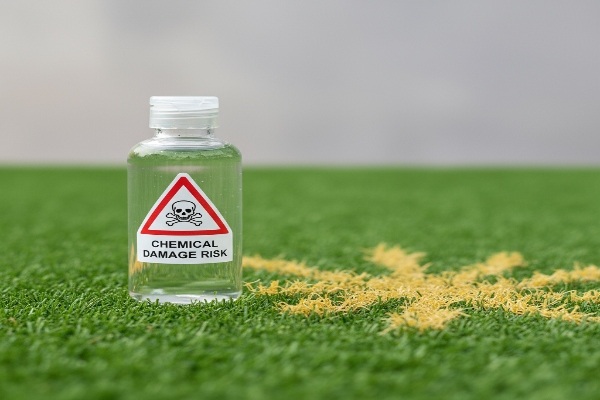
It’s a common question I get from my clients, especially those managing large commercial landscapes or public playgrounds. They need to keep their turf clean and hygienic without accidentally ruining the product they paid for. I’ve seen expensive mistakes happen from using the wrong bottle of cleaner. Understanding how different chemicals affect the turf material is the first step to proper maintenance. Let’s look closer at why some cleaners are a bad idea and what you should be using instead to protect your investment.
How Do Artificial Grass Materials React to Common Chemicals?
You see a stain and grab the nearest powerful cleaner. But will it bleach your grass or make the fibers weak? Using the wrong chemical can turn a small, easy-to-fix problem into a big one.
Artificial grass fibers, usually made of Polyethylene (PE)1 or Polypropylene (PP), are essentially durable plastics. Strong solvents, high-concentration alcohol, and harsh chemicals like bleach (chlorine) can react with these plastics. They can strip out color, break down crucial UV inhibitors, and make the fibers brittle and weak.
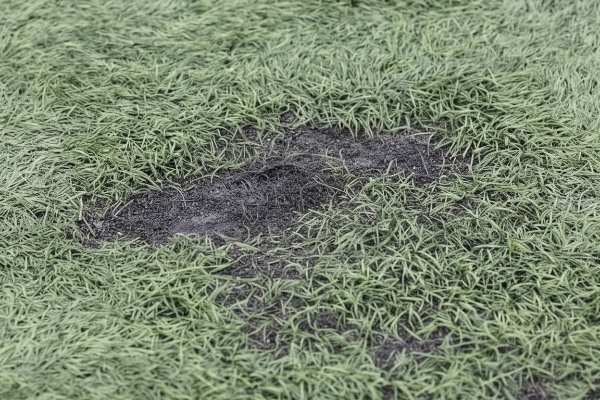
In my early days working in the factory’s technical department, I learned exactly how artificial grass is made to be durable. The plastic fibers are filled with UV inhibitors and color pigments to keep them green and strong under the sun. When you apply a harsh chemical, you are launching an attack on these protective components.
The Chemical Reaction
I remember a client who tried to remove a tough paint stain with an industrial-grade solvent. It did remove the stain, but it also left a pale, stiff patch on their beautiful lawn. The UV protection in that area was completely stripped away, and that spot began to degrade much faster than the rest of the turf. It was a costly mistake that could have been prevented with a little bit of knowledge. The issue is that these chemicals attack the very parts that make the turf durable.
Common Chemicals and Their Effects
To help my customers avoid this, I often share a simple guide. Here’s a breakdown of how common chemicals react with turf fibers.
| Chemical Group | Typical Reaction with Turf | My Recommendation |
|---|---|---|
| High-Concentration Alcohol2 | Dries out fibers, can cause slight discoloration over time. | Avoid unless highly diluted for a specific purpose. |
| Chlorine Bleach3 | Extremely corrosive. Causes rapid fading and fiber brittleness. | Strictly Avoid. This is a guaranteed way to ruin your turf. |
| Alkaline Cleaners4 (High pH) | Can slowly degrade fiber integrity and backing materials. | Strictly Avoid. This includes many oven and drain cleaners. |
| Acids (Strong) | Can melt or "burn" the plastic fibers on contact. | Strictly Avoid. This includes battery acid or muriatic acid. |
| Gasoline / Motor Oil | Will stain and can dissolve the latex or PU backing. | Clean immediately with mild soap and water before it soaks in. |
Understanding this chemistry is key to long-term care.
What Cleaning Agents Are Safe for Disinfecting Artificial Turf?
You need to disinfect your turf, especially in high-traffic play areas or for customers with pets. But you are rightly afraid of using products that could harm kids, pets, or the grass itself.
The safest and most effective options are simple household items. A solution of mild, neutral pH soap5 and water is great for general cleaning. For disinfecting, you can use a 50/50 mix of white vinegar and water6 or choose a commercial turf cleaner specifically designed to be non-toxic.
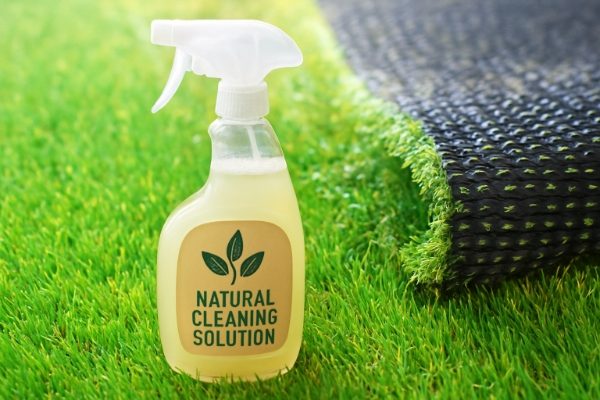
When I help customers choose a turf product, our conversation often shifts to maintenance. My slogan is about helping clients achieve greater success, and that includes keeping their turf projects looking great for years. Bad maintenance advice can ruin a business’s reputation. That’s why I always recommend sticking to the basics. You don’t need expensive or harsh chemicals to have clean, sanitary turf.
DIY Cleaning Solutions
For most situations, simple is best. These solutions are effective and won’t damage the grass fibers or the backing.
- General Cleaning: Mix a small amount of household dish soap or laundry detergent (choose one with a neutral pH and no bleach) with a bucket of water. This is perfect for cleaning up food spills, dirt, and general grime.
- Disinfecting and Deodorizing: A 50/50 solution of white vinegar and water in a spray bottle is a fantastic, natural disinfectant. It helps kill bacteria and neutralize odors, especially from pets, without harming the grass fibers. I recommend this to all my clients with pets.
Professional Turf Cleaners
If you prefer a commercial product, many companies now make cleaners and disinfectants specifically for artificial turf. When I consult with large-scale projects like sports fields or community parks, I advise them to look for products that are labeled "enzymatic." These cleaners use natural enzymes to break down organic waste and odors without harsh chemicals. Always check the label to ensure it is non-toxic and safe for use around children and pets.
What Is the Best Practice for Cleaning and Sanitizing Your Turf?
Just spraying a cleaner on your lawn isn’t enough. Without the right technique, you might just be spreading dirt around and failing to truly sanitize your artificial grass.
First, remove all loose debris with a stiff brush or leaf blower. For spills, blot them immediately. Apply your chosen safe cleaning solution, gently scrub with a soft-bristled brush, and then rinse the area thoroughly with clean water. Let it air dry completely.
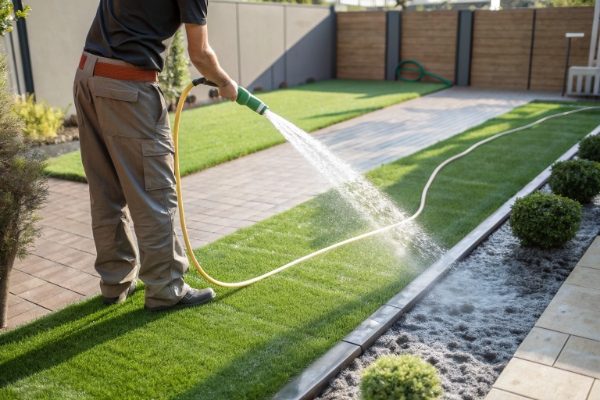
During my years as a sales executive, I visited many clients’ completed projects. The installations that looked the best after five or even ten years were always the ones with a simple, consistent maintenance routine. It’s not about intense, occasional deep cleans; it’s about regular, gentle care. One of my clients in Australia, who installed our turf for several public playgrounds, created a brilliant weekly cleaning schedule that his team followed perfectly. It proved that routine care is far more effective than emergency cleanups with harsh chemicals.
Step-by-Step Cleaning Guide
Here is the process I share with all my customers. It’s simple and effective.
- Remove Debris: Before washing, use a stiff brush (with synthetic, not metal, bristles) or a leaf blower to remove leaves, twigs, and other loose debris from the surface.
- Rinse Lightly: Give the entire area a quick rinse with a garden hose. This helps to wash away dust, pollen, and other fine particles.
- Spot-Treat Stains: For spills or pet urine, tackle them right away if possible. Blot liquids with a towel. Apply your cleaning solution (mild soap or vinegar/water mix) and let it sit for a few minutes.
- Gentle Scrub: Use a soft-bristled brush or a cloth to gently scrub the affected area. Avoid aggressive scrubbing, as this can damage the fibers over time.
- Rinse Thoroughly: This is the most important step. Rinse the area completely with clean water to wash away both the dirt and the cleaning solution. Leftover soap residue can become sticky and attract more dirt.
- Cross-Brush and Dry: After rinsing, you can use a brush to gently push the grass fibers up against their natural grain. This helps the turf stand up straight and look its best as it air dries.
Conclusion
Protecting your artificial turf investment is simple. Avoid harsh chemicals like concentrated alcohol and bleach. Stick to gentle cleaning with soap, water, or specifically designed turf-safe products to ensure a long-lasting lawn.
-
Explore the properties of Polyethylene to understand its durability and applications in artificial grass. ↩
-
Find out how high-concentration alcohol can damage artificial grass and what to use instead. ↩
-
Learn why chlorine bleach is harmful to artificial grass and discover safer cleaning alternatives. ↩
-
Understand the risks of using alkaline cleaners on synthetic turf and explore safer cleaning options. ↩
-
Understanding neutral pH soap can help you choose safe cleaning agents for your artificial turf. ↩
-
Explore the benefits of using vinegar for disinfecting turf, a safe and natural solution. ↩
_画板-1.png)